

CHIPS Payment System: How It Works & What It Means for You

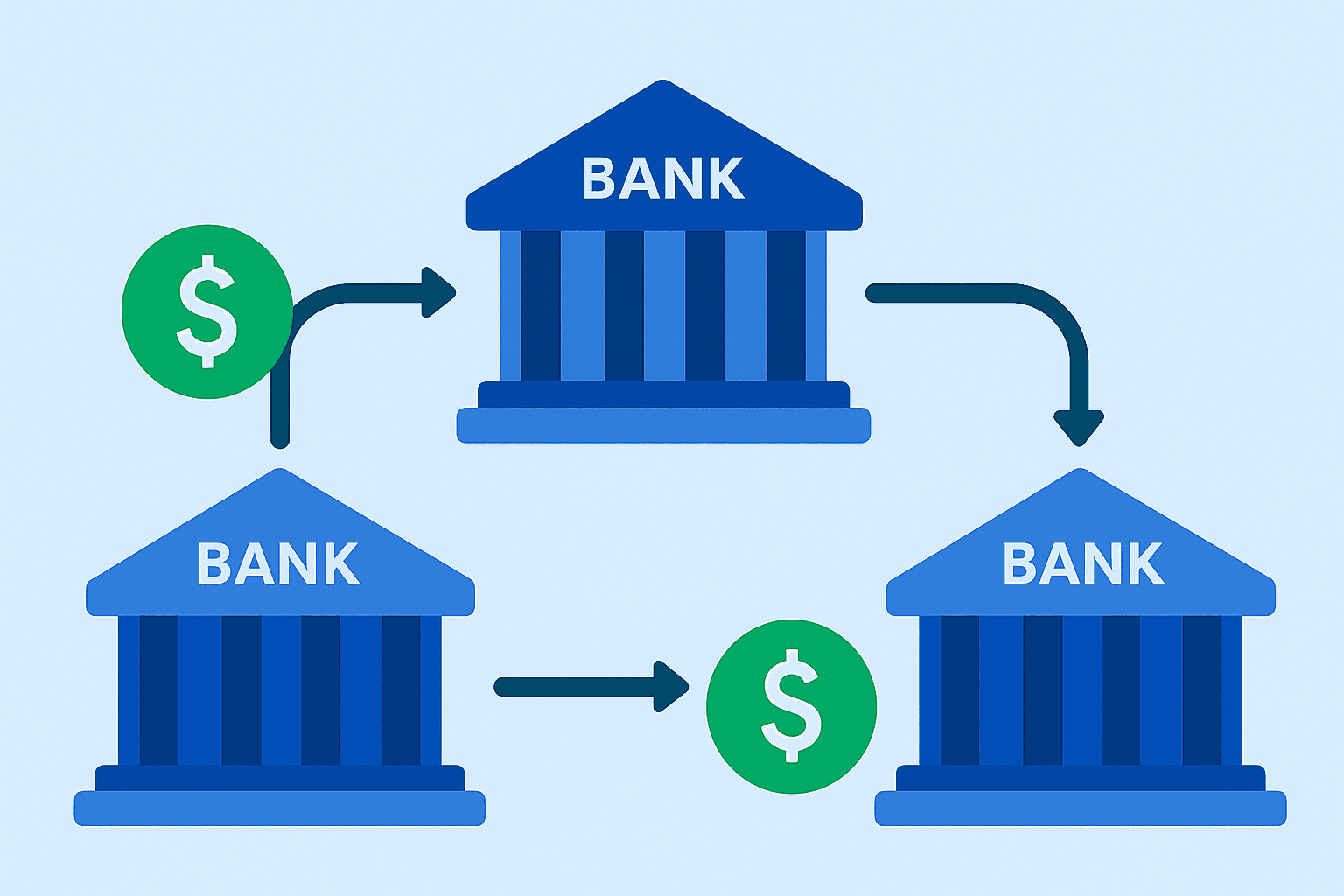
Receive international payments through optimised banking rails with transparent forex rates and faster settlements.
TL;DR
- What is the CHIPS payment system? The CHIPS payment system is a privately operated, US-based payment network that clears and settles large-value USD transactions between financial institutions.
- How does the CHIPS payment system process a transaction? CHIPS continuously matches and offsets payment obligations, settling payments with finality when they are released. Fedwire is used to fund participant balances and return remaining balances.
- How does CHIPS differ from SWIFT, ACH, and Fedwire? CHIPS settles large-value USD payments throughout the day using liquidity-saving offsets, Fedwire settles payments in real time on a gross basis, SWIFT carries financial messages, and ACH handles batch payments, including eligible same-day and international transactions.
- What does the CHIPS payment system mean for Indian exporters and freelancers receiving USD payments? CHIPS may handle the US-side settlement leg of an inbound USD wire. Timing and charges depend on the banks and payment route.

What Is the CHIPS Clearing House Interbank Payments System?
CHIPS (Clearing House Interbank Payments System) is a privately operated, US-based payment network that clears and settles large-value USD transactions between financial institutions. It is owned and run by The Clearing House Payments Company and is the private-sector counterpart to the Federal Reserve's Fedwire Funds Service. Launched in 1970, it now clears and settles more than $2 trillion on an average business day across more than 630,000 transactions.
What sets CHIPS apart is how it settles. Instead of moving every payment individually and in full, it uses a netting algorithm that matches and offsets payments between banks, so the same pool of funds can settle a much larger value of payments. Banks prefund a CHIPS account at the start of the day, and each payment is final once CHIPS releases it. This makes it cheaper for banks to move large volumes of dollars, which is why they route a big share of international USD payments through it.
Only a small group of large US and international banks connect to CHIPS directly, and other banks reach it through a correspondent. As a business or freelancer, you never choose CHIPS yourself; the banks handling the wire decide whether the dollar leg moves through CHIPS or Fedwire. For example, when a US-based company wires $15,000 to a Bengaluru software agency, the banks may use SWIFT to send the payment instruction and CHIPS to settle the US dollar leg before the funds move on to the agency's bank in India.
Who Uses CHIPS and Why Does It Matter for Indian Exporters?
Financial institutions use CHIPS, and it matters to Indian exporters because some international wire payments they receive from US clients may use CHIPS for the US dollar settlement leg.
CHIPS clears and settles large-value USD transactions between financial institutions. A participating bank may submit a payment to CHIPS directly; another bank may use a participating correspondent. CHIPS may settle the payment individually or offset it against other payments.
If you're an Indian exporter or freelancer, CHIPS may handle the US-side settlement leg of an inbound wire. The route, timing and fees depend on the banks involved, and the Indian bank may convert the funds before crediting your account.
CHIPS is part of the banking infrastructure used to move USD between financial institutions. An exporter generally doesn’t select CHIPS or Fedwire when raising an invoice. The sending and correspondent banks determine the payment route based on their relationships, capabilities and processing arrangements. Exporters should focus on sharing accurate beneficiary details and confirming the available payment options with their bank or provider.


Save 50% on every international transfer
- Receive from 150+ countries
- Get global accounts
- Zero forex margin
How Does the CHIPS Payment System Actually Process a Transaction?
CHIPS continuously evaluates payment instructions and settles them with finality when they are released. It can release payments individually or offset obligations between two or more participants, reducing the funding needed. Participants fund CHIPS balances through the Federal Reserve; at the end of the day, additional funding may be needed to settle remaining eligible payments.
By matching and offsetting payments and reusing funds, CHIPS reduces the funding banks need to settle payments. In 2025, CHIPS settled an average of $2.014 trillion a day.
Fedwire is the US Federal Reserve's real-time gross settlement (RTGS) system. Banks use it to fund CHIPS and receive their remaining balances, while CHIPS payments are final when released and settled on CHIPS.
Here is one possible route for a $15,000 cross-border payment from a US client to a Bengaluru software agency:
- A US client instructs their bank to wire $15,000 to a Bengaluru software agency.
- The US client's bank sends the instruction through a CHIPS participant, either directly or through a correspondent.
- CHIPS evaluates the payment and may offset it with other participants’ payments.
- Once released on CHIPS, the payment is settled with finality during the operating day.
- The banks use their correspondent relationships and payment messages to pass the payment details and arrange delivery to the Indian agency's bank.
- The Indian bank credits the agency's account after any applicable forex conversion and processing.
Timing and fees can depend on the banks involved, their checks and the payment route.
How Long Do CHIPS Payments Take?
The CHIPS leg itself is fast. CHIPS settles payments throughout its operating day, with finality when a payment is released, and 95% of payments settle within seconds. Release depends on liquidity and participant controls, so a very large payment can wait in the queue until the sending bank has enough funds or an offsetting payment arrives.
What you experience as the recipient is much longer than a few seconds, because CHIPS is only one step in an international wire. The time for the recipient to receive funds also depends on the banks and the route. An inbound USD wire to India typically takes one to three working days from the time your client sends it, and can stretch to five when more banks or extra checks are involved.
Delays can occur at different points in an inbound wire. The sending bank runs its own compliance checks before releasing the payment. Banks then use payment messages and correspondent relationships to pass the payment onward, and each correspondent bank in the chain can add processing time. The Indian bank then credits the account after any applicable forex conversion and processing, which includes confirming the purpose of the remittance.
Timing also matters. CHIPS stops accepting new payment messages at 6 p.m. Eastern Time on US business days and does not run on weekends or US bank holidays. A wire your client sends late on a Friday in the US will usually not start moving until Monday, and an Indian bank holiday can add another day at the receiving end.
Save 50% on every international transfer
- Receive from 150+ countries
- Get global accounts
- Zero forex margin
What Are the Charges for CHIPS Payments?
Charges on a wire depend on the banks and route. A correspondent may charge an intermediary fee, the Indian beneficiary bank may apply processing or nostro charges, and the USD-to-INR exchange rate may include a spread.
CHIPS settled an average of $2.014 trillion a day in 2025, using its liquidity-saving mechanism to reduce the funding banks need. Recipient fees depend on the banks and route.
In the payment trace, correspondent and beneficiary bank charges and currency conversion can affect the amount received. Timing depends on the payment route and the banks involved.
How Do CHIPS and SWIFT Work Together on International Wires?
CHIPS and SWIFT can work together by splitting the job. CHIPS clears and settles USD payments between participating banks, and SWIFT is a global messaging network that carries payment instructions and transaction details. The two are not interchangeable.
On an international wire from a US client to an Indian exporter, the banks may use CHIPS for the USD settlement leg and SWIFT messages to communicate payment instructions. The route and messages depend on the banks involved.
For Indian recipients, complete payment details help the receiving bank process the payment and related Foreign Inward Remittance Certificate (FIRC) documentation. Check the required details and acceptable payment route with your bank or provider.
✅ PRO TIP
Before your US client sends payment, confirm the available payment route and the details your receiving bank or provider needs.
Save 50% on every international transfer
- Receive from 150+ countries
- Get global accounts
- Zero forex margin
CHIPS vs SWIFT vs ACH vs Fedwire: What Is the Difference?
CHIPS and Fedwire settle USD payments between financial institutions, SWIFT carries financial messages globally, and ACH processes payments in batches, including some international transactions.
| System | Operated by | Transaction type | Settlement method | Typical use case | What the Indian recipient sees |
|---|---|---|---|---|---|
| CHIPS | The Clearing House (private) | Large-value, same-day USD | Continuous settlement with liquidity-saving offsets; Fedwire for funding and return of balances | International wires, interbank transfers | A possible USD settlement leg of an inbound wire |
| SWIFT | SWIFT cooperative (Belgium) | Any currency, any value - messages only | Not a settlement system; carries instructions | Cross-border payment messaging globally | Payment instructions that may help the banks process a credit |
| ACH | Federal Reserve Banks and The Clearing House’s Electronic Payments Network; rules governed by Nacha | Batch USD payments, including eligible same-day and international entries | Deferred net settlement (batch cycles) | Payroll, domestic bill pay, low-value transfers | Timing and documentation depend on the provider and route |
| Fedwire | US Federal Reserve | Large-value, real-time gross USD | Real-time gross settlement (RTGS) | Funding CHIPS balances; urgent and other USD transfers | May be the USD wire settlement route; not usually visible to the recipient |
⚠️ COMMON MISCONCEPTION
CHIPS and ACH are different systems. ACH handles batch payments, including some international transactions. CHIPS handles large-value USD payments, including the USD leg of some international wires.
Free cross-border payments guide

Why Does the Amount You Receive Differ From What Your Client Sent?
The amount you receive can differ from what your US client sent because of fees and currency conversion. A correspondent bank may charge an intermediary fee, your Indian beneficiary bank may apply its own charges, and the USD-to-INR exchange rate may include a spread.
Depending on the payment route and fee arrangements, these costs may apply:
- A correspondent bank may charge an intermediary fee, which may be deducted from the payment.
- The Indian beneficiary bank may apply its own processing or nostro charges.
- The USD-to-INR exchange rate may include a spread that varies by provider, affecting the INR received.
Correspondent bank fees may be deducted from the payment or charged separately, depending on the arrangement. Ask your bank or provider about fees and the exchange rate before sending.
The gap between the sent and received amounts can reflect bank fees and forex conversion.
Keep the invoice, payment and remittance records together. If the foreign-currency amount received differs from the invoice, check the deductions and eBRC details with your bank.
CHIPS may handle the US-side settlement of a payment. Depending on the route, correspondent fees and forex spreads can affect what you receive. Skydo gives eligible exporters and freelancers USD receiving details so they can receive international payments in India. Skydo charges a transaction fee plus GST and provides a free, automatically generated Foreign Inward Remittance Advice (FIRA) for each settled international payment. FIRA is not a formal FIRC; check which document your filing needs.
Save 50% on every international transfer
- Receive from 150+ countries
- Get global accounts
- Zero forex margin

Get international bank accounts in 5 mins

Save as much as ₹10 lakh annually with Zero FX Margin

Real time payment tracking and instant FIRA
Get international bank accounts in 5 mins
Save as much as ₹10 lakh annually with Zero FX Margin
Real time payment tracking and instant FIRA
Frequently asked questions on chips clearing house interbank payments system
CHIPS is a US-based system that clears and settles USD payments between banks, while SWIFT is a global messaging network that carries financial instructions and does not itself settle funds. An international wire may use CHIPS for USD settlement and SWIFT for payment messages.
About the author

Associate, Partnerships
Pratyush specializes in the infrastructure behind global payments, focusing on payment rails, compliance, and banking partnerships. He works to solve the complex challenges that make seamless international transactions possible.

Verified by
Abhilove ShardaLatest blog posts
View all posts
Freelancer Payment Terms: Types, Clauses & Getting Paid

FLA Return Filing: Who Must File, Deadline & Steps

What Is a Multi-Currency Account? How It Works & Benefits
Related blog posts
View all postsWhat Is a Multi-Currency Account? How It Works & Benefits

How to Sell on Amazon: Setup, Fees & Payments