Global Payment Trends: What Indian Exporters Must Know

TL;DR - Summary
- What are the main global payment trends shaping 2026? - Real-time payment networks, digital wallets, embedded finance, and AI-powered fraud detection are among the major trends redefining how international payments are sent, received, and secured in 2026.
- Do faster global payment rails mean Indian exporters get paid faster too? - Not necessarily. Faster international payment networks do not guarantee faster credit to an Indian exporter’s bank account. Intermediary banks, compliance checks, currency conversion, and the receiving bank’s processing can still add time.
- Why do Indian freelancers still lose money on international transfers? - International payment costs can remain high even when payment infrastructure becomes faster due to transfer fees, intermediary-bank charges, and foreign-exchange markups. Although, the actual cost varies by provider, currency, payment route, and transaction size.
- What should Indian exporters check before adopting a new payment platform? - Indian exporters should check whether the payment provider is authorised or permitted to handle the relevant cross-border transactions in India, what fees and exchange rates it applies, and what transaction documentation it provides.
What Are Global Payment Trends in 2026?
Global payment trends in 2026 are the major structural changes in how money moves across borders, led by real-time payment networks, digital wallets, embedded finance, and AI-powered fraud detection. To list a few:
- Cross-border payment flows are projected to grow from $194 trillion in 2024 to $320 trillion by 2032, highlighting the scale of the international payments market and the demand for faster and more efficient payment infrastructure.
- India is already a major real-time payments market. UPI processed 24,161.69 crore transactions worth more than ₹314 lakh crore in FY 2025-26, with UPI accounting for nearly 49% of global real-time payment volume.
- Real-time payments enable funds to move fast, while digital wallets provide platform-based payment flows such as PayPal and Stripe. Embedded finance integrates financial services into non-financial platforms, while AI is increasingly being used for fraud detection and payment security.
Despite this shift towards faster digital payments, cross-border transfers can still cost 6% to 7% on average and take 1 to 3 days to settle. This shows why faster payment infrastructure does not automatically mean that every international payment reaches the recipient instantly or at a lower cost.
💡 QUICK INSIGHT
Cross-border payment flows are projected to reach $320 trillion by 2032, while UPI already accounts for nearly 49% of global real-time payment volume. The next challenge is making cross-border payments as fast and efficient as domestic digital payments.
How Is Real-Time Payments Growth Affecting Cross-Border Settlements?
The growth of real-time payments is making cross-border settlements faster by connecting domestic instant-payment networks across countries and reducing reliance on slower traditional payment routes. However, the speed advantage is not universal. For Indian freelancers and exporters, the final credit can still depend on correspondent banks, compliance checks, and India’s receiving infrastructure.
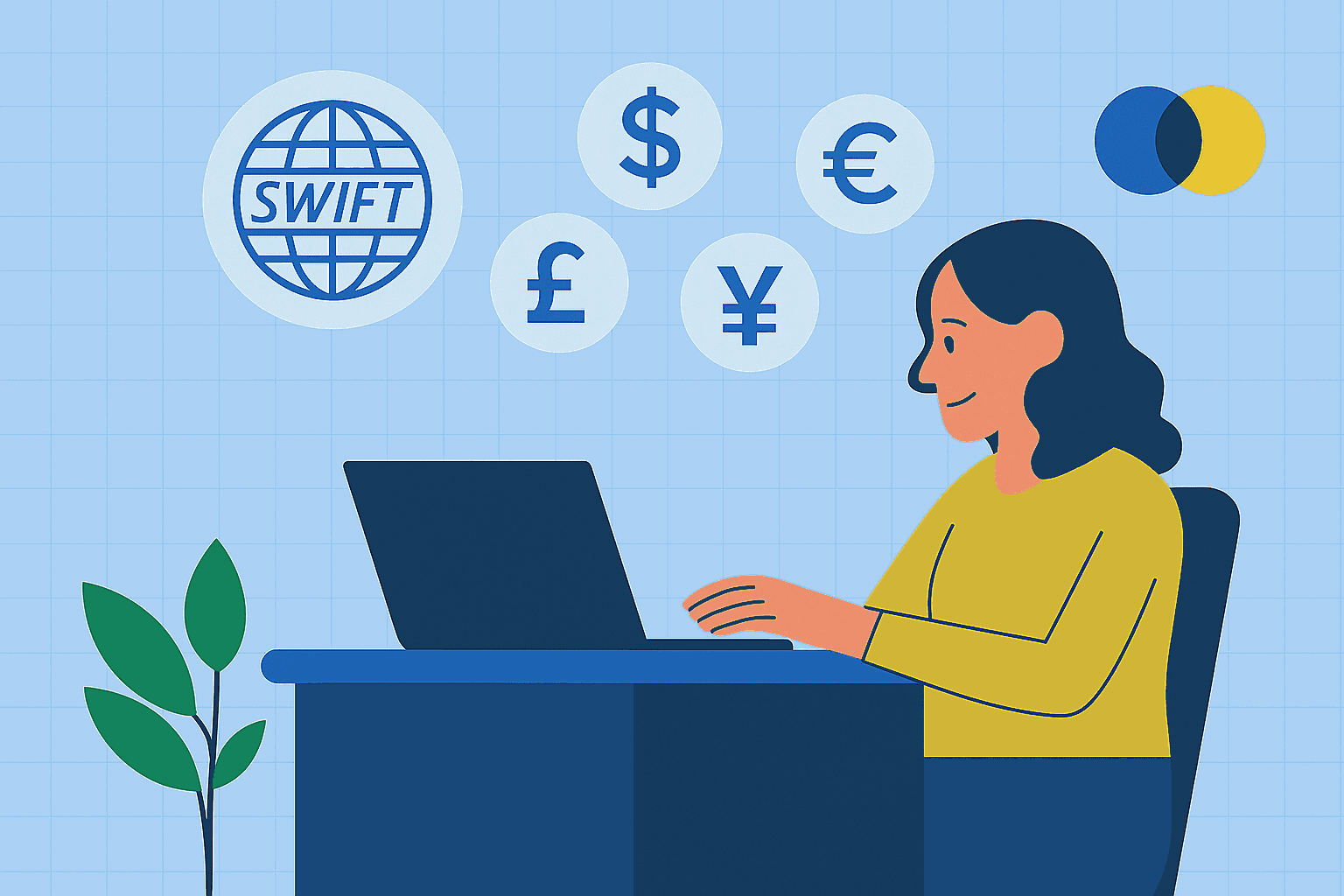
- Real-time payment networks are expanding internationally, with more countries linking their domestic instant-payment rails to enable faster cross-border transfers. This cuts the traditional 3 to 5 business day SWIFT timeline in corridors where these links already exist.
- For Indian exporters, money typically still passes through correspondent banking layers before reaching an Indian account. This adds 2 to 3 days on the receiving end, even when a foreign client initiates an instant transfer.
- A freelancer whose UK client pays through a real-time rail may still wait 2 to 3 days for the INR credit. Domestic receiving infrastructure has simply not caught up with global sending speeds yet.
- RBI has been actively pushing for faster FEMA-compliant inward remittance settlement, and UPI's international expansion is part of that push. As of 2026, UPI is live in around nine countries, including Singapore, the UAE, and France. It remains primarily a person-to-person and retail travel channel, but not a mainstream route for Indian exporters billing foreign B2B clients.
The real question for any Indian freelancer or exporter is not how fast a client's bank sends money, but how fast their own receiving setup actually credits it.
Related: Traditional SWIFT transfers carry costs and delays that a purpose-built alternative can avoid. In such cases, you might want to check the best SWIFT payment alternatives.
What Role Is AI Playing in Global Payments Security?
AI is playing an increasingly important role in global payments security by helping payment providers detect suspicious transactions, assess risk in real time, and automate compliance checks.
For Indian freelancers and exporters, these systems can help identify potential wire fraud in international payments earlier and reduce unnecessary delays, although legitimate payments can still be flagged for additional review.
- AI-powered fraud detection systems now screen international transactions at the point of initiation, flagging unusual patterns, geographies, and amounts before a payment ever enters the correspondent banking chain.
- For Indian exporters and freelancers, this brings a practical upside. Legitimate inward remittances are less likely to be held or returned over manual compliance reviews, which is a common cause of payment delays under older systems.
- The downside is that AI screening can still trigger holds on transactions matching certain risk profiles, such as a first-time large transfer or payments from particular geographies. Real-time tracking from a payment provider becomes genuinely useful here.
- AI is also applied to currency conversion rate optimisation and settlement routing, helping platforms pick the cheapest or fastest path for a given transfer. This benefit reaches the exporter only if the receiving platform passes those savings through rather than absorbing them as margin.
- AI-assisted KYC onboarding is also cutting setup time for new payment accounts, which is a real improvement for Indian freelancers who previously faced long verification queues with global platforms.
How Do These Global Payment Trends Compare in Practice?
These global payment trends have different practical implications for Indian exporters receiving cross-border payments. The key difference is that a payment method that is faster or more convenient globally may still need to meet India's banking and compliance requirements.
| Trend | What It Means Globally | Practical Impact for Indian Exporters Receiving Payments |
|---|---|---|
| Real-Time Payments | Instant cross-border transfers in connected corridors | Can speed up the sending of funds, but the time taken for the payment to reach an Indian account can still depend on the receiving bank and settlement route. |
| Digital Wallets (PayPal, Stripe, Wise) | Client pays through a digital payment platform | Convenient for clients, but the documentation available for the receipt can differ from a direct bank transfer. Exporters should confirm what proof of inward remittance the payment route provides. |
| Embedded Finance | Payments are built into non-financial platforms such as marketplaces and SaaS tools | Makes payment collection easier, but exporters should check whether the platform and payment route support the required Indian inward-remittance and documentation processes. |
| AI Fraud Detection | Automated systems screen transactions for unusual or potentially fraudulent activity | Can reduce unnecessary manual checks, although large or unusual payments from new clients may still undergo additional review. |
The compliance dimension, including FIRA or other inward-remittance documentation, FEMA requirements, and the regulatory status of the payment provider, receives less attention in global discussions of these trends. However, for Indian exporters, these factors can be just as important as speed or convenience when choosing a payment channel.
✅ PRO TIP
If a foreign client plans to pay through a digital wallet or payment platform, check in advance what transaction documentation the route provides and whether it meets your accounting, GST and other compliance requirements. A direct bank transfer may be preferable when specific inward-remittance documentation is required.
For Indian exporters, faster global payment networks are useful only when the receiving side is just as hassle-free. Skydo helps simplify that part by letting you receive international payments through multi-currency accounts in USD, EUR, GBP, SGD, AUD and CAD. You get flat-fee transfers, and FIRA is generated for free, instantly, with every payment, giving you the documentation you need to keep your international receipts in order.
What Do Global Payment Trends Mean for Indian Freelancers Specifically?
For Indian freelancers, global payment trends mean faster and more digital ways to receive overseas payments. However, they also change how fees, settlement times, and payment documentation are handled. The technology may be global, but the experience still depends on the payment route used to bring the money into India.
- Traditional international transfers can involve transfer fees, intermediary-bank charges and foreign-exchange markups, so the amount that reaches an Indian freelancer may be lower than the amount originally sent by the client. The actual cost varies by bank, provider, currency and payment route.
- UPI's international expansion is making cross-border payments more accessible in several markets, but its current international use does not make it a universal solution for Indian freelancers receiving B2B payments from overseas clients.
- The payment route also matters from a regulatory perspective. Cross-border receipts involving Indian residents generally need to move through an authorised person or authorised bank under the applicable FEMA framework. Here, freelancers should check how a payment provider handles the inward remittance.
- Documentation is another consideration. Before choosing a wallet, marketplace or payment platform, check what proof of the inward payment it provides and whether that documentation works for your accounting, GST and other compliance requirements. The appropriate documentation can vary depending on the transaction and payment route.
When considering how to receive international payments in India, begin by signing up with an ideal payment provider. However, before you finalise, ask:
- How is the international payment routed into India, and through which authorised entity?
- What payment or inward-remittance document will I receive for each transaction?
- How long does it normally take for the funds to reach my Indian bank account?
- What will I pay in total, including transfer fees, exchange-rate margins and any intermediary charges?
- How are export-related records such as eBRC or EDPMS handled, if they apply to my transactions?
Do global payment trends affect how I receive money as a freelancer in India?
Yes. Trends like real-time payments, digital wallets, and embedded finance directly affect fees, settlement speed, and whether a transaction generates a FIRA, required for GST exemption on export income. The impact runs deeper than speed alone. Each trend carries a compliance dimension under FEMA and RBI regulations that barely features in the global conversation, yet matters enormously for Indian freelancers.
Will real-time global payments mean money arrives faster in my Indian bank account?
Can I still get a FIRA if my foreign client pays via PayPal or a digital wallet?
Is UPI internationalization actually useful for receiving foreign client payments yet?
What should I check before accepting cross-border payments through an embedded finance platform?
What is a FIRA and why does it matter for Indian freelancers receiving international payments?
Why do Indian freelancers still lose 5–8% on international transfers if global payment infrastructure is improving?
What is eBRC and do I need it as a service exporter?
How do I know if my current payment setup is keeping up with global payment trends?