OPGSP: Meaning, Transaction Limits & PA-CB Update (2026)

TL;DR - Summary
- What is OPGSP? - OPGSP was an RBI framework that let Indian exporters and freelancers receive international payments through an intermediary, without dealing with foreign banks directly.
- Is OPGSP still valid? - No. In 2024, the RBI replaced OPGSP with the Payment Aggregator - Cross Border (PA-CB) framework.
- What changed under PA-CB? - PA-CB introduced direct RBI authorisation, higher transaction limits, tighter compliance, and greater oversight of cross-border payments.
- What should businesses use now? - Businesses should use an RBI-authorised PA-CB provider offering compliant collections, transparent pricing, and automatic payment documentation.
What Is an OPGSP (Online Payment Gateway Service Provider)?
An OPGSP, or Online Payment Gateway Service Provider, was a framework that let Indian exporters, freelancers, service providers, and e-commerce sellers collect international payments without needing a direct relationship with a foreign bank.
RBI first rolled the framework out in 2010, then updated it through a circular dated 24 September 2015. The whole idea was to make export collection simpler for businesses dealing with relatively small overseas payments, the kind that didn't justify setting up full banking relationships abroad.
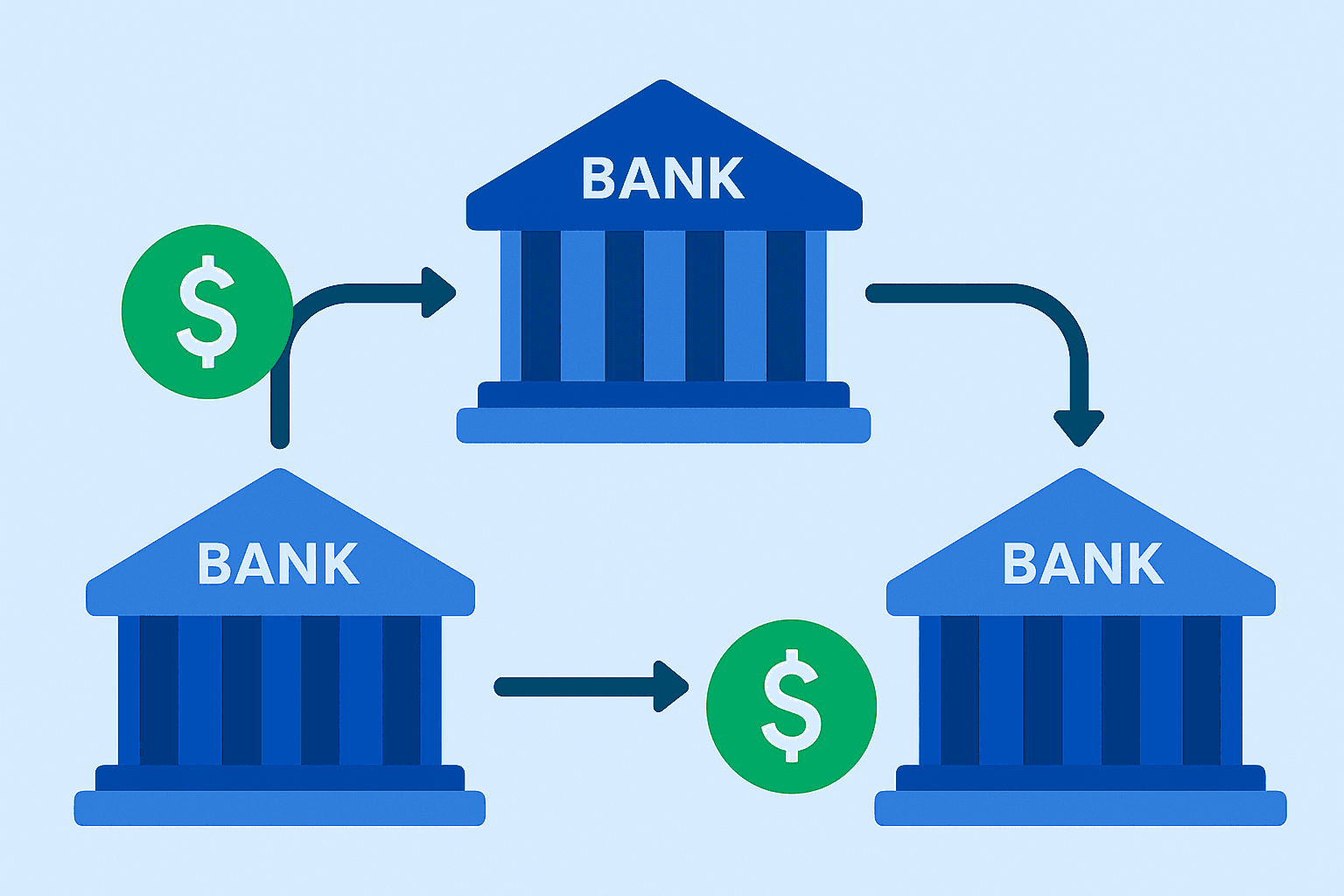
Rather than receiving money straight from a foreign bank, exporters got paid through an intermediary instead. The OPGSP would collect the funds overseas, route everything through a designated collection account, and then hand the money over to the exporter's Indian bank account once the necessary compliance checks were done.
Unlike your everyday domestic payment gateway, OPGSPs were built specifically to handle cross-border export payments, nothing else.
One thing worth noting: an OPGSP was never directly authorised by the RBI. It was, rather, operated under an Authorised Dealer Category-I (AD-I) bank which assumed the regulatory compliance and settlement obligations. Common examples of platforms that operated as OPGSPs include PayPal, Stripe, Payoneer etc.
💡 QUICK INSIGHT
OPGSP isn't the active regulatory term anymore. The RBI swapped it out for PA-CB in 2024, but the money still moves through the same kind of compliant infrastructure underneath.
How Did the OPGSP Model Work?
How the OPGSP model moved a payment
Buyer pays through the OPGSP
Not into the exporter's bank
OPGSP collects the funds
In its overseas collection account
USD 3,000The gateway
AD-I bank
USD → INRRuns the RBI compliance check, then converts the currency
Exporter is credited
Straight to their Indian bank account
Lands in INRThe exporter never touches foreign banking. Everything abroad stays on the left. The AD-I bank is the only crossing point, and the exporter only ever deals with the India side.
The OPGSP model ran on three parties working together: the exporter, the OPGSP itself, and an AD Category-I bank, all coordinating to move international payments from point A to point B.
Here's roughly how a payment moved under the OPGSP export collection framework:
The exporter raised an invoice for a buyer overseas. The buyer then paid that invoice through the OPGSP. From there, the OPGSP collected the funds in its overseas collection account. Then the AD-I bank took over, checked the RBI compliance, and converted the foreign currency to INR. Finally, the payment was credited to the Indian bank account of the exporter.
This made life much easier for freelancers, consultants, software exporters, agencies and MSMEs, who no longer had to deal with foreign banking relations or figure out SWIFT transfers on their own.
That said, exporters still carried some compliance responsibilities on their end. They had to register their AD Code and make sure the payment was reported correctly against their authorised dealer.
Example of how an OPGSP worked
Say a freelancer in Pune sends an invoice to a US client for USD 3,000.
Under the OPGSP model, the client pays through the payment platform. The funds get collected overseas first, then move to the AD-I bank for compliance checks, get converted into Indian Rupees, and finally land in the freelancer's bank account.
At no point does the freelancer deal with foreign banking systems directly.
Today, under an RBI-authorised PA-CB provider like Skydo, the payment flow looks similar, except that the payment platform itself is now directly regulated by RBI, and it throws in automatic FIRA documentation along with faster digital settlements.
The OPGSP guidelines RBI put in place did make international collections a lot more accessible, but the framework wasn't without its problems:
Transaction limits were low. Use cases were limited. RBI supervision was indirect, filtered through the banks rather than applied straight to the platforms. And the customer experience varied a fair bit depending on which provider you went with.
These gaps are basically what pushed RBI towards introducing PA-CB.

What Were the OPGSP Transaction Limits Under RBI Guidelines?
Under OPGSP RBI guidelines, exporters could receive up to USD 10,000 per export transaction, while import payments topped out at USD 2,000 per transaction.
These caps were set up specifically to support low-value cross-border trade, which is precisely why the framework worked so well for freelancers, consultants, software companies, and smaller exporters.
Take this example: a freelancer billing USD 8,000 could easily receive that payment through the OPGSP route. But an invoice for USD 15,000? That blew past the OPGSP limit, meaning the exporter had to find another RBI-approved channel instead.
Even for transactions that stayed within the limit, exporters still had paperwork to deal with, things like getting the purpose codes right, keeping export documentation in order, reporting to the AD bank, and staying on top of FEMA compliance.
The export limit worked fine for smaller operations, but it started feeling restrictive once exporters began landing bigger international contracts. And the import limit of USD 2,000 was even tighter, which really cut down how useful the framework was for anyone handling imports.
💡 QUICK INSIGHT
The USD 10,000 export cap suited freelancers and small exporters just fine, but for growing service businesses billing larger invoices, it became a hard wall they kept running into.
Why Did RBI Replace OPGSP With PA-CB in 2024?
RBI swapped OPGSP out for the Payment Aggregator - Cross Border (PA-CB) framework mainly to bring cross-border payment providers under direct regulation, tighten up compliance, and open the door to higher-value international transactions.
Under the old OPGSP setup, payment platforms operated through AD-I banks, and it was really the banks carrying most of the regulatory weight, not the platforms themselves.But as international digital payments picked up pace, the RBI wanted the payment platforms to be directly accountable too, not just the banks backing them.
Hence, the RBI released the PA-CB framework through a circular dated 31 October 2023, providing a deadline of 30 April 2024 for eligible payment providers to get their authorisation from the RBI.
This new framework brought several changes worth knowing about.
Direct RBI Authorisation
Unlike the OPGSP setup, PA-CB providers now need to get RBI approval directly, rather than relying solely on their partner banks to handle that side of things.
Higher Transaction Limits
PA-CB now allows transactions of up to ₹25 lakh per unit of goods or services, which makes it a much better fit for larger exporters.
Separate Licence Categories
PA-CB splits things into three licence categories: Export Only (PA-CB-E), Import Only (PA-CB-I), and Export & Import (PA-CB-E&I). This keeps providers operating strictly within whatever scope they're authorised for.
Better compliance
The framework also enhanced the minimum net worth requirements, KYC procedures, due diligence for transactions above Rs 2.5 lakh, and direct reporting to the RBI.
The upshot for exporters is stronger regulatory oversight, without losing the convenience of a digital payment experience.
⚠️ COMMON MISCONCEPTION
PA-CB isn't just OPGSP with a new name slapped on it. It requires the payment platform itself to hold direct RBI authorisation, something OPGSPs never had to deal with.
OPGSP vs PA-CB: Key Differences
The key differences are in regulatory framework, transaction limits, compliance requirements, and the degree of RBI oversight. OPGSP ran through an Authorised Dealer (AD-I) bank, while PA-CB providers answered directly to the RBI.
| Feature | OPGSP (Legacy) | PA-CB (Current) |
|---|---|---|
| Regulatory basis | Operated through an AD-I bank; no direct RBI authorisation | Direct RBI authorisation required |
| Introduced | RBI framework (2010), updated in 2015 | RBI PA-CB framework (31 October 2023) |
| Licence categories | Single framework | Export Only (PA-CB-E), Import Only (PA-CB-I), Export & Import (PA-CB-E&I) |
| Export transaction limit | USD 10,000 per transaction | ₹25 lakh per unit of goods or services |
| Import transaction limit | USD 2,000 per transaction | Covered under PA-CB-I framework |
| Oversight | Indirect supervision through AD-I banks | Direct RBI supervision |
| Net worth requirement | ₹10 crore | ₹15 crore at application, increasing to ₹25 crore by March 2026 |
This shift from OPGSP to PA-CB isn't just a regulatory formality. This shifts the responsibility from the partner bank to the payment platform, thus ensuring more transparency and better protection for exporters.
What Does the OPGSP-to-PA-CB Shift Mean for Indian Freelancers and Exporters?
In practical terms, the shift from OPGSP to PA-CB means Indian exporters and freelancers now need to work with an RBI-authorised PA-CB provider to collect international payments, since OPGSP simply isn't an option anymore.
For exporters, the day-to-day payment experience hasn't really changed much, but what's happening behind the scenes has.
Here's what actually matters for you:
- Pick an RBI-authorised provider. Since OPGSP no longer exists as a live framework, it's on you to check that whoever you're using for payments actually holds valid PA-CB authorisation.
- Limits have gone up. The old USD 10,000 OPGSP ceiling has been replaced with a ₹25 lakh per-unit limit, which makes life easier for businesses dealing with bigger invoices.
- You still have to comply. Exporters have to take care of GST, FEMA and income tax norms. It’s not your legal obligations that have changed. It’s the regulatory status of the payment provider.
- FIRA still counts. You will still need this document for compliance, GST refund claims and for general record-keeping.
- Expect to be scrutinised more. The PA-CB can also ask for further verification on any transaction above ₹2.5 lakh.
💡 QUICK INSIGHT
As an exporter, your actual payment flow looks pretty much the same under PA-CB, but the platform handling your money is now answerable directly to the RBI, not just to the bank standing behind it.
How Does Skydo Help You Collect Cross-Border Payments?
Skydo helps Indian exporters and freelancers collect international payments through an RBI-authorised PA-CB platform, with pricing that's actually transparent, faster settlements, and compliance documentation handled automatically.
If you were previously using an OPGSP platform, Skydo gives you that same convenience, just backed by the newer RBI framework.
Here's what you get with Skydo:
- An RBI-authorised PA-CB platform for compliant cross-border collections.
- Free virtual receiving accounts in USD, EUR, GBP, SGD, AUD, and CAD.
- Onboarding that takes just 5 minutes, entirely digital.
- Pricing that's easy to follow: USD 19 flat for payments up to USD 2,000, USD 29 flat for USD 2,000 to 10,000, and 0.3% for anything above USD 10,000.
- A free FIRA for every international payment you receive.
For freelancers, service exporters, manufacturers of goods, or those selling on Amazon, Skydo makes international collections easy and hassle-free and as per RBI expectations.
What is the full form of OPGSP?
OPGSP stands for Online Payment Gateway Service Provider. It was an RBI framework wherein Indian exporters could take international payments through an intermediary and not have to deal with foreign banks directly.
What is the maximum transaction limit under OPGSP?
Is OPGSP still valid, or has RBI replaced it with PA-CB?
What is the difference between OPGSP and ASPSP?
What is PA-CB and how does it replace OPGSP?
Which platforms are authorised as PA-CBs in India today?
Did exporters need to do anything when OPGSP transitioned to PA-CB?
How does FIRC or FIRA work under the PA-CB framework?