Top 10 B2B Payment Gateways for Indian Businesses

TL;DR - Summary
- What is a B2B payment gateway? - A B2B payment gateway is a digital platform that helps businesses process payments from or to other businesses. Depending on the provider, it may also support invoicing, approvals, reconciliation and finance-system integrations.
- How does a B2B payment gateway work? - A B2B payment typically moves through several stages, i.e., invoicing and internal approval, payment processing, fund transfer and reconciliation. The exact workflow varies by provider.
- What should Indian businesses look for in a B2B payment gateway? - Indian businesses receiving international payments should compare cross-border authorisation, supported currencies, settlement times, fees, FX (foreign exchange) costs, remittance documentation and customer support.
- Which B2B payment gateway is best for Indian businesses receiving foreign payments? - The right platform depends on the business's payment needs. Platforms designed for inbound cross-border collections can be particularly relevant for Indian businesses that need foreign-currency collection, INR settlement and India-specific remittance support.
What Is a B2B Payment Gateway?
A B2B payment gateway is a digital solution that helps businesses process payments from or to other businesses. It can support different payment methods and depending on the platform, may also connect payment processing with invoicing, approval workflows, and accounting or finance systems.
B2B payments are transactions between businesses for products, professional services, software, subscriptions, or ongoing commercial arrangements. Unlike a typical consumer purchase, these payments often involve a more structured process. A business may raise a purchase order, receive an invoice, obtain internal approval, and then make the payment according to agreed terms.
When these payments involve customers or suppliers in other countries, businesses need to understand how cross-border payments work and what is involved in moving money across borders.
B2B payment gateways can broadly be set up in two ways:
Option A
Hosted Gateway
Buyer is redirected to a payment page hosted by the provider.
Option B
Non-Hosted Gateway
Payment is integrated directly into your own website or platform.
- Hosted Gateways: Here, the buyer is redirected to a payment page hosted by the payment provider to complete the transaction. This can make implementation easier and reduce the business's responsibility for directly handling sensitive payment information.
- Non-Hosted Gateways: The payment experience is integrated into the business's own website or platform. This gives the business greater control over the checkout experience, but also means it has greater responsibility for handling payment data and meeting applicable security requirements.
How Does a B2B Payment Gateway Work?
How a B2B Payment Gateway Works
Hover any step for details
Agree on payment terms
Scope, pricing, taxes, and due date (15, 30, or 60 days) are set.
Supplier raises invoice
Invoice references the PO and lists amount, taxes, and terms.
Internal checks & approval
Procurement confirms delivery, finance validates against budget.
Buyer initiates payment
Bank transfer, corporate card, or payment link depending on gateway.
Gateway validates transaction
Payment provider checks credentials, available funds, and credit limits.
Funds transferred
Payment moves from the buyer's bank to the supplier's account.
Supplier reconciles
Finance matches payment to invoice and marks it settled.
A B2B payment gateway works by processing a payment request from the buyer, validating the transaction, and facilitating the transfer of funds to the supplier. It typically sits between the buyer, the supplier, and the relevant banks or financial institutions, helping process the payment after the buyer approves the invoice. Here is how the process generally works:
- Step 1: The businesses agree on payment terms. The buyer and supplier establish the scope of work, pricing, applicable taxes and when payment is due. Depending on the agreement, this could be within 15, 30 or 60 days.
- Step 2: The supplier raises an invoice. The invoice usually refers to the relevant purchase order or contract and includes details such as the amount due, taxes and payment terms.
- Step 3: The invoice goes through internal checks. The buyer's procurement or relevant business team confirms that the goods or services have been delivered as agreed, while the finance team checks the invoice and available budget before approving it.
- Step 4: Once approved, the buyer initiates the payment using an available method such as a bank transfer, corporate card or payment link, depending on what the gateway supports.
- Step 5: The payment provider or bank processes the transaction and validates details such as the payment credentials, available funds or credit limit.
- Step 6: Once the transaction is approved, the payment moves from the buyer's financial institution to the supplier's account.
- Step 7: The supplier's finance team matches the incoming payment with the outstanding invoice and records the transaction as settled.
This structured approach can be particularly useful when a business is handling a high volume of payments. Modern B2B payment platforms usually automate parts of the process, reducing manual data entry and making it easier to track invoices, payments and outstanding amounts. They can also give finance teams a centralised view of payment activity across departments, speed up invoice validation and approval, and simplify reconciliation through features such as payment references and virtual accounts. Detailed transaction histories and activity logs can further support reporting and audits.
For businesses moving from traditional methods to digital payment processes, understanding the shift from cheques to digital B2B payments can help put these changes into perspective.
Domestic B2B Gateway vs International B2B Payment Platform
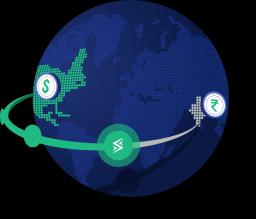
A domestic B2B gateway may be suitable for collecting or making payments within India, while a cross-border payment platform is designed specifically to help businesses receive international payments in India.
| Feature | Domestic B2B Gateway (e.g. Razorpay, Cashfree) | International B2B Payment Platform (e.g. Skydo) |
|---|---|---|
| Primary use case | Payments between businesses within India | Receiving business payments from overseas customers |
| Settlement currency | Typically INR | USD, EUR, GBP, SGD, AUD, CAD to INR |
| Fee structure | Varies by provider and payment method, often percentage-based | Flat fee per transaction with zero hidden charges and zero monthly subscription charges |
| FIRA Support | Does not apply for domestic cases | Instant free FIRA generation on every transaction |
| Cross-border compliance | Not built for it | Designed specifically for cross-border transactions and applicable RBI requirements |
⚠️ WATCH OUT
Do not assume that a domestic payment gateway is automatically the right choice for receiving international export payments. The costs, supported payment methods, foreign-exchange conversion, settlement process and remittance documentation can differ significantly and Indian exporters could lose 3% to 5% upfront.
What Should Indian Businesses Look for in a B2B Payment Gateway?
Indian businesses should choose a B2B payment gateway that meets applicable regulatory requirements, has hassle-free settlement, transparent pricing, and offers multi-currency support. Here are some factors to consider:
- Regulatory Compliance: If you receive payments from overseas customers, check whether the provider is authorised to offer the relevant cross-border payment service and follows applicable RBI and FEMA requirements. This helps ensure that international receipts are processed through the appropriate channels.
- Supported Currencies and Payment Methods: Make sure the platform supports the currencies and payment methods your customers use. International clients may prefer options such as bank transfers or local payment methods in their country, so a solution limited to domestic rails such as UPI or NEFT may not meet your requirements. If you're a freelancer receiving overseas payments, comparing the top international payment gateways for freelancers in India can help you assess the options available for your needs.
- Transparent Pricing: Look beyond the advertised transaction fee. Check the applicable processing charges, foreign-exchange conversion costs and any other fees involved in receiving and settling payments.
- Settlement Timelines and Documentation: Understand how long it takes for funds to reach your Indian bank account and what remittance documentation the provider supplies. Depending on the transaction and provider, documents such as FIRA may be relevant for recording and accounting for foreign receipts.
- Accounting and ERP Integration: If your business handles a large number of transactions, integration with your accounting software or ERP system can reduce manual data entry and make reconciliation easier.
- Customer Support: Payment or compliance issues can delay access to funds. Hence, check how the provider handles support requests and whether assistance is available when you need it.
- Scalability: Choose a platform that can handle increasing transaction volumes without making your finance team change its payment process every time the business grows.
- Reporting and Analytics: Detailed transaction histories, downloadable reports and payment status information can help finance teams monitor receipts, reconcile transactions and maintain better records for audits. Make sure you consider comparing the top cross-border payment companies in India before making a choice.
When we were picking a provider, three things mattered most. Was the pricing predictable, so we knew what would actually land in our account? Was the money reaching fast? And was the compliance, the FIRA, handled without us chasing it every time? Once we asked those three questions, Skydo was the easy pick.

Top 10 Best B2B Payment Gateways
The best B2B payment gateway depends on what you need it to do. While some platforms focus on online checkout, billing and subscriptions, others are designed around receiving cross-border business payments. For Indian exporters, the choice also involves factors such as supported currencies, foreign-exchange costs, settlement, and access to remittance documentation. Here are 10 platforms worth considering:
1. Skydo
Skydo is a cross-border payment platform designed for Indian exporters and businesses receiving international payments. It received final RBI authorisation as a Payment Aggregator-Cross Border (PA-CB) entity in January 2026 and supports international collections through global receiving accounts.
Its current pricing is $19 for transactions up to $2,000, $29 for transactions between $2,001 and $10,000, and 0.3% for transactions above $10,000, plus applicable GST. It also provides FIRA documentation and real-time payment tracking. It is particularly suited to exporters, service businesses and other Indian businesses that regularly receive payments from overseas clients.
2. Stripe
Stripe is a global payments platform offering online payments, billing, invoicing and other financial tools. Indian businesses that are eligible for Stripe accounts can accept international payments in more than 135 currencies, subject to Stripe's requirements for Indian businesses.
Current Indian pricing lists 3% for cards issued outside India, with an additional 2% currency-conversion fee where applicable. It can suit businesses selling products or services online to international customers, particularly those that need a developer-friendly checkout and billing stack. If you are weighing it against PayPal, this Stripe vs PayPal comparison covers the key differences for international payments.
3. Paddle
Paddle is a Merchant of Record platform built primarily for SaaS, software, apps and other digital products. It combines payments, billing, subscriptions, tax handling and compliance in one platform. Its standard pay-as-you-go pricing is 5% + $0.50 per checkout transaction. It is a strong option for Indian software and digital-product businesses selling globally. However, it is not a general-purpose solution for every type of export transaction.
4. PayPal
PayPal is a widely used international payments platform that allows businesses to receive payments from customers in other countries. For Indian users, PayPal currently supports international payments, while its currency-conversion pricing includes a fee added above the base exchange rate. It can be useful when overseas clients already prefer PayPal, although businesses should compare its conversion costs and settlement requirements with other cross-border options.
5. Razorpay
Razorpay is a major Indian payments platform offering payment gateways, payment links and other business payment products. Its international payments offering allows eligible businesses to accept payments from customers using foreign-issued cards, and Razorpay also provides FIRA for international payments.
It can work well for Indian businesses that need a broader payment option combining domestic payments with international card acceptance. If you need a solution focused more specifically on receiving international payments, you can also compare Razorpay alternatives for international payments in India.
6. Payoneer
Payoneer helps businesses and professionals receive payments from international clients, marketplaces and other platforms through receiving accounts and other payment options. For Indian customers, Payoneer offers receiving accounts in multiple currencies and provides digital FIRA/FIRS/NOCs through its platform. It is well suited to businesses and freelancers receiving recurring payments from overseas customers or marketplaces, although its withdrawal and currency-conversion fees should be checked for the specific transaction.
7. CCAvenue
CCAvenue is an established Indian payment gateway that supports domestic and international payment acceptance. It offers more than 200 payment modes and allows merchants to accept international payments in customers' local currencies, with settlement in INR. It can suit established online businesses that want broad payment-method coverage and international checkout capabilities, although pricing varies by plan and business requirements.
8. EBANX
EBANX provides payment infrastructure for businesses expanding into emerging markets. Its India offering supports methods such as cards and UPI. It is more relevant to international businesses looking to collect payments from customers in emerging markets than to an Indian exporter looking for a dedicated way to receive overseas invoice payments.
9. Cashfree Payments
Cashfree Payments provides domestic payment services as well as international payment products. Its international offering supports payments from customers around the world in more than 140 currencies, and Cashfree has received RBI authorisation as a Payment Aggregator-Cross Border. It also offers global collections with local accounts in currencies including USD, EUR, CAD and GBP. This makes it a versatile option for Indian businesses that need both domestic payment infrastructure and cross-border collection capabilities.
10. Instamojo
Instamojo provides payment links, online-store tools and payment collection services aimed largely at small businesses and online sellers. Its current payment options include UPI, domestic cards, net banking and international cards subject to approval, but it does not support multi-currency payments. It can be an easy option for small Indian businesses collecting online payments. However, businesses with substantial international payment requirements may need a platform with broader cross-border capabilities.
How can Skydo Help to Receive B2B Payments in India
Indian businesses receiving payments from overseas customers often have to deal with foreign-exchange costs, remittance documentation and settlement timelines, which eventually affects the actual experience of receiving an international payment.
Skydo is an RBI-authorised Payment Aggregator-Cross Border (PA-CB) platform designed to help Indian businesses deal with these challenges. Skydo supports cross-border payment collection for eligible Indian exporters and freelancers while helping them manage the related settlement and documentation process.
How an Indian business can receive a B2B payment through Skydo
- Create an invoice: The business sends an invoice to its overseas client and includes the relevant Skydo virtual account details.
- The client makes the payment: The client transfers the agreed amount to the virtual account in the supported currency.
- Skydo processes the payment: The payment is processed through the applicable cross-border payment flow.
- Funds are settled: The corresponding INR amount is transferred to the business's Indian bank account, subject to the applicable processing and settlement requirements.
- Documentation is provided: The business can access instant free FIRA automatically for its records.
Skydo also provides tools to help with eBRC and EDPMS-related processes, including features designed to make it easier to manage export-remittance records and closure requirements. Once onboarding is complete, businesses can receive payments digitally without needing to visit a bank branch. India-based customer support is also available through channels such as WhatsApp, text support, and calls.
Is Stripe a B2B or B2C payment gateway, and can Indian businesses use it to receive foreign payments?
Stripe supports both B2B and B2C payments. Eligible Indian businesses can accept international payments in 135+ currencies, although new Stripe accounts in India are currently invite-only and require a valid IEC for international payments. Stripe sends payment advice for international transactions, which can be submitted to the bank to obtain remittance documentation.
Which B2B payment platforms are best for Indian exporters and service agencies?
How does a cross-border B2B payment work under FEMA for an Indian business?
What is FIRA and why does your B2B payment gateway need to issue it automatically?
Can Indian businesses use PayPal as a B2B payment gateway for export remittances?
What is the difference between a domestic B2B gateway and an international B2B payment platform for Indian businesses?
What are the most common B2B payment methods for international transactions?
How do B2B payments differ from B2C payments?
What fees should Indian businesses expect when receiving international B2B payments?