Blockchain in Cross-Border Payments: Benefits & Limits

TL;DR - Summary
- What is blockchain in cross-border payments? - It uses a shared digital ledger to record and, in some systems, settle payments across borders. The network and its participants determine how the transfer works.
- How does blockchain in cross-border payments work? - One example is a digital token sent between wallets and recorded on a blockchain. Network settlement and conversion to money in a bank account are separate steps.
- What are the benefits of using blockchain in cross-border payments? - Depending on the network and provider, it may offer faster transfers, lower costs, transaction tracking, fewer intermediaries and round-the-clock processing.
- What are the real limits of blockchain in cross-border payments for Indian exporters? - Costs, conversion, asset and provider risks, and export documentation still matter. For an eligible export payment, a bank or regulated payment service is an alternative to receiving crypto.
What Is Blockchain in Cross-Border Payments?
Blockchain in cross-border payments uses a shared digital ledger to record and, in some systems, settle a transfer between parties in different countries. Some networks let participants transfer digital assets directly; others use permissioned systems with financial institutions.
For Indian exporters and freelancers, a foreign client might propose a token transfer or use a provider that handles the blockchain leg. The payment method and documents needed for export compliance are separate questions.
Take a Bengaluru software agency invoicing a US client for $5,000. A token transfer could reach a wallet quickly, but the time and cost to convert it into rupees depend on the network, provider and checks. A bank transfer can also vary by route.
How Does Blockchain Enable Cross-Border Payments?
Blockchain enables cross-border payments using a distributed ledger and a network's validation rules. Wallets, smart contracts, stablecoins and other digital assets may also be involved, depending on the system.
- Distributed ledger technology: A blockchain is a shared ledger maintained across participating computers, or nodes. A public network and a permissioned network can have different operators, access rules and governance.
- Digital wallets and blockchain addresses: A wallet holds or manages the keys used to authorize transactions. A blockchain address tells the sender where to send the asset; both parties need a compatible network and asset.
- Smart contracts: Smart contracts are code on a blockchain that can execute an instruction when its programmed conditions are met. They can support automated releases, but external information and human checks may still be needed.
- Stablecoins and digital assets: Some payment systems use stablecoins, tokens designed to track an asset such as the US dollar. Their market value can differ from the target price. Other crypto assets, such as Bitcoin and Ether, can be more volatile.
- Transaction validation and settlement: Transactions are checked under the network's rules and added to the ledger. Confirmation and finality depend on the network; an on-chain record does not by itself prove that a bank account has been credited.
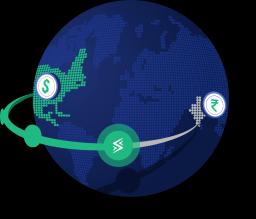
How Does a Blockchain-Based International Payment Work?
In one token-based international payment, the sender transfers a digital asset to a recipient’s wallet and the network records the transaction. The on-chain leg can take minutes or longer, but getting local currency into a bank account involves separate steps. SWIFT is a messaging network used by banks; payment times vary by route.
- The sender obtains the digital asset, signs a transfer from a compatible wallet and enters the recipient's address and amount.
- The transaction is broadcast to the network and validated under its rules.
- The validated transaction is included in the ledger. The confirmation needed and who can view it depend on the network.
- If a stablecoin is used, the sender may buy it with local currency before sending. The recipient may need to sell it through a suitable provider to receive local currency. The conversion adds time, cost and compliance checks.
- If the arrangement uses a smart contract, programmed conditions can trigger a transfer or release. This is not required for every blockchain payment.
✅ PRO TIP
Before accepting a token payment, check the asset, network, fees and available conversion route. Ask your bank and adviser how the receipt would meet export requirements.
Benefits of Using Blockchain for Cross-Border Payments
Depending on the network and provider, blockchain payments may offer faster transfers, lower transaction costs, better visibility, traceability, fewer intermediaries and continuous processing.
- Faster settlement: Some networks can confirm transfers quickly. The total time to receive usable funds also depends on conversion, banking hours and compliance checks. SWIFT payment times vary by route and bank.
- Lower transaction costs: A shorter payment chain may reduce some fees. Compare the total, including network, provider, conversion and compliance costs, with a bank transfer before deciding.
- Greater payment transparency: Participants may be able to track a transaction on a shared ledger. What they can see depends on network permissions and provider access; banks and payment providers can also offer tracking.
- Improved traceability: A transaction identifier can help locate a ledger record and support an audit trail. Records can be difficult to alter, but a hash alone does not establish the parties' identity or resolve a dispute.
- Fewer intermediaries: Some direct token transfers bypass correspondent banks on the blockchain leg, potentially reducing points of failure, delay, and cost. Providers may still be needed for conversion, custody and compliance.
- Continuous transaction processing: Some blockchain networks operate around the clock. Access to a provider and the final conversion or bank credit can still depend on checks and operating hours.
⚠️ WATCH OUT
Indian exporters should check with their authorized dealer bank and tax adviser whether their route and records meet Foreign Exchange Management Act (FEMA), Reserve Bank of India (RBI) and tax requirements. A wallet transfer alone does not establish export compliance.
Challenges of Blockchain in Cross-Border Payments
Blockchain payments can involve regulatory and documentation questions, asset and counterparty risks, network fees, identity checks, and the cost and time needed to convert into local currency.
- Regulatory uncertainty: Private cryptocurrencies are not legal tender in India. Exporters should check with their authorized dealer bank whether a proposed crypto or stablecoin route meets applicable receipt, reporting and documentation requirements.
- Currency volatility: Crypto assets such as Bitcoin or Ether can gain or lose value between sending and conversion. That risk is separate from any foreign-exchange movement.
- Stablecoin and counterparty risks: A stablecoin can lose its peg. Issuer reserves, custody, smart contract bugs and the exchange or provider can also affect the amount or access to funds.
- Network fees and scalability: Network fees can change with congestion, and network capacity can affect speed. Include these charges and the conversion cost when comparing payment methods.
- AML and KYC requirements: Anti-money laundering (AML) and know-your-customer (KYC) checks can still apply. A provider may delay or restrict a transaction while it checks identity, source of funds or compliance.
- Conversion into local currency: A recipient who holds a token may need to sell it through a provider and withdraw the proceeds to a bank. Check the fees, exchange rate, tax treatment and records required for the specific transaction. A token transfer does not automatically produce a bank-issued remittance document.
💡 QUICK INSIGHT
An on-chain transfer and the conversion to INR are separate steps. Compare the time, fees and documentation for the full journey.
Blockchain Payments vs Traditional Cross-Border Payments
Blockchain token transfers and bank payments differ in how they move funds and create records. Foreign Inward Remittance Certificate (FIRC) and Foreign Inward Remittance Advice (FIRA) availability depends on the route and bank. Skydo may also use SWIFT for some payments.
| Feature | Traditional SWIFT | Token transfer example | Regulated Platforms (e.g., Skydo) |
|---|---|---|---|
| Settlement speed | Varies by route and bank | Network time varies; conversion extra | 1–3 business days after screening, subject to terms |
| Cost | Fees and exchange rates vary | Network, provider and conversion costs | $19 / $29 / 0.3% + GST |
| FIRC / FIRA available | Bank advice or certificate may be available | Not automatic from the token transfer | Free FIRA after settlement; FIRC separate |
| FEMA compliance | Subject to applicable rules | Check with AD bank and adviser | Eligible transactions, subject to checks |
| Ease of setup | Bank process varies | Wallet and conversion method vary | Online application; approval required |
| 24/7 availability | Availability varies by bank | Some networks run 24/7 | Online access; settlement subject to checks |
| INR settlement | Via bank, subject to conversion | Conversion may be needed | To Indian bank after processing |
For Indian exporters, a token transfer alone may not provide the bank documents needed for a particular export transaction. Skydo supports eligible international collections through banking and payment partners.
Skydo's published standard pricing is $19 for payments up to $2,000, $29 for $2,001–$10,000, and 0.3% above $10,000, plus 18% GST on the fee. Amazon Global Selling has separate pricing, and SWIFT charges may apply before funds reach Skydo.
⚠️ COMMON MISCONCEPTION
Blockchain is not automatically cheaper. Compare network and provider fees, conversion spreads and documentation costs with the full cost of a bank payment.
How Are Businesses Using Blockchain for International Payments?
Businesses use blockchain-based systems for supplier payments, contractor payouts, remittances and treasury transfers. The participants and rules vary by service.
- Supplier and vendor payments: Some businesses use blockchain networks to pay overseas suppliers faster or track a transfer. A smart contract can encode agreed conditions, but it does not verify real-world delivery on its own.
- Freelancer and contractor payouts: Some platforms offer digital-asset payouts across borders. An Indian recipient should check the payment route, conversion, tax and export documentation with their bank and adviser first.
- International remittances: Some providers use blockchain in consumer remittance corridors. The speed and total cost depend on the corridor, conversion and provider.
- Treasury and liquidity management: Some companies and financial institutions are testing or using shared ledgers to move funds between entities. Benefits depend on the system and the hours and access of the connected banks.
✅ PRO TIP
Before accepting an export payment, confirm the supported currency, payment method and documentation with your bank or provider. If crypto is involved, ask the provider and a qualified adviser about the specific arrangement before proceeding.
What Is the Future of Blockchain in Cross-Border Payments?
The future of blockchain in cross-border payments may involve more links with regulated financial infrastructure. The speed, cost and access available to Indian exporters will depend on the service and applicable rules.
- Central bank digital currencies: Central bank digital currencies (CBDCs) are digital forms of central bank money. India's digital rupee is being piloted and represents legal tender. A CBDC need not use a blockchain, and a domestic pilot does not by itself make it a cross-border payment service.
- Interoperability with banking rails: Projects are exploring ways to connect blockchain systems with existing payment infrastructure. ISO 20022 is a messaging standard, not a blockchain or settlement network.
- Stablecoin regulation: Rules for stablecoins vary by country and continue to develop. A foreign regulatory framework does not by itself establish a compliant export-receipt route in India.
For now, compare the full payment route and ask your bank about documentation and export reporting before choosing a method.
How Skydo Helps Indian Businesses Receive International Payments
A crypto token transfer does not automatically provide the bank records an Indian exporter may need. Skydo helps eligible businesses receive international payments through banking and payment partners, with payment records and INR settlement.
Skydo is a cross-border payment platform that helps eligible Indian exporters, freelancers and service businesses receive international payments. Fees and routes depend on the payment.
- Free virtual accounts: Share local receiving details in USD, GBP, AED, CAD, EUR, AUD and SGD with your client. Available currencies and payment routes depend on the service; you do not need a crypto wallet to use these details.
- Transparent pricing: Standard fees are $19 up to $2,000, $29 for $2,001–$10,000 and 0.3% above $10,000, plus 18% GST on the fee. Amazon Global Selling has separate pricing. Check the quote and payment instructions for route-specific charges.
- Free FIRA: A Foreign Inward Remittance Advice (FIRA) is generated automatically for settled payments. It is an advice, not a formal FIRC; check which bank document is needed for your specific filing.
- eBRC assistance: Skydo helps eligible exporters link their Directorate General of Foreign Trade (DGFT) account and match inward remittance records to generate an electronic Bank Realisation Certificate (eBRC). Review the details before submission.
- EDPMS assistance: Skydo can help with the information and coordination needed for export reporting. Reporting and closure in the Export Data Processing and Monitoring System (EDPMS) are handled by the authorized dealer bank.
- Settlement times: Skydo's terms describe commercially reasonable efforts to credit eligible export payments within 1–3 business days after its screening, depending on the currency and corridor and subject to checks across the payment chain.
- Online setup: Apply digitally and provide the required business and identity documents. Account approval and activation depend on verification.
- No monthly fees: You pay when you transact rather than a monthly subscription.
- India-based support: Support is India-based and available via WhatsApp, call, and text.
Is it legal to receive crypto payments in India as an exporter?
Crypto is not legal tender in India. Whether a proposed export receipt satisfies foreign-exchange rules depends on the payment and its reporting. Before accepting it, ask your authorized dealer bank and a tax adviser how to meet the applicable requirements. Report income as required by tax law.
Do blockchain payments generate a FIRC or FIRA?
How long do blockchain cross-border payments take compared to SWIFT?
What are stablecoins and are they safer than crypto for receiving payments?
Can I use a blockchain payment platform instead of SWIFT for export payments?
What is the cost of a blockchain cross-border payment vs a bank wire?
What happens if my foreign client sends payment in crypto and I don't declare it?
What is the best way for an Indian freelancer or exporter to receive international payments today?