Forward Contract on Export Receivables: A Complete Guide

TL;DR - Summary
- What is a forward contract on export receivables? - A forward contract on export receivables is a private agreement between an Indian exporter and their bank to lock in an exchange rate today for a foreign currency payment that will arrive on a future date.
- Which Indian exporters can use a forward contract on export receivables, and under what Reserve Bank of India (RBI) rules? - Indian exporters with foreign currency exposure can book a forward contract on export receivables through Authorized Dealer (AD) Category I banks under the Foreign Exchange Management Act (FEMA), 1999, and they can book up to USD 1,00,000 on a self-declaration without submitting underlying documents.
- How do you book a forward contract on export receivables, and what does it cost? - Booking a forward contract on export receivables takes 5 steps with an AD Category I bank, and the cost is the bank spread plus a booking fee, plus a potential cancellation penalty.
- When is a forward contract on export receivables the right tool? - A forward contract on export receivables suits large or repeat receivables where currency risk is material, while a flat-fee platform like Skydo is the better fit for small to mid-size receivables, especially under USD 10,000.
What Is a Forward Contract on Export Receivables?
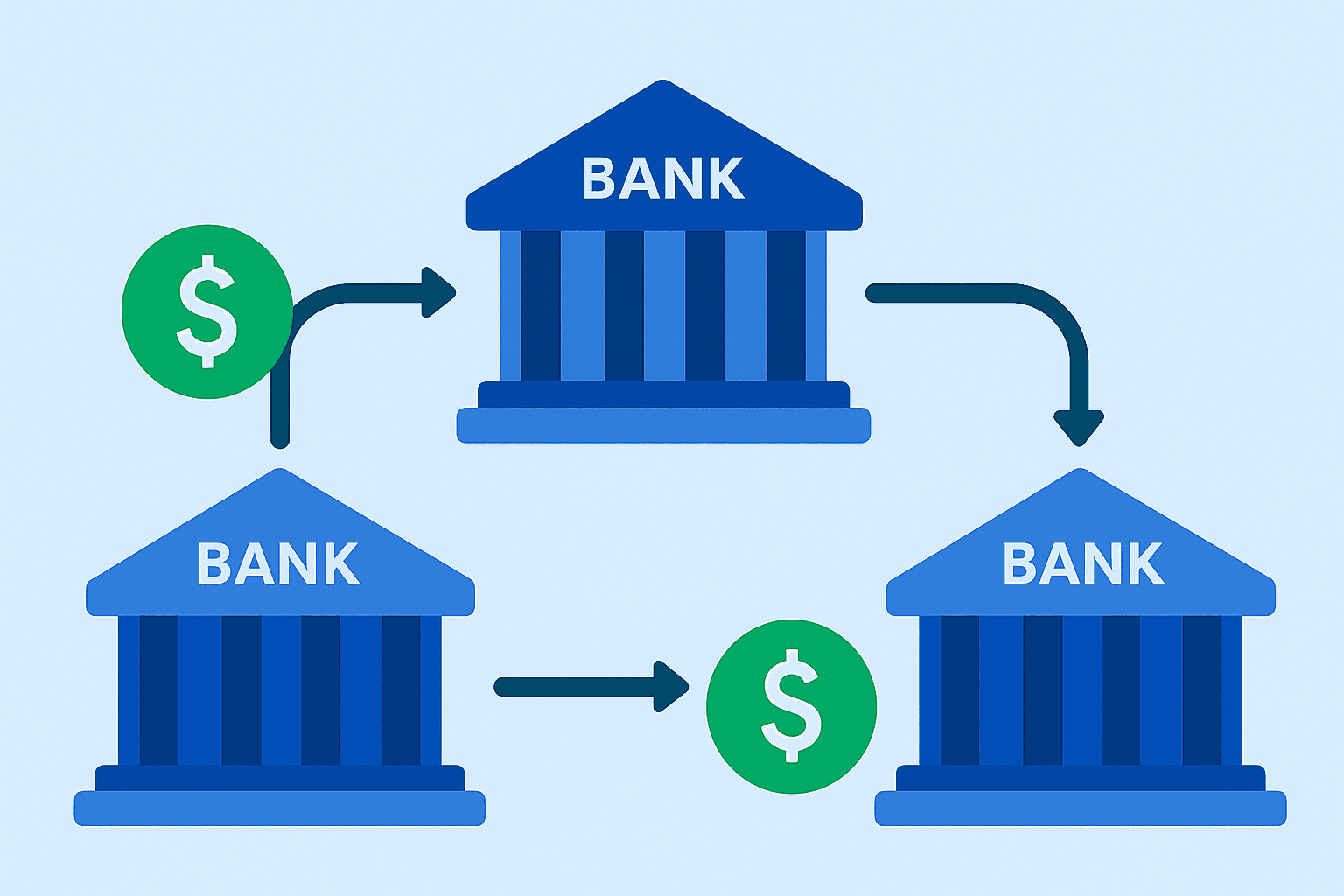
A forward contract on export receivables is a private agreement between an Indian exporter and their bank. Both parties lock in a specific exchange rate today for a foreign currency payment that will arrive on a future date, called the maturity date. You know exactly how many rupees you will receive, regardless of how the market moves.
The primary use case for Indian exporters is hedging against currency risk. If a rupee appreciation is expected between the invoice date and the payment date, you are protected because the rate is already fixed.
For example, an apparel exporter in Bengaluru ships goods worth USD 1,00,000 to a US buyer with payment due in 90 days. The spot rate today is ₹84/USD, and the exporter books a forward contract at ₹83.50/USD. If the rupee appreciates to ₹81 by settlement, the exporter still receives ₹83,50,000 instead of ₹81,00,000.
Which Indian Exporters Can Use Forward Contracts?
Indian exporters with foreign currency exposure can book forward contracts through Authorized Dealer (AD) Category I banks. That includes goods exporters, service exporters, and companies with foreign currency loans. AD Category I banks allow individuals, firms, and companies to book up to USD 1,00,000 without submitting underlying documents, and a simple self-declaration is sufficient.
- Legal framework: Forward contracts in India are governed by the Foreign Exchange Management Act (FEMA), 1999, under the Reserve Bank of India (RBI). The Foreign Exchange Dealers Association of India (FEDAI) sets the operational rules and standard guidelines that banks follow.
- Concession for smaller exporters: Smaller exporters and SMEs can book forward contracts up to USD 1,00,000 on a simple self-declaration, with no underlying documents.
- Documents above the threshold: For contracts above USD 1,00,000, you must submit underlying documents such as export invoices to prove the exposure.
- Cancellation and rebooking: For export transactions specifically, forward contracts can be cancelled and rebooked freely at the current market rate.
- Extension and rollover: When a contract is extended or rolled over, it is first cancelled at the prevailing rate and then rebooked. The difference between the original contract rate and the cancellation rate is either paid to or recovered from you.

What Are the Types of Forward Contracts Available to Exporters?
Indian exporters have 4 main types of forward contracts available: closed outright forward, flexible forward, long-dated forward, and non-deliverable forward (NDF). A closed outright forward exchanges currencies on a single fixed date. A flexible forward lets you settle before the due date, often in parts. A long-dated forward extends the settlement period beyond 1 year. An NDF exchanges only the rate difference in cash.
Closed Outright Forward
This is the simplest type. Both parties agree to exchange currencies at a single fixed future date by locking in an exchange rate today. It is also called a European or Standard Forward Contract. No partial settlements are allowed, and the full exchange happens on the maturity date only.
Flexible Forward
Parties can exchange funds before the settlement date, often in parts, as long as the entire contracted amount is settled by the due date. This is useful when you are uncertain about the exact payment date or expect to receive funds in installments from the overseas buyer.
Long-Dated Forward
A long-dated forward works the same way as a standard forward contract, except the settlement period extends beyond 1 year. Most forward contracts are short-term. Exporters with multi-month or multi-year supply agreements or project cycles use long-dated forwards.
Non-Deliverable Forward (NDF)
No physical exchange of currency takes place in an NDF. Only the difference between the contracted rate and the spot rate at maturity is exchanged in cash. It is used when physical delivery of the currency is restricted or not practical.
How Do You Book a Forward Contract on Export Receivables in India?
Booking a forward contract on export receivables in India takes 5 sequential steps with an AD Category I bank, using the export invoice as the underlying document. You choose a bank, submit your documents, get a forward rate quote, sign the contract note, and then track and settle on the maturity date. The steps below use a USD 5,000 invoice.
- Choose an AD Category I bank: Approach a bank authorized by RBI to deal in foreign exchange. This is typically your existing business bank.
- Submit export invoice and shipping documents: For exposures under USD 1,00,000, a self-declaration suffices. Your USD 5,000 invoice is well within this limit, so no underlying documents are mandatory beyond a self-declaration. You state the invoice amount and the expected payment date.
- Get a forward rate quote: The bank calculates the forward rate by taking the current spot rate (for example, ₹84/USD) and adding or subtracting forward points. Forward points are derived from the interest rate differential between the two currencies and the tenor of the contract. For a 90-day USD/INR contract, the bank might quote ₹83.80/USD as the forward rate.
- Sign the contract note: You and the bank agree on the total amount (USD 5,000), the forward rate (for example, ₹83.80), and the maturity date. A binding contract note is signed. No money moves at this stage.
- Track and settle: On the maturity date, you deliver the USD received from the overseas buyer to the bank and receive INR at the locked rate: ₹83.80 × 5,000 = ₹4,19,000, regardless of where the spot rate is that day.
The forward rate is calculated as Spot Rate + Forward Points. Forward points are 1/10,000 (0.0001) of the spot rate, adjusted for the interest rate differential between the two currencies and the time to maturity.
If you receive foreign payments under USD 10,000, ask whether the paperwork and bank coordination involved in booking a forward contract is proportionate to the exposure. Skydo offers a free virtual account (USD, EUR, GBP, SGD, AUD, CAD) and settles to INR within 1 working day at a flat fee, with a 15-minute setup.
Always confirm whether your bank offers a flexible forward alongside the standard one. It gives you room to settle early if your buyer pays ahead of schedule.

What Are the Pros and Cons of Forward Contracts for Exporters?
Forward contracts give exporters rate certainty, cash flow predictability, no upfront premium, and customizability. The downsides are opportunity cost if the rupee weakens, illiquidity, counterparty risk, and potential losses if prices are miscalculated.
Pros
- Rate certainty: You know the exact INR amount you will receive on the maturity date, regardless of market movement between the invoice date and the payment date.
- Cash flow certainty: Knowing the exact INR inflow in advance makes financial planning significantly easier for SME exporters.
- No upfront hedging cost: Unlike options contracts, forward contracts require no premium payment at the time of booking. They are cost-free to initiate, though not cost-free if cancelled early.
- Highly customizable: The amount, currency pair, and maturity date can all be tailored to match the specific export invoice, with no standardized lot sizes.
- Available for long tenors: In India, currency forward contracts are typically available for tenors of 1 year or longer, which makes them viable for exporters with multi-month project cycles or supply agreements.
Cons
- Opportunity cost: If the rupee depreciates after you lock in the forward rate, you still deliver at the contracted rate and miss the additional INR upside. If the forward rate is ₹83.50/USD but the spot rate on maturity is ₹87/USD, you forgo ₹3.50 per dollar.
- Illiquidity: Forward contracts are private bilateral agreements. If an export order is cancelled or delayed, you remain bound by the contract. Exiting requires cancellation and rebooking, which can involve swap costs.
- Counterparty risk: There is no central clearinghouse, so both parties carry the risk that the other may default.
- Possible miscalculation: In a highly volatile market, if you misjudge the direction of price or rate movement, you may end up locked into an unfavorable contract.
What Are the Risks of Forward Contracts Indian Exporters Should Know?
The key risks of forward contracts for Indian exporters are late payment by the foreign buyer, which can trigger cancellation or extension charges, counterparty default, opportunity cost from locking in an unfavorable rate, and illiquidity if the underlying trade falls through. Forward contracts are also not exchange-traded, so there is little public data on pricing benchmarks.
- Late payment or maturity mismatch: If your foreign client delays payment beyond the maturity date, you must either cancel the contract or request an extension. Cancelling closes the contract at the prevailing spot rate, and the difference versus the original contracted rate is settled. This can result in a net cost that exceeds the forex protection you were trying to secure. An extension means cancelling the original contract and rebooking at the new rate, with associated swap costs.
- Counterparty risk: Forward contracts are bilateral OTC agreements with no clearinghouse guarantee. If the bank or the counterparty defaults, you have no exchange-backed protection.
- Opportunity cost and rate miscalculation: If the rupee weakens after the forward rate is locked, you deliver at the lower contracted rate and miss the higher INR yield. In a highly volatile market, a wrong directional call can result in significant foregone income.
- Illiquidity: If the export order is cancelled after the forward contract is booked, you are still contractually obligated. Exiting requires cancelling the contract, which may involve additional costs depending on the prevailing market rate at that point.
- Limited public information: Forward contracts are not exchange-traded, so there is little public data on pricing benchmarks. That makes it harder for first-time users to verify whether the bank's quoted rate is competitive.
⚠️ WATCH OUT
If your foreign client delays payment beyond the forward contract maturity date, you may face cancellation or extension charges that can exceed the forex gain you were trying to protect. This is especially painful for exporters on project-based billing.
How Do Forward Contracts Compare to Other Hedging Options?
A forward contract locks in a rate and gives high settlement predictability, but its cost is bank spread plus a booking fee plus a potential cancellation penalty, and it suits large or repeat receivables where currency risk is material. An EEFC account lets you hold foreign currency and convert when the rate is favorable, with low to medium settlement predictability. Skydo's flat-fee settlement has no lock-in, credits INR within 1 working day, and fits small to mid-size receivables, especially under USD 10,000.
| Dimension | Forward Contract | EEFC Account | Skydo Flat-Fee Settlement |
|---|---|---|---|
| Cost | Bank spread + booking fee + potential cancellation penalty | No explicit hedging fee, but forex conversion cost applies when funds are converted | $19 flat (under $2,000), $29 flat ($2,000–$10,000), 0.3% (above $10,000) |
| Flexibility | Fixed rate on a fixed date; early exit has costs | Can hold foreign currency and convert when rate is favorable | No lock-in; settle when payment arrives |
| Documentation burden | Self-declaration up to USD 1,00,000; full invoice submission above | Requires an EEFC account with an AD bank | Minimal; account setup in 10–15 minutes |
| Settlement predictability | High: rate is known in advance | Low to medium: depends on when you choose to convert | High: INR credited within 1 working day |
| Best-fit transaction size | Large or repeat receivables where currency risk is material | Exporters who can afford to wait and time the market | Small to mid-size receivables, especially under USD 10,000 |
- Forward vs spot contract: A spot contract involves immediate exchange of currency at the current market rate. A forward contract locks in today's rate for exchange on a future date.
- Forward vs futures contract: Futures trade on a standardized exchange with a clearinghouse and cannot be customized. Forward contracts are OTC, bilateral, and fully customizable to your specific invoice amount, currency, and date.
- Hedging vs speculation: Hedging, which is what exporters do with forward contracts, reduces risk on an existing exposure. Speculation involves taking directional bets on market movement with no underlying trade exposure. In the export context, forward contracts are a hedging tool.
✅ PRO TIP
For receivables under USD 2,000, the bank spread plus booking fee on a forward contract often costs more than a flat $19 Skydo fee. Run the numbers before booking.
How Does Skydo Help When Forward Contracts Are Not the Right Fit?
Forward contracts protect against currency risk on large, predictable receivables with fixed payment dates. For a freelancer or small exporter receiving USD 1,500 from a US client, booking one through a bank means self-declaration paperwork, coordination with a relationship manager, and the risk of cancellation charges if the client pays late. The forex exposure on USD 1,500 is rarely worth that overhead.
Skydo is a cross-border payment aggregator that helps Indian exporters and freelancers receive international payments through free virtual accounts in USD, EUR, GBP, SGD, AUD, and CAD, with INR settlement within 1 working day. It is the right fit when a forward contract is not: when the receivable is small (under USD 10,000), the payment timeline is uncertain, or the documentation overhead of booking through an AD Category I bank outweighs the forex risk being hedged.
- Transparent pricing with no hidden spread: Under $2,000 is $19 flat, $2,000–$10,000 is $29 flat, and over $10,000 is 0.3%. There are no monthly fees and no forex markup layered on top. You pay only when you transact.
- Settlement predictability without a contract: Skydo guarantees settlement within 1 working day, so the INR amount is predictable without locking in a rate weeks in advance.
- Compliance built in: Every transaction comes with a free FIRA certificate. Skydo also offers eBRC closure assistance (link your DGFT account once, then bulk-upload shipping bills to auto-map IRMs and generate eBRC in a click) and EDPMS closure assistance. That removes the manual compliance work that traditionally requires RM calls.
- Quick setup: The entire account setup takes 10–15 minutes. There are no branch visits and no SWIFT copy chasing.
The decision rule: if the receivable is under USD 10,000 and the payment timeline is uncertain, compare the flat Skydo fee against the bank spread + forward contract booking fee + potential cancellation cost. For most small-ticket exporters, Skydo is the lower-cost and lower-complexity option. You can open a free account to get started.
What are the RBI guidelines for forward contracts on export receivables?
RBI governs forward contracts under FEMA, 1999, and FEDAI sets operational rules for AD Category I banks. You can book up to USD 1,00,000 on a self-declaration without submitting underlying documents. Above this, export invoices and shipping documents are required. Export forward contracts can be freely cancelled and rebooked at the prevailing market rate.
What is the purpose of a forward contract for an exporter?
How do you calculate MTM (mark-to-market) for an FX forward contract?