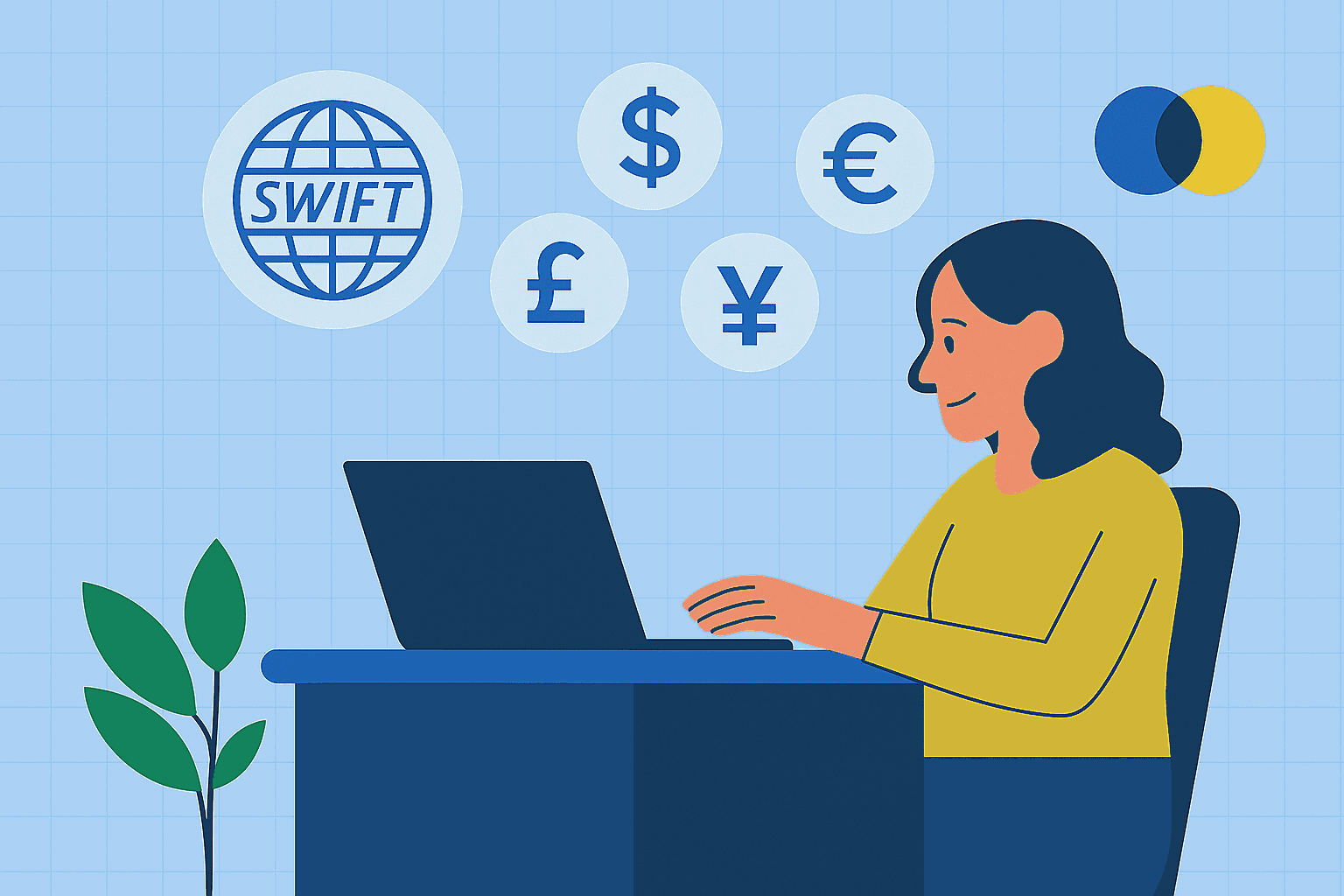
Future of Cross-Border Payments: Trends & What's Next

TL;DR - Summary
- What are the key trends defining cross-border payments in 2026? - Cross-border payments are moving towards faster settlement, more efficient multi-currency transactions, greater payment visibility, standardised payment data and clearer pricing. Technologies such as real-time payment networks, ISO 20022, CBDCs and digital payment platforms are helping reshape how international payments are processed.
- Why is the current cross-border payment system still difficult to use? - Traditional cross-border payments can involve intermediary-bank deductions, unpredictable settlement times, FX markups, manual compliance work and limited payment tracking. For Indian freelancers and exporters, these issues can make it harder to predict how much they will receive, when the money will arrive and what documentation they need.
- What are the biggest trends shaping the future of cross-border payments? - The industry is moving towards real-time payment systems, easier multi-currency transactions, better payment tracking, richer payment data through ISO 20022 and more transparent pricing. These changes are aimed at making international payments faster, easier to track and more predictable for businesses.
- How will these cross-border payment trends affect Indian freelancers and exporters? - Faster settlement can improve cash flow, transparent pricing can make payment costs easier to predict, and automated documentation can reduce manual compliance work. Multi-currency receiving options can also give Indian businesses more flexibility when receiving and converting foreign currency.
What Are the Key Trends Defining Cross-Border Payments in 2026?
There are four key forces defining cross-border payments in 2026. Settlement is moving toward real-time, systems now handle multiple currencies more efficiently, fee transparency is under growing pressure, and regulatory standards are converging across markets.
A cross-border payment simply means money moving between a payer and a recipient in two different countries. This mechanism underpins international trade, e-commerce, and remittances worldwide. Most banks still route many international payments through SWIFT, where a transfer can pass through several intermediary banks before reaching the recipient. Intermediary charges may be deducted along the way, and the journey can take 3 to 5 business days depending on the payment route.
Newer fintech platforms compete on quicker processing, upfront fee disclosure, and less paperwork than traditional bank transfers typically require. This ecosystem involves four main players. Banks handle large volumes through established payment networks, fintechs compete on speed and user experience, payment processors handle routing and settlement, and regulators such as the RBI set the rules governing these transactions.
Blockchain, Central Bank Digital Currencies and real-time payment networks are among the technologies driving this shift. Each approaches the traditional problems of cost, speed and payment visibility differently. ISO 20022 is now the global messaging standard for cross-border payments, providing richer and more structured payment data that can help reduce errors and improve processing and reconciliation.
💡 QUICK INSIGHT
India's services exports reached a record $387.5 billion in FY2024-25, growing 13.6% from the previous year. Indian freelancers, agencies and other service exporters are therefore among the businesses that stand to benefit from faster and more efficient cross-border payment infrastructure.
Why Is the Current Cross-Border Payment System Broken?
The current cross-border payment system is particularly difficult for Indian freelancers because money can be lost to fees, settlement timing can be unpredictable, compliance still involves manual steps, and tracking a payment while it is in transit can be difficult.
- A SWIFT transfer may pass through several intermediary banks before reaching an Indian account, and intermediary institutions may deduct charges along the way.
- The amount credited to an account can be lower than the amount sent by the client. These deductions may come from correspondent banks handling the payment rather than from a clearly stated charge imposed by the recipient's bank.
- A standard bank transfer can take 2 to 5 business days to settle, while expedited transfers may still take 24 to 48 hours. For freelancers relying on client payments for regular expenses, this can create cash-flow pressure.
- Much of the process still involves manual work. Filing remittance paperwork, requesting SWIFT copies and contacting a relationship manager for payment updates can all add to the administrative burden.
- Banks convert foreign currency using their applicable exchange rate, which can include a margin over the underlying interbank or market rate. This FX margin may not appear as a separate fee, thereby making the actual cost harder to identify.
- Combined transfer charges and currency-conversion costs can push the total cost as high as 8% at a bank or through PayPal. Several newer platforms instead offer flat-fee pricing.
- Compliance screening is an important part of international payments, but it can also add processing time. Transactions may be held for additional review, particularly when further information or documentation is required.
Besides these cross-border payment challenges, users may also have to rely on general customer-support channels rather than a team familiar with Indian foreign-exchange and export-compliance requirements, in case they encounter a payment problem.
What Are the Biggest Trends Shaping Cross-Border Payments?
The biggest trends shaping cross-border payments are faster settlement, easier multi-currency transactions, greater payment visibility, standardised payment data and more transparent pricing. Considering the pros and cons of cross-border payment solutions, the industry as a whole is clearly moving toward innovation and ease. For Indian freelancers and exporters, these changes can directly affect how quickly they receive money, how much they retain from each payment and how much manual work is involved.
Trend 1: Real-Time Payment Systems
The demand for faster settlement is pushing real-time payment (RTP) networks into wider use. SWIFT is upgrading its infrastructure, while regional initiatives such as the Pan-African Payment and Settlement System (PAPSS) and ASEAN Payment Connectivity are also working towards faster cross-border payments. A global survey found that 92% of businesses anticipate significant investment in real-time payments over the next 24 to 36 months.
What this means for you: Instead of waiting 3 to 5 business days after a client sends a payment, faster payment infrastructure could eventually bring funds into your Indian account within hours or on the same business day.
2. Multi-Currency Transactions
Handling multiple currencies efficiently is becoming an important part of international payment infrastructure. Dynamic currency conversion can make cross-border transactions smoother, while newer technologies such as Central Bank Digital Currencies (CBDCs) could change how some international transfers are settled. Major initiatives include China's Digital Yuan, India's Digital Rupee pilot and the European Central Bank's work on a Digital Euro.
What this means for you: Multi-currency receiving accounts can allow you to receive and hold currencies such as USD, EUR and GBP before deciding when to convert them into INR.
3. Increased Transparency
Modern payment systems are providing greater visibility into the status of international transactions, including whether a payment has been initiated, processed or received. This reduces the uncertainty that can arise when a payment passes through correspondent banks without clear status updates.
What this means for you: You can track a foreign client's payment more easily and identify where a delay has occurred instead of repeatedly chasing the bank for an update.
4. Regulatory Standardisation Through ISO 20022
ISO 20022 is a global messaging standard that allows financial institutions to exchange richer and more structured payment data. More complete and consistent information can reduce errors, mismatches and processing delays across the payment chain.
What this means for you: Better payment data can mean fewer delays caused by missing or mismatched information and less manual correction when receiving an international payment.
5. Fee Transparency
The cross-border payments industry is moving towards clearer pricing, with fintech competition and regulatory developments putting pressure on providers to make costs easier to understand. Flat-fee and separately disclosed pricing models can make the total cost of a transaction more predictable.
What this means for you: Compare the complete cost of receiving a payment, including transaction fees and any FX markup, rather than looking only at the advertised transfer fee.
However, most Indian freelancers and exporters are still waiting for that shift to reach them through their own bank. Skydo eliminates these challenges as it already operates on this newer infrastructure today, with flat pricing, zero hidden charges, zero FX markup, live transaction tracking, and a free FIRA generated automatically for every payment.
What Does India's Cross-Border Payment Future Look Like?
India's cross-border payment future is moving towards faster digital payment rails, greater use of UPI and the Digital Rupee, and more automated compliance. India's services exports hit $387.5 billion in FY2024-25. That puts Indian freelancers, agencies, and exporters squarely among the biggest winners from any real improvement in cross-border payments. Additionally,
- UPI is no longer confined to India. The system is already live across a growing number of international corridors. Its international expansion could eventually make cross-border payment collection more seamless for Indian businesses, although receiving export payments directly through a UPI-linked account is not yet a general-purpose facility.
- India's Digital Rupee pilot continues expanding in parallel, and its long-term role in cross-border settlement could eventually reduce how much INR-linked payment activity still depends on SWIFT.
- Faster payment rails do not remove India's documentation and regulatory requirements. Export-related receipts remain subject to applicable FEMA and RBI requirements, with the authorised dealer responsible for the relevant reporting and documentation like FIRA.
- FEMA compliance, EDPMS entries, and eBRC closure stay mandatory obligations for exporters specifically, sitting entirely apart from whichever payment infrastructure actually moved the money.
None of this compliance burden is going away, but automation can absorb much of it. A platform that automates documentation and integrates smoothly with AD Bank workflows can streamline eBRC processing and eliminate hours of manual follow-up.
Faster payment systems do not shrink your compliance obligations. Whatever rail brings the money in, exporters still have to meet the RBI and FEMA requirements for inward receipts and keep the required FIRA documentation. Speed changes how fast it lands, not what you owe on the paperwork.

How Will These Cross-Border Payment Trends Affect You?
These cross-border payment trends can directly benefit Indian freelancers and exporters through faster settlement, more predictable costs and less manual compliance work. Skydo already brings many of these developments into the payment experience, helping businesses receive international payments with flat pricing, faster settlement and automated documentation.
- Faster settlement in practice: As real-time payment infrastructure expands, the traditional 3 to 5 day wait after a client pays could reduce to same-day or next-day credit. For freelancers and exporters billing regularly, that can make cash flow easier to manage.
- Lower fees from flat pricing: A $5,000 invoice under a percentage-based bank model can lose $200 to $400 to combined fees and FX markup. A flat $29 charge on the same $5,000 payment leaves more of the invoice value with the exporter.
- Less manual compliance work: Platforms that automatically generate a FIRA and assist with eBRC closure can reduce the administrative work involved in each transaction. Instead of repeatedly following up with a relationship manager or requesting payment records, exporters can handle more of the process digitally.
- Greater control over foreign currency: Virtual accounts in USD, GBP, AED, CAD, EUR, AUD and SGD allow businesses to stop thinking over how to receive international payments in India. These platforms offer currencies their clients use, giving them greater flexibility over when and how those funds are converted.
- More predictable timelines: A clearly defined 24-hour settlement window is easier to plan around than a 3 to 5 business day estimate that depends on correspondent banks and the payment route.
- India-focused support: India-based support through WhatsApp, phone and email can make it easier to resolve payment issues without relying on a generic overseas support queue.
Comparing the old cross-border payment experience with where the industry is heading, and where Skydo already stands, shows how these changes affect the factors that matter most:
| Factor | Old Cross-Border Payment Reality | Where the Industry Is Heading | Where Skydo Sits Today |
|---|---|---|---|
| Settlement speed | 3 to 5 business days via SWIFT | Real-time to same-day | Within 24 hours |
| Fee transparency | FX markup plus transaction charges, potentially reaching 8% in total | Flat or clearly disclosed pricing | Flat fee: $19, $29 or 0.3%, with no FX markup |
| Compliance documentation | Manual FIRA/FIRC requests and follow-ups | More automated documentation | Free FIRA with every transaction, plus eBRC closure assistance |
| Support model | Generic or branch-based support | Localised, multi-channel support | India-based support via WhatsApp, phone and email |
Will cross-border payments become free in the future?
Not entirely free, since infrastructure, compliance, and currency conversion will always carry a real cost somewhere in the chain. What is actually changing is the pricing model itself. It is moving away from hidden percentage cuts layered on an FX markup, toward flat, disclosed fees a payer can see before committing. Some platforms already pass those infrastructure savings straight to the user, while many banks continue adding their own margin on top of the very same improved rails.
How long does an international payment take today, and will that change?
What is ISO 20022 and does it affect how I receive payments from abroad?
Is UPI going to work for receiving international payments as a freelancer?
Do I still need a FIRA even if payment rails get faster and more automated?
How do I know if a payment platform will actually pass on the savings from better infrastructure?
What currencies can I receive payments in as an Indian exporter or freelancer?
What compliance steps are specific to India that global payment trends won't remove?