How to Choose a Merchant Service Provider: Key Factors


Choose a merchant service provider that offers transparent fees and seamless cross-border payments.
TL;DR
- What is a merchant service provider? A merchant service provider is a company that enables businesses to accept and process payments from customers, covering authorization, settlement and, in many cases, the movement of funds into the merchant's bank account.
- What types of merchant service providers exist? Common models include payment service providers (PSPs), independent sales organizations (ISOs), payment aggregators, and acquiring banks. These terms can overlap.
- What are the key factors when you choose a merchant service provider? The key factors when you choose a merchant service provider are fee structure and total cost, compliance and regulatory authorization, settlement speed and currency options, documentation (FIRC/FEMA), customer support quality, onboarding time, and restricted business category policies.
- What compliance requirements must Indian businesses verify before choosing a merchant service provider? Before choosing a merchant service provider, Indian businesses should verify its regulatory status, the available remittance documents, FEMA requirements, and EDPMS and eBRC support where applicable.

What Is a Merchant Service Provider?
A merchant service provider is a company that enables businesses to accept and process payments from customers. Its work covers authorization, settlement, and in many cases, the movement of funds into the merchant's bank account.
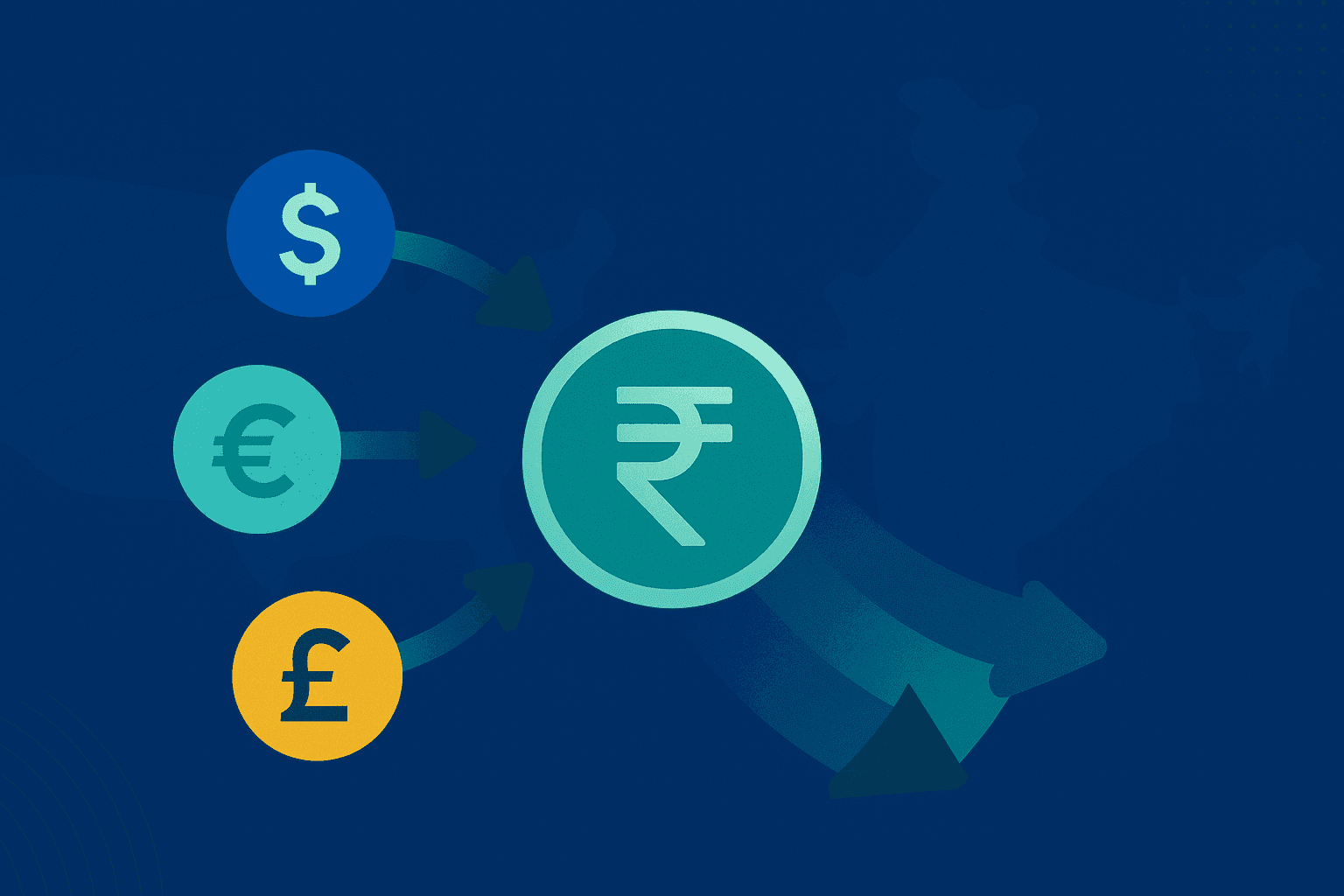
For Indian freelancers, agencies, and exporters, the use case is receiving payments from foreign clients in currencies like USD, EUR, or GBP and getting the equivalent INR settled into their Indian bank account. Service exporters who handle these payments must know the international payment terminologies that go with them.
Example: a Bengaluru-based UX designer invoicing a US client $3,000 uses a merchant service provider to collect that payment and receive INR in their account within a defined timeline.
⚠️ COMMON MISCONCEPTION
PayPal and Stripe payments do not lack documentation simply because the provider may not issue a separate FIRC for each transaction. PayPal offers a weekly FIRA, while Stripe says its bank sends payment advice that can be presented to your bank. Check which documents your bank and tax adviser require.
What Services Does a Merchant Service Provider Offer?
A merchant service provider handles authorization and settlement of customer payments and, in many cases, moves the funds into the merchant's bank account. Indian exporters can also look for virtual accounts in the currencies their clients pay in, INR settlement, remittance documentation, and support for the Export Data Processing and Monitoring System (EDPMS) and electronic Bank Realisation Certificate (eBRC) where applicable.
- Foreign currency collection: virtual accounts in the currencies your clients pay in (USD, EUR, GBP, etc.), with INR settled into your Indian bank account.
- Remittance documentation: ask whether FIRA, FIRC or other bank documentation is available, how often it is issued, and whether it costs extra.
- EDPMS and eBRC support: where applicable, ask how the provider helps your bank reconcile EDPMS entries and helps you generate eBRCs.
- Regulated settlement: verify the provider's Reserve Bank of India (RBI) status and the authorised bank involved in settling your payments.

Save 50% on every international transfer
- Receive from 150+ countries
- Get global accounts
- Zero forex margin
What Are the Types of Merchant Service Providers?
Common merchant service models include payment service providers (PSPs), independent sales organizations (ISOs), Payment Aggregators, and acquiring banks. These categories can overlap.
- Payment Service Providers (PSPs): companies that help businesses accept payments. Some also aggregate merchants under a shared account. Examples include PayPal and Stripe.
- Independent Sales Organizations (ISOs): third-party agents that resell payment processing services on behalf of acquiring banks.
- Payment Aggregators: providers that aggregate customer payments and settle funds to merchants. In India, check a non-bank cross-border aggregator's RBI authorisation or applicable permission to operate.
- Acquiring bank: a bank that enables merchants to accept card payments. Indian exporters can also receive eligible international transfers through an authorised dealer bank.
The distinction that matters most for Indian exporters is direction. Some providers are built for sending payments (payroll, vendor payments abroad), while others are built for receiving payments from foreign clients.
Check that the provider supports your payment flow and meets applicable requirements.
Who Should Use a Merchant Service Provider?
Four groups of Indian businesses and individuals should use a merchant service provider: service exporters, freelancers with documented client contracts, goods exporters, and Amazon sellers on global marketplaces.
- Service exporters: service exporters such as IT firms, design agencies, and consultants billing foreign clients.
- Freelancers: freelancers with documented client contracts who invoice overseas.
- Goods exporters: exporters who receive international wire payments against shipped orders.
- Amazon sellers: sellers operating on global marketplaces who receive payouts in foreign currency.
If you invoice a foreign client and need the payment in your Indian bank account, you can compare a merchant service provider with an authorised dealer bank. Check the available documents and requirements for your transaction.
Save 50% on every international transfer
- Receive from 150+ countries
- Get global accounts
- Zero forex margin
What Are the Key Factors for How to Choose a Merchant Service Provider?
The key factors for choosing a merchant service provider are fee structure and total cost, compliance and regulatory authorization, settlement speed and currency options, documentation (FIRC/FEMA), customer support quality, onboarding time, and restricted business category policies.
- Fee structure: look at the all-in cost: transaction fees, forex conversion margins, monthly fees, and withdrawal charges together. Look beyond the headline rate.
- Compliance and RBI authorization: check the provider's regulatory status and the bank involved. For a non-bank cross-border aggregator, verify its RBI authorisation or applicable permission to operate.
- Settlement speed and currency options: the number of working days between your client's payment and the INR hitting your account matters for cash flow. Get a written SLA. Also check that the provider offers virtual accounts in the currencies your clients pay in (USD, EUR, GBP, etc.) and settles in INR.
- FIRC/FEMA documentation: ask what remittance evidence the provider or its bank supplies, and confirm that it meets your banking and tax requirements.
- Support: check the available channels and response times for your account.
- Onboarding time: ask how long signup and verification each take. A quick signup does not guarantee account approval.
- Restricted categories: every provider maintains a list of business types it will not onboard. Verify that your category is permitted before you invest time in the application.
Merchant Service Provider Fees and Charges Explained
The cost of a merchant service provider includes transaction fees, forex conversion margins, monthly fees, and withdrawal charges. On a standard $3,000 payment, Skydo's published fee is $29 plus 18% GST on the fee. Compare actual quotes and INR proceeds across providers.
The table below compares pricing information for a $3,000 invoice. Actual INR proceeds depend on the payment method, exchange rate, taxes and applicable charges.
| Provider | Fee Type | Fee on a $3,000 Invoice | Forex Margin | Estimated INR Landing Amount |
|---|---|---|---|---|
| Bank Wire | Varies by bank | Varies by bank and route | Varies by bank | Depends on quote |
| PayPal | Percentage-based | Varies by transaction and currency | Conversion fee may apply | Depends on quote |
| Stripe | Percentage-based | Varies by card, currency and plan | Conversion fee may apply | Depends on quote |
| Skydo | Flat fee | $29 + 18% GST on fee ($34.22 total) | No FX markup on standard pricing | Depends on quote |
The purpose code should describe the actual service or goods for which the payment is received. Choosing a code simply because it seems closest to the transaction can create problems during bank reconciliation or compliance reviews. Exporters should confirm the correct code with their authorised dealer bank, especially when the nature of the service is not straightforward.

Save 50% on every international transfer
- Receive from 150+ countries
- Get global accounts
- Zero forex margin
What Compliance Requirements Must Indian Businesses Verify?
Indian businesses receiving foreign payments should check the provider's regulatory status, available remittance documents, FEMA requirements, and EDPMS and eBRC support where applicable.
- RBI authorization: check the regulatory status of the provider and its bank. For a non-bank cross-border aggregator, verify its RBI authorisation or applicable permission to operate.
- Remittance documentation: FIRA, FIRC and BRC are different records used to document foreign receipts. For a GST refund on export of services, the applicable rules call for a statement with invoice and relevant BRC or FIRC details. Ask your bank and tax adviser which records you need.
- FEMA compliance: check that the transaction and settlement route comply with the Foreign Exchange Management Act and applicable RBI directions. Confirm the role of the authorised dealer bank and keep the required records.
- EDPMS closure: where applicable, work with your authorised dealer bank to match export proceeds to the relevant export entry. A PA-CB must provide the bank the documents or information needed for closure.
- eBRC: the electronic Bank Realisation Certificate records export realisation and may be needed for applicable export benefits or other processes. Banks send inward remittance messages to DGFT, and exporters self-certify eBRCs.
How to Compare Merchant Service Providers
To compare merchant service providers, check seven things before you sign up: regulatory status, remittance documentation, settlement currency, fee transparency, onboarding time, support SLA, and restricted business categories.
- Regulatory status: what is the provider's RBI status, and which authorised bank handles settlement?
- Remittance documents: which documents are available, how often are they issued, and are there any charges?
- Settlement currency: does the provider offer virtual accounts in the currencies your clients pay in (USD, EUR, GBP, etc.) and settle in INR?
- Fee transparency: can you see the total cost (flat fee or percentage, plus any forex margin) before you transact?
- Onboarding time: how long do KYC and account activation take? Days or minutes?
- Support SLA: is support India-based, and what are the available channels (phone, WhatsApp, email)?
- Restricted business categories: is your business type (IT services, freelancing, goods export, Amazon selling) explicitly permitted, or is it on the restricted list?
Skydo is RBI-authorized and provides free, automatic FIRA for settled export payments. Sign up with Skydo.
Common Mistakes to Avoid When Choosing a Merchant Service Provider
Six mistakes cause the most trouble when choosing a merchant service provider: failing to check remittance documents, comparing only headline fees and ignoring forex margins, choosing a platform that cannot receive your payments, skipping the restricted category check, trusting a fast onboarding promise without written confirmation, and overlooking EDPMS or eBRC support where needed.
- Not checking remittance documents: missing the records your bank or tax adviser needs can make reconciliation and filing harder.
- Comparing only headline fees and ignoring forex margins: compare the complete fee and exchange-rate quote for your payment, not just the advertised transaction fee.
- Using a payment-sending platform to receive payments: some tools are designed for outward payments, such as vendor payouts or payroll, and may not support your incoming payments.
- Not checking restricted business category lists before applying: investing time in KYC only to be rejected wastes days and delays client payments.
- Assuming a fast onboarding promise is real: get confirmation of the actual activation timeline in writing. Don't rely on a marketing page.
- Skipping EDPMS and eBRC support as a goods exporter: check what your provider can help with and what still requires action by you or your bank.
Free cross-border payments guide

How Skydo Helps Indian Businesses Receive International Payments
Once you've worked through the checklist above, choose an international payment gateway that supports the way you receive payments, with the right regulatory status, remittance documents, transparent fees, and onboarding that meets your needs.
Skydo is an RBI-authorized cross-border payment aggregator built specifically for receiving international payments.
- Fee structure: standard published pricing is $19 up to $2,000, $29 for $2,001–$10,000, and 0.3% above $10,000, plus 18% GST on the fee. Skydo states no FX markup or monthly fee. Amazon Global Selling pricing differs; confirm your quote and any route-specific charges.
- Local receiving accounts: Skydo offers local receiving options for USD, EUR, GBP, SGD, AUD and CAD. Confirm availability, the currency and supported transfer method for your account before sharing details.
- FIRA for settled export payments: Skydo provides free, automatic FIRA for each settled export payment. Check with your bank and tax adviser for any other documents you need.
- eBRC and EDPMS support: eligible exporters can link their DGFT account and bulk-upload shipping bills to match bank-reported IRMs and self-certify eBRCs. EDPMS closure is separate and involves your authorised dealer bank.
- Settlement speed: Skydo's terms describe commercially reasonable efforts to credit payments within T+1 to T+3 business days after screening, depending on the currency, corridor and payment chain.
- Support: ask Skydo which support channels and response times apply to your account.
- Onboarding: signup is online; account activation depends on completing the required checks.
Save 50% on every international transfer
- Receive from 150+ countries
- Get global accounts
- Zero forex margin

Get international bank accounts in 5 mins

Save as much as ₹10 lakh annually with Zero FX Margin

Real time payment tracking and instant FIRA
Get international bank accounts in 5 mins
Save as much as ₹10 lakh annually with Zero FX Margin
Real time payment tracking and instant FIRA
Frequently asked questions on how to choose a merchant service provider
Check the provider's regulatory status, remittance documents, fees, supported currencies and settlement times. Also ask about support and EDPMS or eBRC assistance where applicable.
About the author

Associate, Partnerships
Pratyush specializes in the infrastructure behind global payments, focusing on payment rails, compliance, and banking partnerships. He works to solve the complex challenges that make seamless international transactions possible.

Verified by
Abhilove ShardaLatest blog posts
View all posts
International Wire Transfer Regulations: RBI Rules & Limits
Proforma Invoice vs Tax Invoice: Differences & Usage
Best International Payment Methods in 2026: A Complete Comparison
Related blog posts
View all postsProforma Invoice vs Tax Invoice: Differences & Usage
Best International Payment Methods in 2026: A Complete Comparison