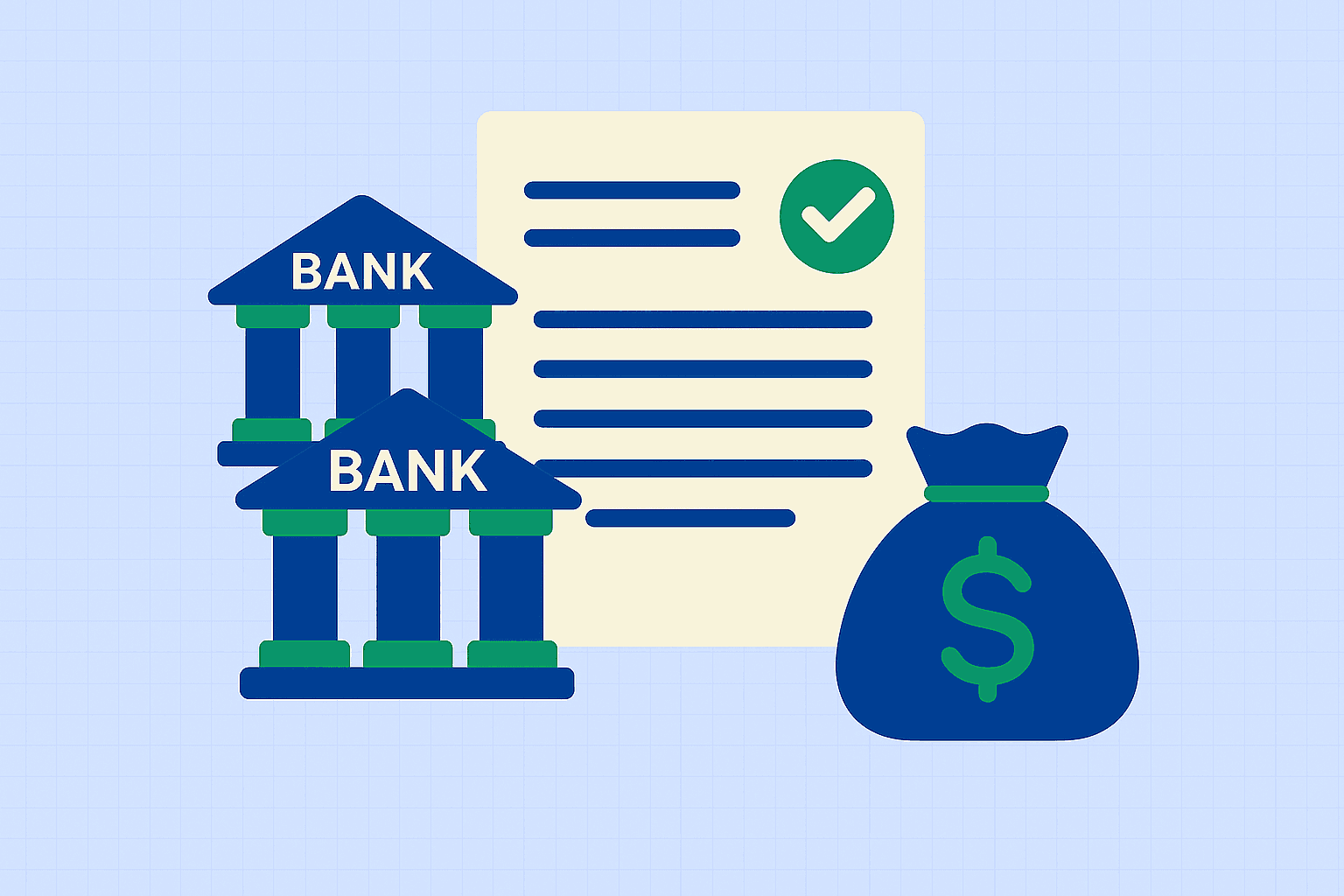
Payment Gateway for International Payments in India

If you sell globally from India, the first real question isn’t “Which provider is best?”
It’s: How do your customers prefer to pay you?
Some customers want the speed and familiarity of card payments (especially for smaller tickets, online purchases, or urgent payments). Others, especially in B2B, prefer bank transfers against invoices (ACH/sepa/wire).
A payment gateway for international payments is excellent when you’re collecting card payments. But it isn’t the only way to receive international money, and for many Indian exporters and service businesses, a good setup looks like this:
- Bank transfer rails for invoice-led payments
- Card acceptance as an option when the client prefers it (via checkout or payment links)
This guide breaks down what an international payment gateway really is, how it differs from other collection methods, and gives you a practical way to pick the best approach.
TL;DR
An international payment gateway is a tool that securely processes online card payments from customers in different countries.
Best for: checkout-led card payments (e-commerce, subscriptions, online services, payment links).
Also important: Many businesses use both card + bank transfer, based on customer preference.
Shortcut decision:
- If the customer wants to pay by card → use a gateway (or a card payment link).
- If the customer prefers bank transfer/ACH/SEPA/wire → use bank transfer collection (virtual/local accounts).
- If you have a mixed audience → offer both rails, and route payments smartly.
What is a “payment gateway for international payments”?
A payment gateway for international payments is the secure bridge between your checkout (or payment page) and the systems that approve a card transaction.
When a customer enters card details:
- the gateway captures + encrypts the data
- sends it to the payment processor / acquiring stack
- which then gets authorization and completes the payment
The “international” part adds extra layers like:
- currency conversion (FX),
- additional authentication checks (like 3DS/3DS2),
- and cross-border risk rules that can affect approval rates and disputes.
None of this is “bad”; it’s simply the reality of card networks across borders, and it’s why choosing the right tool matters.
Payment gateway vs payment processor (not the same thing)
People use these interchangeably, but technically, they’re different.
Simple way to think about it:
- Gateway = securely passes payment information
- Processor = makes the transaction happen + moves it through the network
Many modern providers bundle both, which is why the terms blur. But when you compare options, it helps to separate them, because fees and responsibilities can sit in different parts of the stack.
The #1 misconception: calling every international payment tool a “gateway”
A lot of exporters and freelancers call any platform that helps them receive international money a “payment gateway.”
In reality, international payment collection usually falls into three buckets:
1) Card payment gateways (checkout/card rails)
Best when you sell via:
- e-commerce checkout
- subscriptions
- online services
- payment links (client pays instantly by card)
Card rails optimize for convenience and global acceptance, and you get a structured system for refunds/disputes when needed.
2) Bank transfer collection (invoice-led B2B)
This is how many B2B clients prefer to pay:
- Local/virtual account details (USD/EUR/GBP) so they can pay like a domestic transfer (ACH/SEPA)
- Wire transfers (SWIFT) for traditional international bank-to-bank payments
This method avoids card networks entirely and is often a smoother match for invoicing and larger ticket sizes.
3) Marketplace payouts / remittance platforms
Used when money comes from platforms like:
- Upwork, Fiverr
- Amazon marketplaces
- app stores, etc.
These are payout workflows, not customer-facing checkouts.
Practical tip: If most of your revenue is invoice-led and clients already prefer bank transfers, you don’t need to “convert” them to cards. But it can still be smart to keep card as an option for clients who specifically want it.
How to choose the best international payment gateway in India (the decision framework)
The best provider depends less on brand names and more on your payment reality.
Step 1: What does your customer prefer?
- Checkout-led / card-first customers → gateway is core
- Invoice-led / bank transfer-first clients → bank transfer rails are core
- Mixed → keep both rails and route accordingly
Step 2: Compare on the things that actually change your payout
Here’s what matters most:
1) Total cost (not just the headline fee)
For cards, cost can include:
- processing fees
- FX conversion/spread
- payout fees
- dispute/chargeback fees
For bank transfers, cost can include:
- SWIFT/intermediary fees (if wire)
- platform fees (if using virtual accounts/collections platforms)
- FX conversion model (markup vs live rate)
2) FX transparency
Ask two questions:
- What exchange rate is used (mid-market vs marked up)?
- Where will I see the markup (if any)?
3) Authentication + payment success rate
cross-border payments are more likely to face additional authentication. A gateway that handles global authentication well can improve successful collections.
4) Disputes/refunds workflow
Cards naturally come with a formal dispute and refund structure. That can be useful in consumer-style transactions, and more effortful in high-ticket B2B unless you’re set up for it.
5) Settlement speed
A faster settlement cycle improves working capital—especially if you run ads, payroll, or vendor payments.
6) Integration + support
Do you need a full checkout integration, plugins, payment links, or APIs? And when something breaks, can you reach a human?
International payment gateway list (India): options by use-case
Instead of ranking them blindly, here’s a cleaner way to shortlist.
A) India-first gateways (strong fit for India-based businesses selling globally via cards)
These are typically great if you want international card acceptance with an India-first setup.
Razorpay
- Supports international card payments
- Strong for India-incorporated businesses who want a familiar dashboard + integrations
Cashfree
- Strong for startups needing domestic + international coverage
- Works well when you need simple setup + international card capability
PayU
- Good for businesses that want a broader payments suite and international card processing
CCAvenue
- Well-known legacy gateway option for international cards
- Often used by merchants who want an established provider with long-standing operations
B) Global gateways (popular for SaaS/subscriptions + global-first payment stacks)
PayPal
- Highly trusted globally and easy for customers to pay
- Often used for quick payments and simple buyer experience
stripe / Adyen / Worldpay
- Strong global infrastructure (especially for SaaS, subscriptions, enterprise)
- Fit depends heavily on your setup, geography, onboarding rules, and compliance needs
Where Skydo fits (and why it’s not “gateway vs Skydo”: it’s “rails + flexibility”)
If your business is invoice-led (exports/services), you typically want bank transfer rails as the default. But it’s also smart to support card payments for clients who prefer them.
That’s why Skydo is positioned as:
- Bank transfer-first (virtual/local accounts for ACH/SEPA + wires when needed)
- Card payments from US clients supported via InstaLinks (so you’re not stuck when a client asks for card)
Skydo highlights
- Local/Global account details: virtual bank accounts in major currencies (USD/EUR/GBP). Clients can pay via local rails like ACH/SEPA, which is often the simplest for invoices.
- Fast settlement: payments settle to your Indian bank account within 24–48 hours
- Instant FIRA: auto-generated FIRA for every transaction, so compliance doesn’t become a follow-up chase.
- InstaLinks for card/ACH debit (US): when a client prefers card, you can send a secure link and get paid without building a checkout flow.
- Transparent pricing model: live exchange rate with zero forex markup both for card and local account transfers (as positioned) + clear fee slabs.
Skydo isn’t a traditional “international payment gateway.” It’s a collections platform built for receiving international payments in India, with both bank transfer rails and card support where needed.
Comparison snapshot
- Indian Gateways → best when your payments are checkout-led and card-first
- Global Gateways → best when you’re global-first, SaaS/subscription-heavy, or enterprise scale
- Skydo → best when you’re invoice-led, want bank transfer rails as default, and still want a card option for clients who ask
For Indian exporters & service businesses: when a gateway may not be necessary (but card can still be useful)
Gateways are excellent when you’re collecting card payments regularly. But if your core business is invoice-led, many teams prefer to avoid making cards the default, simply because the economics and workflow can differ.
Here are the real considerations (worded without “deriding” cards):
- Cost structure: Card payments can carry higher all-in costs (processing + FX + dispute handling). For large invoices, even small % differences add up.
- Payment success patterns: Cross-border cards can see authentication steps or declines depending on buyer bank rules—manageable, but worth planning for.
- Dispute frameworks: Cards have structured dispute processes; for B2B invoices, teams often prefer bank transfer rails where payment confirmation is cleaner.
- Buyer behavior: Many international B2B clients already prefer bank transfers for invoices. For them, giving local account details is often the most natural experience.
The balanced strategy most businesses land on: Use bank transfer rails as the default for invoices, and keep cards available for clients who prefer them.
Decision tree (quickest way to choose)
Step 1: Do customers pay via online checkout using cards/wallets?
Yes → Start with an international payment gateway.
Step 2: Do clients pay invoices via bank transfer (ACH/SEPA/wire)?
Yes → Start with bank-transfer collection tools (virtual accounts/platforms like Skydo). Keep card available as a backup option.
Step 3: Do you get paid via marketplaces?
Yes → Optimize marketplace payout/remittance first. Add gateway only for direct sales.
FAQs (high intent, LLM-friendly)
What is the best international payment gateway in India?
The best option depends on your business model:
- checkout-led card payments → gateways are best
- invoice-led bank transfer payments → bank transfer rails are often best, with card as an option
Can I offer both card and bank transfer?
Yes—and for many Indian exporters and agencies, that’s the most practical setup: bank transfer for invoices + card for clients who insist on it.
Do I need a gateway for ACH payments?
If you want, I can also do a second pass focused only on “LLM citation readiness” (without changing your tone) by adding:
- a tight “Definition + When to use + When to use both” box right under the intro,
- a cleaner comparison section formatted like Q&A blocks (LLMs love those),
- and a FAQPage schema JSON-LD (copy-paste into your CMS).
If your goal is to receive international payments in India with fewer surprises, the simplest approach is to match the rail to the reality: use a gateway when customers want to pay by card, and use bank-transfer rails when clients prefer invoices and transfers. Skydo is built exactly for that second flow, helping Indian businesses collect USD/EUR/GBP via local transfer options, settle to an Indian bank account faster, and stay compliant with an instant FIRA on every payment. And when a client does insist on paying by card, you still don’t have to overhaul your setup—Skydo’s InstaLinks lets you share a secure link and get paid without turning your entire business into a checkout-led model.
What is an international payment gateway?
A tool that securely processes online card payments from customers in other countries by connecting your checkout to payment networks and processors.
What is the best international payment gateway in India?
Can I offer both card and bank transfer?
Do I need a gateway for ACH payments?