FEMA vs FCRA: Key Differences for Indian Businesses

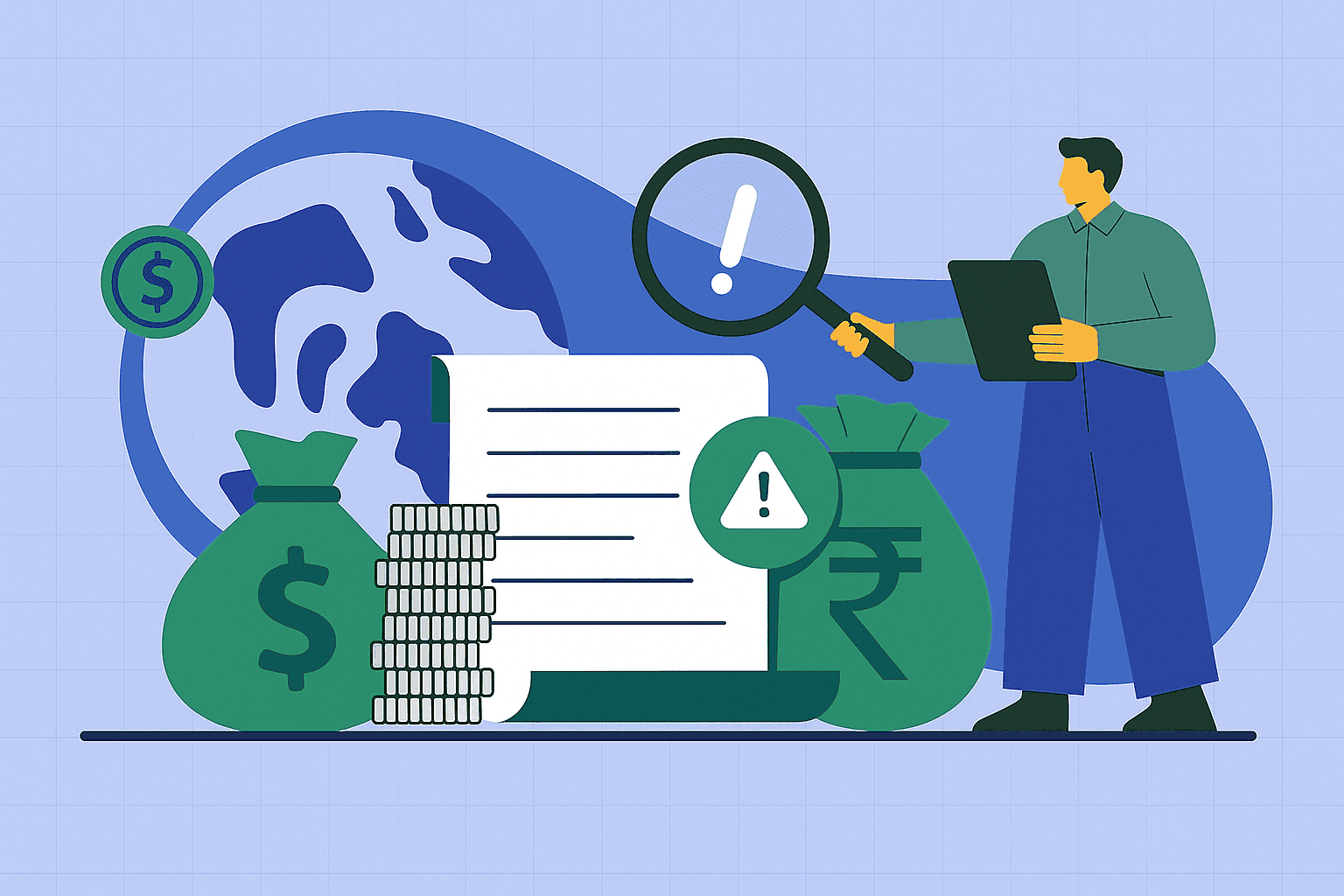
In India, any entity receiving foreign funds must follow specific legal rules to remain compliant. FEMA (Foreign Exchange Management Act) and FCRA (Foreign Contribution Regulation Act) are the two key laws. Although both relate to foreign funds, each applies to different cases and has its own compliance rules. Any confusion can result in penalties, delays, or regulatory issues.
This article describes FEMA and FCRA differences to enable companies, non-governmental organizations, freelancers, startups, and Section 8 companies to align with the minimum compliance standards.
TL;DR - Summary
- FEMA: - Governs business payments, investments, and foreign trade — applies to exporters, freelancers, and companies receiving payment for goods or services.
- FCRA: - Applies to NGOs, trusts, and societies receiving foreign grants or donations.
- Key distinction: - Selling goods or services = FEMA. Receiving funds without any service in exchange (donations, grants) = FCRA.
- For exporters and freelancers: - FEMA applies, not FCRA.
What is FEMA and Why Does It Matter for Indian Businesses
The Government of India enacted the Foreign Exchange Management Act, 1999 (FEMA), to replace the stricter Foreign Exchange Regulation Act (FERA) and to relax foreign exchange rules in India. FEMA inward remittance guidelines provide rules on how foreign currency enters and leaves India, mainly for trade, investment, and business use. Unlike FERA, which imposed strict limits, FEMA allows businesses and freelancers to engage with global markets while maintaining economic stability.
Key Features of FEMA
- Facilitative Approach: FEMA permits transactions unless explicitly restricted, prioritizing economic growth over restriction.
- Current and Capital Account Transactions: Current account transactions are associated with trade in goods and services, remittances, and payment of income, which are generally allowed. Capital account transactions are investments, foreign assets, or capital flows and can only be approved by the regulator.
- Authorized Dealers: Only RBI-authorized banks (AD Category-I) can handle foreign exchange transactions.
- FIRC Requirement: A Foreign Inward Remittance Certificate (FIRC) acts as proof that funds received are valid business payments.
Who Must Comply With FEMA
- Exporters dealing in physical goods, including e-commerce and Amazon sellers
- Freelancers and service providers working with overseas clients
- Startups receiving foreign investments such as FDI
- Any business earning revenue in foreign currency through commercial activities
Section 8 firms doing both social and business work must keep separate accounts. Donations follow FCRA rules, while income from business activities like workshops follows FEMA. Clear bookkeeping keeps both compliant.
What is FCRA and Who Does It Regulate
The Foreign Contribution (Regulation) Act, 2010 (FCRA) governs how organizations in India can receive and use foreign donations. Its purpose is to prevent outside influence that could affect national security or independence. Organizations must either be registered or receive prior approval to accept funds, which sets them apart from FEMA rules.
Key Features of FCRA
- Restrictive Approach: Authorities monitor foreign donations carefully to prevent any misuse or diversion from their original purpose.
- Mandatory Registration: Organizations must obtain approval from the Ministry of Home Affairs (MHA) before accepting any foreign contribution. Without registration, receiving such funds is not permitted.
- Designated Bank Account: All foreign contributions must be received through a specific FCRA account maintained with the State Bank of India, New Delhi main branch.
- Usage Restrictions: Funds must be used only for the purpose stated at the time of registration. Proper records should be kept to clearly show how the money is used.
Who Needs FCRA Registration
- NGOs involved in social or development activities
- Registered trusts and societies working on charitable causes
- Section 8 companies receiving donations (not equity or investment)
- Religious, educational, or cultural bodies funded by foreign sources

What Are the Key Differences Between FEMA and FCRA
The primary difference between FEMA vs FCRA is the motive of money coming into India. FEMA applies in case the money received is used in business, commerce, or investment. FCRA is applicable in cases involving donations or grants that do not involve a business transaction.
| Aspect | FEMA | FCRA |
|---|---|---|
| Purpose | Allows international trade, payments, and investments | Manages foreign donations to safeguard national interest |
| Nature of funds | Business income, export payments, investments | Gifts, grants, and voluntary donations |
| Regulatory authority | Reserve Bank of India (RBI) | Ministry of Home Affairs (MHA) |
| Who it applies to | Exporters, freelancers, startups, businesses | NGOs, trusts, societies, charities |
| Banking requirement | Any RBI-approved bank | New Delhi FCRA account, Mandatory SBI |
| Registration requirement | No separate registration, follow compliance rules | Before the funds were given, they had to be registered |
| Overall approach | Eases international business dealings | Restricts and monitors foreign contributions |
| Key documentation | Purpose codes, invoices, FIRC/BRC | Registration certificate, annual returns (FC-4) |
If you're not sure whether the law applies, ask yourself a simple question: Are you being compensated for your job or products, or are you receiving financial assistance? FEMA covers payments, whereas FCRA covers donations.
What Are the Compliance Requirements Under Each Law
Compliance requirements under each law define the specific legal obligations businesses and organizations must meet when receiving foreign funds, including documentation, reporting, authorised banking channels, and regulatory approvals.
FEMA Compliance for Businesses
- Purpose Code Declaration: Each foreign payment must include a purpose code (e.g., P0802 for software services) to identify the nature of the transaction.
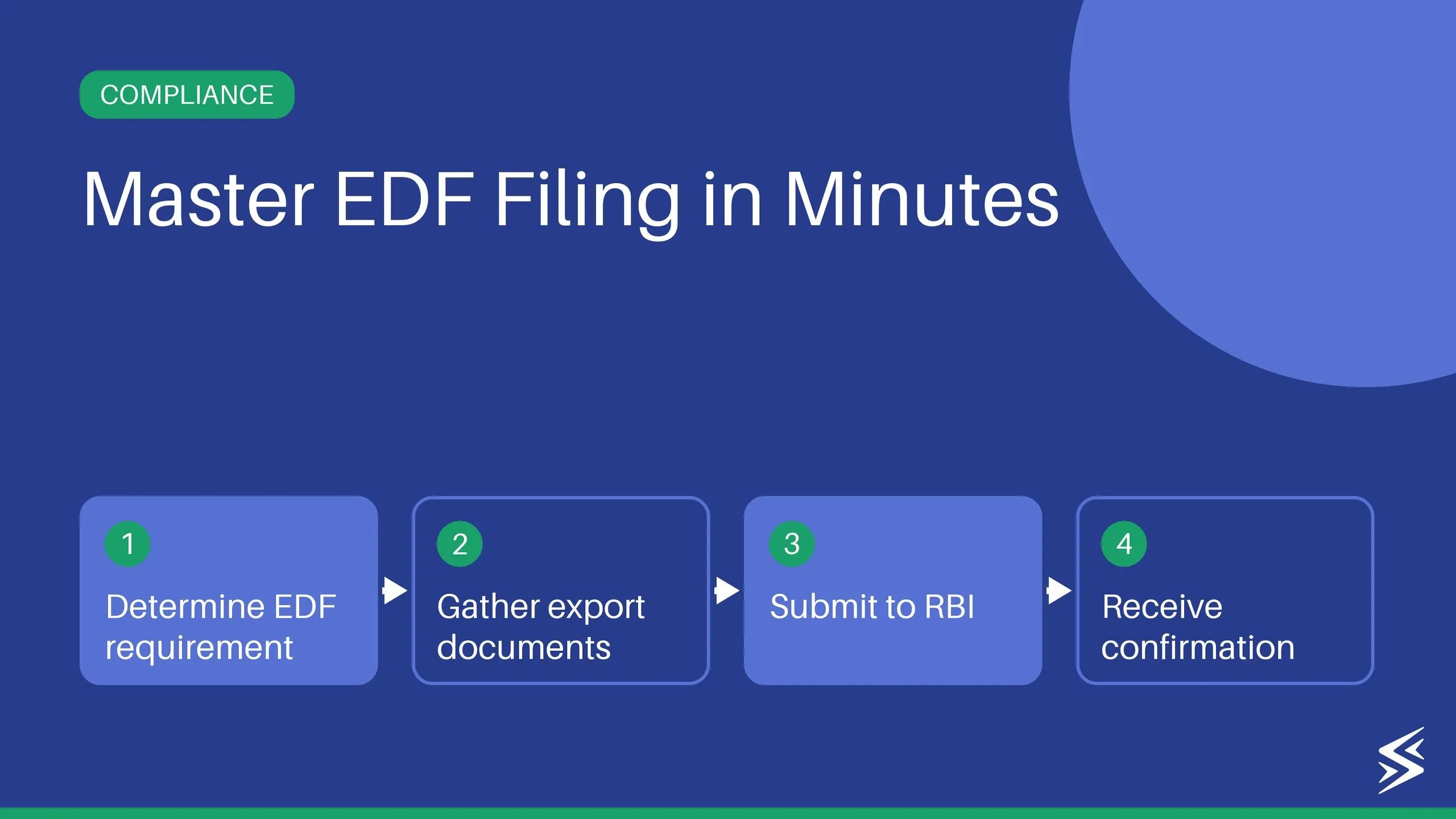
- FIRC/BRC Documentation: Keep a Foreign Inward Remittance Certificate (FIRC) or a Bank Realization Certificate (BRC) as official proof that you received the payment.
- Authorized Dealer Routing: Payments should be received by authorized banks by RBI to ensure legality.
- KYC and Record-Keeping: Keep detailed records of the sender, invoices, purpose, and related documents for each transaction.
- Export Documentation: Goods exporters must retain shipping bills and export invoices to validate foreign sales.
FCRA Registration and Reporting
- Prior Registration: No organization can legally receive foreign funding without first registering with the Ministry of Home Affairs (MHA) using the FCRA online system.
- Designated Bank Account: Maintain a dedicated FCRA account at the SBI, New Delhi branch for all foreign funds.
- Annual Returns: File Form FC-4 each year, even if no foreign contributions were received.
- Utilization Records: Maintain proper documentation showing exactly how every rupee of foreign funds is used, in line with the approved objectives.
- Renewal: Once granted, FCRA registration is valid for five years. Organizations need to renew it before the expiration date to stay compliant and continue receiving funds.
What Are the Penalties for FEMA and FCRA Violations
Non-compliance under these laws can result in fines, loss of regulatory approvals, transaction bans, and prosecution depending on the severity of the violation.
FEMA Violation Consequences
- Financial Penalties: Up to three times the amount involved in the contravention.
- Civil Liability: Most violations are treated as civil offenses, not criminal.
- Compounding Option: Minor offenses can be resolved by paying the penalty without prosecution.
- Enforcement Oversight: Serious violations may be investigated by the Enforcement Directorate (ED).
FCRA Violation Consequences
- Registration Impact: FCRA registration can be suspended or cancelled.
- Asset Seizure: Funds or assets obtained through foreign contributions may be confiscated.
- Criminal Liability: Violations can lead to imprisonment and fines.
- Future Restrictions: Organizations may be barred from receiving foreign contributions.
Breaching FCRA rules is treated more seriously than FEMA violations because it deals with foreign funds that may affect national security, so stricter checks and actions are required.
Can an Organization Be Subject to Both FEMA and FCRA
Certain Section 8 companies and trusts may fall under both laws. For instance, when an NGO accepts foreign funding, it must comply with FCRA, while revenue from international paid workshops is managed under FEMA. Each must be kept in a different account, and FCRA funds must not be mixed with income from business activities.
What Are the Recent Amendments to FEMA and FCRA
Recent amendments include the 16 August 2024 update to FEMA’s Non-Debt Instrument (NDI) Rules. Alongside this, continued enforcement of the FCRA Amendment Act, 2020, has strengthened compliance, reporting, and foreign funding regulations.
FCRA amendments:
- All organizations receiving foreign contributions must now keep a designated account at SBI, New Delhi.
- Administrative expenses from foreign funds are capped at 20% of the total foreign contribution utilised in that financial year.
- Renewal applications are subject to stricter scrutiny to ensure compliance.
FEMA amendments:
- The 2024 NDI Rules under FEMA regulations govern non-debt instruments, such as equity shares, convertible debentures, and preference shares for foreign investments.
- The rules for reporting certain transactions have been made simpler, making it easier for companies to follow them.
- FDI limits have also been updated to match current government policies.
How Indian Businesses Can Simplify FEMA Compliance with Skydo
Exporters, freelancers, and Amazon sellers may find it difficult to comply with FEMA requirements. Skydo assists in the following manner:
- Simplified Compliance: Automates FEMA documentation, reducing manual effort.
- Instant Certificates: Get FIRC and BRC issued automatically for every payment.
- Multi-Currency Accounts: Receive payments in USD, GBP, EUR, and SGD without intermediary banks.
- Transparent Pricing: No hidden fees or forex mark-ups.
- Real-Time Tracking: Monitor international payments with full visibility.
FEMA compliance can be simple and quick. Skydo automates your paperwork and makes international transactions easy for exporters, freelancers, and Amazon sellers. Get your account ready and start in just 15 minutes.
1. Does receiving payment through PayPal require FCRA registration?
2. What documents prove FEMA compliance for foreign payments?
3. Can I receive foreign payments in my regular bank account under FEMA?
4. What is the difference between FIRC and BRC?