SEPA Transfer: Meaning, Types and How to Receive?

TL;DR - Summary
- What is a SEPA transfer? - A SEPA transfer is a euro payment made between bank accounts within the Single Euro Payments Area. It provides a standardised way to send and receive euros across participating European countries, making cross-border euro payments work much like domestic transfers.
- What are the types of SEPA transfers? - The main SEPA payment schemes are SEPA Credit Transfer (SCT), SEPA Instant Credit Transfer (SCT Inst), and SEPA Direct Debit (SDD). SCT is used for standard euro payments, SCT Inst enables near-instant euro transfers, and SDD allows businesses to collect recurring payments from customers.
- How does a SEPA transfer work? - The sender initiates a euro payment using the recipient’s IBAN and other required payment details. The payment is processed through SEPA’s standardised clearing and settlement system and reaches the recipient’s account. For an Indian business using a European receiving account, the SEPA payment is followed by a separate settlement process into India.
- Which countries are part of SEPA? - SEPA currently covers 41 countries and territories, including the 27 EU member states, the UK, EFTA countries, European microstates, and several other participating countries. India is not part of SEPA, so an Indian bank account cannot receive a SEPA transfer directly.
What Is a SEPA Transfer?
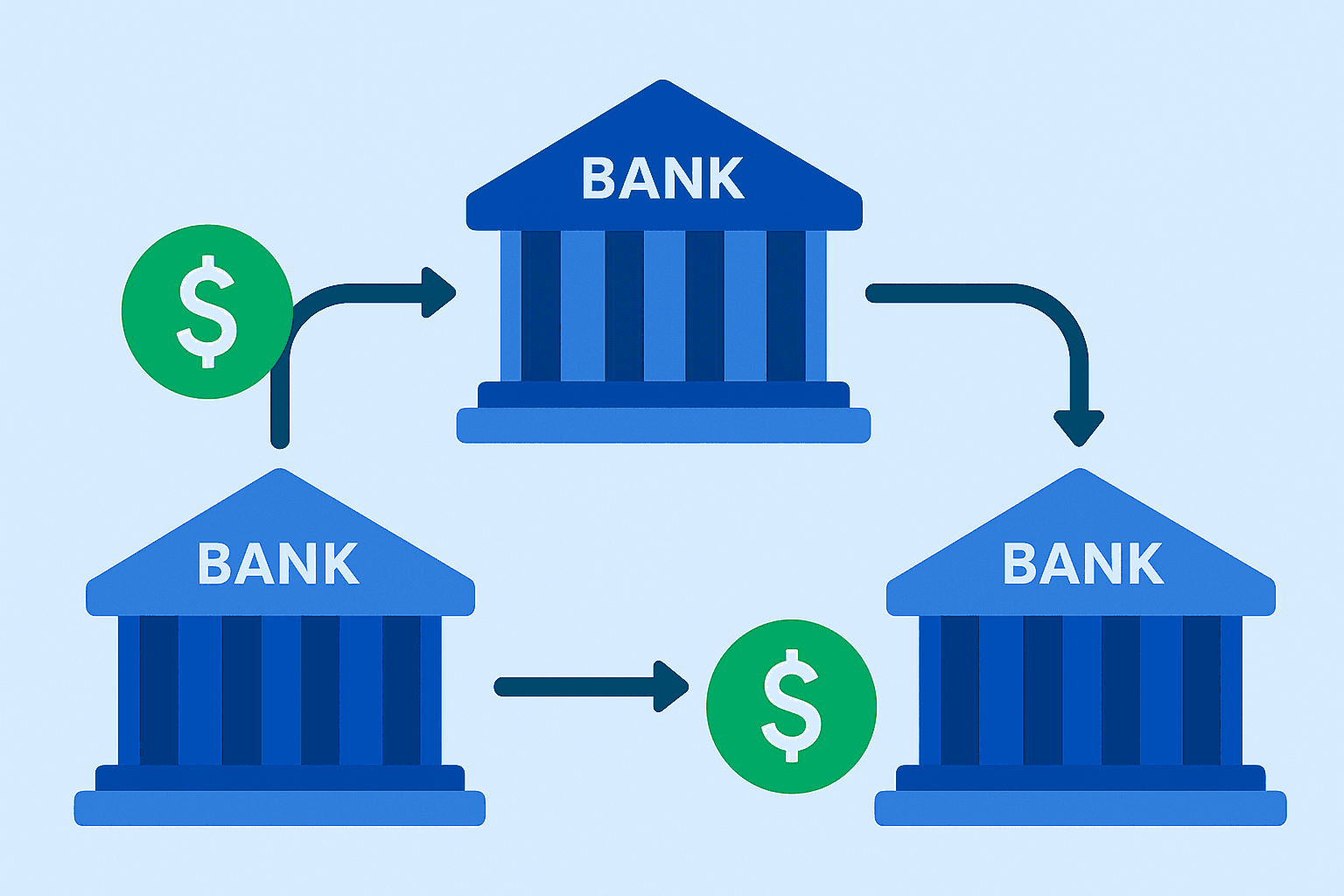
SEPA (Single Euro Payments Area) is a common payment framework that makes euro payments between participating European countries work much like domestic bank transfers. Its purpose is to create a standardised way to send and receive euros across the region, making cross-border payments simpler, more consistent, and easier to process.
For example, a business in France can pay a supplier in Germany €5,000 through a SEPA credit transfer. The French business can send the payment in euros to the supplier’s German bank account using the recipient’s IBAN, without having to navigate a separate payment system for the two countries.
Before SEPA, cross-border euro payments often involved different national banking systems and payment rules, making transfers more complicated and less predictable. SEPA brought these payments under a common framework with standardised rules, maintained by the European Payments Council (EPC), while the European Commission and European Central Bank provide the broader regulatory and oversight framework. SEPA credit transfers use the recipient’s IBAN to identify the destination account, and the accounts involved must be in countries covered by the relevant SEPA scheme. A BIC may also be used in some payment flows, but it is not universally required for SEPA credit transfers.
💡 QUICK INSIGHT
SEPA only covers payments within its participating area. An Indian bank account cannot receive a SEPA credit transfer directly because India is outside the SEPA zone. A payment to India therefore needs a separate international settlement route after the European payment leg.
What Are the Types of SEPA Transfers?
SEPA payments come in three main forms, i.e., Credit Transfer, Instant Credit Transfer, and Direct Debit. For an Indian business receiving an invoice payment from a European client, the two credit-transfer options are the ones that matter most.
- SEPA Credit Transfer (SCT): A standard push payment initiated by the payer. Under the current scheme rules, the beneficiary's bank should receive the funds within one Banking Business Day, although some payments can arrive sooner. SCT has a scheme-level maximum of €999,999,999.99, while individual payment providers may impose lower limits.
- SEPA Instant Credit Transfer (SCT Inst): A real-time push payment available 24/7/365, with funds made available within 10 seconds. The previous €100,000 scheme-level ceiling no longer applies. Individual banks and payment providers can still set their own transaction limits.
- SEPA Direct Debit (SDD): A pull payment that works in the opposite direction. The payee collects an agreed amount from the payer's account under a valid mandate. It is mainly used for recurring payments such as subscriptions, utilities, and other regular bills. For an Indian business receiving an invoice payment, SDD is generally not the relevant SEPA option because the recipient cannot directly collect from an Indian bank account through SEPA.
For an Indian recipient, the SEPA payment type determines how the European payment leg is processed. Once the euros reach the receiving account, any conversion and settlement into India follows a separate process and timeline.
How Does a SEPA Transfer Work?
Money within SEPA moves through a shared clearing and settlement system built specifically for euro payments, rather than the correspondent-banking chain typically associated with international transfers.
For an Indian recipient using a platform such as Skydo, the journey from a European client's bank to the final Indian account happens in seven steps:
How a SEPA payment from Europe reaches an Indian bank account
Client sends the payment with the recipient IBAN, euro amount and a reference.
The client sends the payment with the recipient IBAN, euro amount and a reference.
The sending bank checks it, verifying details, funds and the payee against the IBAN.
The sending bank checks it, verifying details, funds and the payee against the IBAN (EU Verification of Payee).
It enters the SEPA clearing network using ISO 20022 messaging.
It enters the SEPA clearing and settlement network using standardised ISO 20022 messaging.
Euros arrive at the virtual IBAN. The SEPA leg ends here.
Euros arrive at the European EUR receiving account (virtual IBAN). The SEPA leg ends here.
India settlement happens separately. India is outside SEPA, so a SWIFT transfer moves the funds in.
The India settlement happens separately. India is outside SEPA, so a bank-to-bank SWIFT transfer via the AD1 partner moves the funds in.
EUR is converted to INR, with compliance handled and a FIRA generated.
EUR is converted to INR, remittance and compliance are handled, and a FIRA is generated.
INR reaches the Indian bank account within 1 business day of funds reaching the virtual account.
INR reaches the Indian bank account within 1 business day of the funds reaching the virtual account.
- The European client sends the payment. The client logs into their bank and enters the recipient's IBAN, the euro amount, and usually a payment reference. A BIC may also be provided where applicable, but it is not universally required for a SEPA Credit Transfer.
- The sending bank checks the payment. The bank verifies the payment details, available funds, and whether the destination account can receive the relevant SEPA payment. Under the EU's Verification of Payee framework, applicable payment service providers also check the beneficiary information against the IBAN and return a verification result to the payer.
- The instruction enters the clearing network. The payment is processed through a SEPA-compliant clearing and settlement mechanism using standardised ISO 20022 payment messaging, allowing the participating banks to process the instruction electronically.
- Euros arrive at a virtual IBAN. For an Indian business using a platform such as Skydo, the payment first reaches its European EUR receiving account. This is where the SEPA payment leg ends.
- The India settlement happens separately. India is outside the SEPA area, so SEPA itself cannot transfer the euros directly into an Indian bank account. With Skydo, the subsequent settlement into India uses a bank-to-bank SWIFT transfer through its AD1 banking partner.
- EUR is converted to INR. The receiving platform converts the euros into Indian rupees and handles the applicable remittance and compliance processes. Skydo also generates a FIRA for the transaction.
- INR reaches the Indian bank account. Skydo settles the converted funds into the Indian bank account within 1 business day after the funds reach the virtual account.
Note: The IBAN is the key identifier for a SEPA Credit Transfer and can contain up to 34 characters depending on the country. A BIC, also known as a SWIFT code, may be used in some payment flows but is not universally required for SEPA Credit Transfers.
A common mistake is assuming SEPA reaches India. It does not. The SEPA leg ends when the euros land in the European receiving account. Getting the money into India is a separate step, and with Skydo that runs on our AD1 banking arrangement over SWIFT.

"Instant" only describes the European leg of the journey. For an Indian recipient, the time taken for an international wire transfer, i.e., to receive INR depends on both the SEPA payment into the European account and the subsequent settlement into India.
Which Countries Are Part of the SEPA Zone?
41 countries and territories currently fall within the SEPA geographical scope. This includes all 27 EU member states, the UK, four EFTA countries, four European microstates, and five additional countries that have joined the SEPA geographical scope in recent years.
- The 27 EU Members: Austria, Belgium, Bulgaria, Croatia, Cyprus, Czech Republic, Denmark, Estonia, Finland, France, Germany, Greece, Hungary, Ireland, Italy, Latvia, Lithuania, Luxembourg, Malta, Netherlands, Poland, Portugal, Romania, Slovakia, Slovenia, Spain, and Sweden.
- The 4 EFTA Countries: Iceland, Liechtenstein, Norway, and Switzerland.
- The 4 European Microstates: Andorra, Monaco, San Marino, and Vatican City/Holy See.
- The UK Remains Part of SEPA: Leaving the EU did not remove the UK from the SEPA geographical scope. SEPA participation is separate from EU membership.
- The 5 Additional Countries: Albania, Moldova, Montenegro, North Macedonia, and Serbia have been added to the SEPA geographical scope. Albania and Montenegro joined in 2024, followed by North Macedonia and Moldova in 2025. Serbia became the 41st country in May 2025, with Serbian payment service providers becoming eligible for operational readiness from May 2026.
SEPA membership does not require using the euro domestically. Countries such as Denmark, Sweden, Poland, Czech Republic, Hungary, and Switzerland retain their own currencies while participating in SEPA euro payment schemes.
India is outside SEPA. Indian bank accounts cannot receive SEPA payments directly because India is not part of the SEPA geographical scope and Indian banks do not participate in the SEPA payment schemes.
What Does a SEPA Transfer Cost?
A euro-denominated SEPA payment is priced like the equivalent domestic payment for the European sender. The bigger cost difference for an Indian business appears after the euros leave the SEPA payment leg and have to be converted and settled into India.
What the European Sender Pays?
EU rules require banks to charge the same for a cross-border euro payment as they charge for an equivalent domestic payment. That does not mean every SEPA transfer is free, but if the bank's comparable domestic transfer costs €0, the SEPA transfer should cost €0 too. With that,
- Currency Conversion: SEPA's equal-charging rule does not cover FX conversion. If the sender's bank converts currencies, the bank can apply its own conversion charge or exchange-rate margin.
- Payment Errors: An incorrect IBAN or other payment-detail problem can result in correction or administrative charges, depending on the bank's terms.
What Happens on the Indian Side?
Bank FX margins can add to the cost. When a conventional bank converts incoming foreign currency into INR, the exchange rate may include a markup. The exact margin varies by bank and transaction. Along with that,
- Intermediary Charges Apply: International bank wires can pass through intermediary banks, potentially adding fees that are separate from the original SEPA payment charge. Traditional bank wires can take 3-5 working days, reflecting the additional processing involved in conventional international transfers.
- Payment Platforms Can Add their Own Fees and FX Margins: PayPal, for example, applies cross-border fees to applicable international payments and can also charge for currency conversion. The total cost depends on the payment type, country, currency, and applicable PayPal fee schedule.
Additionally, note that there is a broader cost of receiving international payments as an Indian freelancer, and you must know the nuances of international bank transfer fees accordingly.
How Long Does a SEPA Transfer Take?
Inside Europe, a SEPA payment can clear in anywhere from a few seconds to one business day. An Indian recipient, however, waits on two separate legs before the money arrives as INR.
Timing on the European side depends on which SEPA scheme carries the payment:
- SEPA Credit Transfer (SCT): Settles on the same day or within one business day. Under the scheme rules, the beneficiary's bank must generally receive the funds within one banking business day.
- SEPA Instant Credit Transfer (SCT Inst): Makes funds available within 10 seconds, 24/7, including weekends and public holidays.
- SEPA Direct Debit Core: Typically requires two business days, while the B2B scheme generally requires three business days.
- Delays Can Occur: A standard SEPA Credit Transfer submitted after the bank's cut-off time may be processed on the next banking business day. Weekends and bank holidays can also extend the calendar time because they do not count as banking business days.
The India leg runs on a separate clock.
- Once euros reach a virtual IBAN, converting them to INR and crediting an Indian bank account typically takes one additional business day (T+1) with a provider such as Skydo.
- Speed on the European side does not automatically carry over to India. Even if a SEPA Instant payment reaches the virtual account within seconds, the subsequent INR settlement still follows the provider's own processing timeline.
- For an Indian recipient using a setup such as Skydo, 1 to 2 business days is a realistic overall timeline from the European client's payment to the INR reaching the Indian bank account.
SEPA vs SWIFT: Key Differences
SEPA and SWIFT differ mainly in their coverage, currency, cost, speed, and the destinations they can serve. For an Indian business, the most important distinction is that SEPA itself cannot settle a payment directly into India, while SWIFT provides the messaging infrastructure used for international payments that can reach India.
| Dimension | SEPA | SWIFT |
|---|---|---|
| What it is | A set of standardised euro payment schemes operating across the SEPA geographical area | A global financial messaging network used by banks and financial institutions to communicate cross-border payment instructions |
| Currency | Euro | Multiple currencies |
| Reaches India? | No. India is outside the SEPA geographical area | Yes. International payments can reach Indian banks through banking arrangements that use SWIFT |
| Identifiers | IBAN is the key account identifier; BIC may also be used where applicable | SWIFT/BIC identifies the receiving institution, alongside the account details required by the destination bank |
| Cost pattern | Cross-border euro payments within the EU/EEA are generally priced no higher than equivalent domestic payments | Can involve sending-bank fees, intermediary or correspondent charges, and foreign-exchange margins |
| Speed | Around 10 seconds with SEPA Instant or up to 1 banking business day with standard SCT | SWIFT itself does not set a settlement time. Actual international payment speed depends on the banks, currencies, route and beneficiary bank |
| Documentation for India | Cannot directly settle into an Indian bank account | An inward remittance into India may generate FIRC/FIRA documentation, depending on the transaction and applicable banking requirements |
SEPA is designed to make euro payments within its geographical area fast, standardised and similar to domestic payments. SWIFT serves a much broader purpose, providing the messaging infrastructure financial institutions use to communicate international payment instructions across
currencies and countries. SWIFT itself does not move or settle the money.
A European client's finance team might still ask for a SWIFT or BIC code even when planning to pay through SEPA. That does not mean the payment is being sent through SWIFT. BIC can be used as a financial-institution identifier within SEPA payment messages, while the SEPA payment itself follows the relevant SEPA scheme and clearing arrangements. An IBAN is the key account identifier for a SEPA Credit Transfer, and BIC is not universally required from the payer.
Holding an IBAN is not proof of SEPA membership either. Countries outside the SEPA geographical area can use IBAN-based account numbering without participating in SEPA payment schemes.
For an Indian recipient, the distinction becomes especially important at the point where the payment leaves the SEPA environment. A SEPA payment cannot itself settle into an Indian bank account. The subsequent India leg requires a separate international settlement arrangement.
How Can Indian Businesses Receive SEPA Transfer Payments?
Indian businesses cannot receive a SEPA transfer directly into an Indian bank account because India is outside the SEPA geographical area. Indian bank accounts use an account number and IFSC rather than an IBAN, so a European client cannot send a standard SEPA payment directly to an Indian HDFC, ICICI, or other domestic bank account.
The practical workaround is a virtual EUR account. Cross-border payment platforms such as Skydo provide European receiving details, including a virtual EUR IBAN. The European client sends euros to those details through SEPA, after which the platform handles conversion and settlement into the Indian bank account.
The virtual IBAN is a receiving arrangement, not a separate overseas bank account owned by the Indian business. The provider controls the underlying account structure and routes the received funds to the Indian bank account registered with the platform.
How Skydo solves this for Indian exporters and freelancers:
Skydo provides a free EUR virtual account alongside USD, GBP, SGD, AUD, and CAD receiving accounts. The entire account setup is digital, with no monthly subscription fee, and hidden charges.
European clients can pay the EUR virtual account through SEPA using the account's European banking details. The subsequent settlement into India is handled separately by Skydo rather than through SEPA itself.
Skydo also has a flat-fee pricing, i.e.,
- Payments under $2,000 cost $19
- Payments from $2,000 to $10,000 cost $29
- Payments above $10,000 cost 0.3%
There are no monthly fees, so businesses pay when they transact. Settlement takes up to 1 working day after the funds reach the virtual account. Every transaction includes a free FIRA (Foreign Inward Remittance Advice) certificate, generated instantly, and automatically to provide documentation for the resulting foreign inward remittance.
Skydo is built for Indian businesses receiving export payments, including exporters of goods and services, freelancers, and eligible online sellers.
What is a SEPA transfer, and how is it different from a regular bank transfer?
A SEPA transfer is a euro payment moving between accounts across the 41 countries inside the Single Euro Payments Area, priced the same way a domestic transfer would be. A regular international bank transfer instead routes through several correspondent banks, each attaching its own fee and timeline.
Is SEPA available in India, can I receive a SEPA transfer directly into my Indian bank account?
Is IBAN the same as SEPA, and do I need an IBAN to receive EUR from European clients?
What is the difference between SWIFT and SEPA, and which one brings money to India?
How long does a SEPA transfer take to reach an Indian bank account?
What is the SEPA transfer limit?
Do I need a FIRC or FIRA when receiving EUR payments from European clients?
What information does my European client need to pay me through SEPA?