ACH vs Fedwire vs SWIFT: Speed, Cost & Key Differences

TL;DR - Summary
- What are ACH, Fedwire and SWIFT? - ACH is a US batch payment network. Fedwire settles US-dollar transfers individually in central-bank money. SWIFT carries financial messages; banks and payment systems move the funds.
- How fast do ACH, Fedwire and SWIFT payments settle? - ACH credits can settle the same day or within two banking days. Fedwire settlement is immediate and final when processed. SWIFT-based bank wires can arrive quickly or take several business days; the India payout adds its own processing time.
- What do ACH, Fedwire and SWIFT cost the sender and the recipient? - ACH is often low-cost. Wire charges depend on the bank, account and route; incoming fees, intermediary deductions and currency conversion can all affect the amount received.
- Which matters for an Indian freelancer or exporter? - A direct bank wire to India commonly uses SWIFT messaging. ACH or Fedwire can fund a supported US collection account or the US leg of a cross-border payment, followed by a separate India payout.
What Are ACH, Fedwire and SWIFT?
ACH (Automated Clearing House) processes US payments in batches, including payroll, vendor payments and direct debits. Fedwire is the Federal Reserve’s real-time gross settlement system for US-dollar payments between eligible participants. SWIFT is a global financial messaging network, not a settlement system. Banks use its instructions alongside accounts and payment systems to complete international wires.
A Bengaluru designer invoicing $3,000 could receive a SWIFT-based bank wire in India. Alternatively, the client could fund a supported US collection account through ACH or Fedwire before the provider remits to India.
ACH vs Fedwire vs SWIFT: Key Differences
Compare reach, settlement, charges and return rules below. ACH and Fedwire do not directly credit Indian domestic accounts, but can support cross-border payment legs. Remittance evidence depends on the India payout provider, not the US rail alone.
| Feature | ACH | Fedwire | SWIFT |
|---|---|---|---|
| Geography | US network; can support cross-border legs | US-dollar settlement; can support cross-border legs | Global financial messaging |
| Speed | Same day to two banking days for credits | Immediate settlement when processed | Credit timing depends on bank and route |
| Cost to sender | Bank/platform tariff | Bank tariff; e.g. $30 outgoing at BofA | Bank tariff plus possible FX costs |
| Cost to recipient | Bank/platform fees may apply | Incoming bank fees may apply | Receiving/intermediary fees may apply |
| Reversible? | Specific reversal and return rules | Settlement final between participants | Underlying transfer rules apply |
| FIRC issued? | India payout provider determines evidence | India payout provider determines evidence | Bank/provider determines evidence |
| Use case (Indian recipient) | Supported US collection, then India payout | Supported US collection or correspondent leg | International bank wire instructions |
- Speed: ACH credits settle the same day or within two banking days. Fedwire settlement is immediate when processed. SWIFT message delivery is not final beneficiary credit.
- Cost to sender: Compare the bank’s actual tariff rather than treating fees as network-wide prices. For example, Bank of America lists $30 for an outgoing domestic wire and $45 for an international USD wire; foreign-currency wires have no outbound wire fee but include an exchange-rate markup.
- Cost to recipient: ACH may be low-cost, but receiving banks or platforms can charge. Incoming domestic wires can also carry fees. With international wires, correspondent banks may take a cut before the money arrives, depending on the agreed fee arrangement.
- Reversibility: Eligible erroneous ACH entries can be reversed within five banking days; other returns follow separate rules. Fedwire settlement is final. SWIFT recovery depends on the underlying transfer.
- FIRC/FIRA availability: Neither is automatically issued by a SWIFT message. Ask your bank or provider what documents accompany the India remittance.
US clients should use Skydo’s local USD instructions for supported US payments, and its separate International SWIFT instructions where applicable. Skydo supplies free FIRA for settled payments; incoming SWIFT deductions can still apply.
- Skydo advertises free collection accounts in USD, GBP, EUR, SGD, AUD, CAD and AED. Activation depends on onboarding and verification, not a guaranteed 10–15-minute setup.
- Skydo publishes $19 + GST up to $2,000, $29 + GST for $2,001–$10,000 and 0.3% + GST above $10,000. No monthly fee applies. Amazon Global Selling pricing differs; check your quote.
- Skydo advertises automatic FIRA for inward remittances. FIRA is remittance advice, not automatically a substitute for every certificate or export-reporting requirement.
- Local collections avoid incoming international SWIFT charges. International SWIFT receipts can incur bank deductions; Skydo charges no additional SWIFT fee for the onward India transfer, apart from its fee and GST.
✅ PRO TIP
Agree supported receiving instructions with your client. Compare the full India payout time, costs and documents, not just the US payment method.

How Does ACH Transfer Work?
ACH processes bank instructions in batches. ACH credits may settle the same day, next banking day or within two banking days; bank or platform processing can add time.
ACH generally uses an ACH routing number and account number. Same Day ACH requires eligibility and bank cut-offs; International ACH Transactions are ineligible. Extra charges may apply.
ACH is widely used for US payroll, subscription billing and recurring vendor payments. A US company paying a freelancer every month via "direct deposit" is typically using ACH.
Indian recipients commonly use provider-supported US collection accounts. The provider then remits to India; a US collection balance is not the same as Indian bank credit.
Eligible erroneous ACH entries can be reversed within five banking days. Longer unauthorised consumer-debit return windows are not a general right for business clients to reclaim valid ACH invoice payments.
⚠️ COMMON MISCONCEPTION
“Sent by ACH” does not prove receipt in either country. Check US collection status and the separate India payout.
How Does Fedwire Transfer Work?
Fedwire settles individual US-dollar payments immediately, finally and irrevocably between participants when processed. Customer credit may still need bank checks.
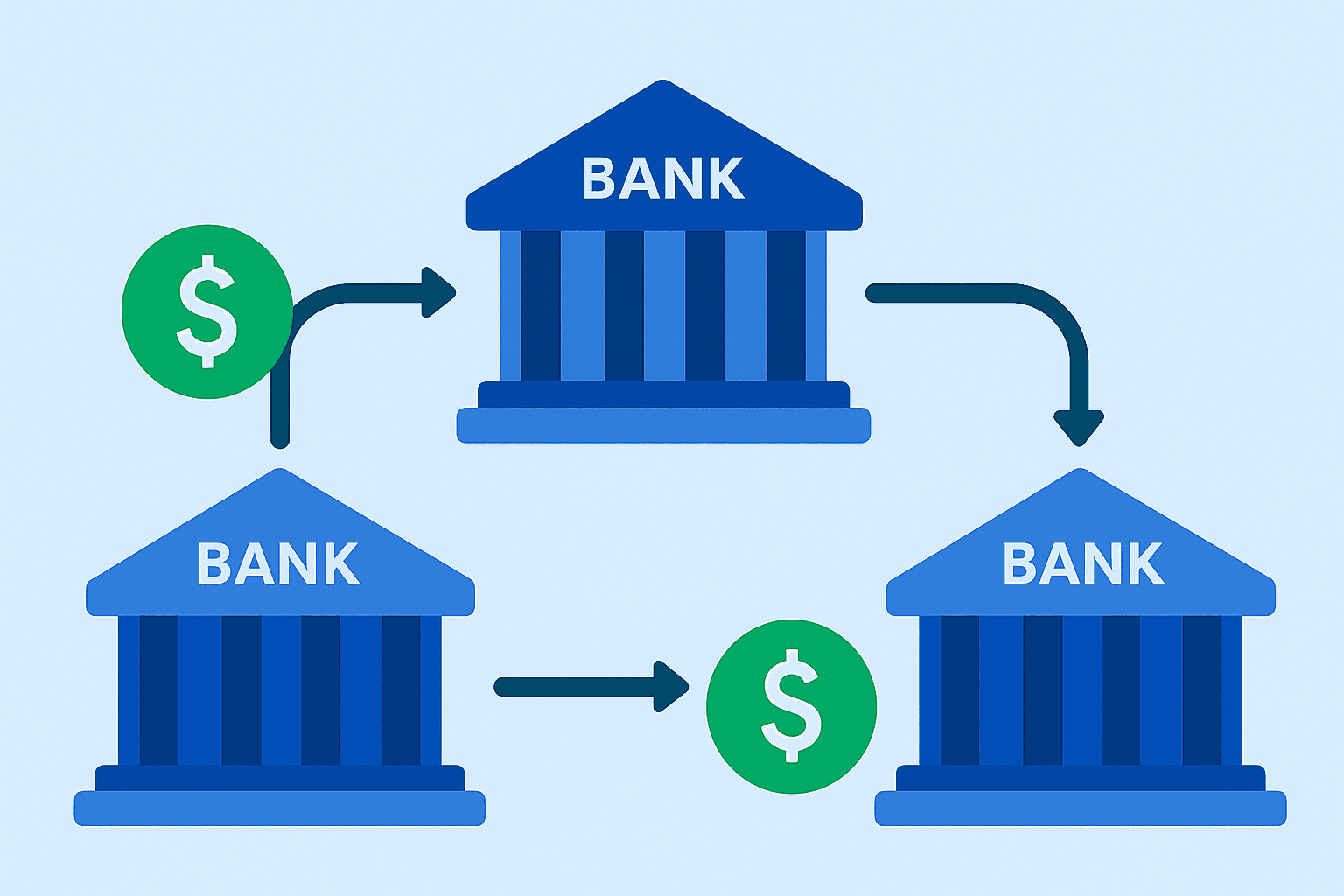
That is the core of Fedwire vs ACH: ACH batches payments, while Fedwire processes each one on its own.
Fedwire connects eligible institutions with Federal Reserve accounts. Eligible US branches or agencies of foreign banks can participate too. It does not directly credit an Indian domestic bank account.
Fedwire can fund a supported US collection account or the US-dollar leg of a correspondent-bank wire continuing to India.
Fedwire’s business-day window runs from 9 p.m. ET on the preceding calendar day to 7 p.m. ET, excluding designated non-business days. Banks can impose earlier customer cut-offs; it is not 24/7.
Fedwire serves time-sensitive interbank transfers, securities funding and business invoices. It is not restricted to large institutions or unavailable simply because the beneficiary is a freelancer.
⚠️ COMMON MISCONCEPTION
Final Fedwire settlement does not mean immediate rupee credit. The provider or correspondent banks still complete the India payout.
How Does SWIFT Transfer Work?
A SWIFT money transfer runs on a secure messaging network. SWIFT does not move money itself. It sends standardized payment instructions between member banks worldwide so they can settle funds on behalf of their customers. When a US client initiates a SWIFT wire to an Indian bank account, the message travels from the sender's US bank, possibly through one or more correspondent banks, to the recipient's bank in India.
SWIFT messages can arrive quickly, but bank credit depends on processing, checks and conversion. Some wires arrive the same day; others take several business days.
Use your receiving bank’s complete instructions: beneficiary name, account number, SWIFT/BIC and any required IFSC or correspondent details. Indian bank accounts do not use IBANs. A US routing number may identify a US intermediary, but it does not replace your Indian bank’s SWIFT code.
SWIFT is widely used for international bank wires to India. Other authorised collection and remittance arrangements also exist; SWIFT is not the only valid route.
FIRA and FIRC are not identical or automatic with SWIFT. For service-export GST refunds, the portal requires relevant BRC/FIRC details. Check your bank’s documents; there is no universal FIRC requirement for every income-tax return.
Correspondent banks may deduct fees, depending on the payment’s charge instructions. For illustration, a $5,000 invoice less $60 in deductions leaves $4,940 before currency conversion or receiving-bank charges. This is an example, not a standard fee.
✅ PRO TIP
For full-invoice delivery, ask about OUR charges or a guaranteed-full-amount service. SHA can leave intermediary and receiving-bank charges with you.
ACH vs Fedwire vs SWIFT: Which Is Faster?
Fedwire settles immediately between participants when processed. ACH credits settle the same day or within two banking days. SWIFT-based credit timing varies; there is no universal fastest-to-India ranking.
- Distinguish bank settlement from usable funds in India. Collection, conversion, compliance checks and payout can follow different schedules.
- Compare beneficiary-credit estimates for the same route and amount, including weekends, holidays and customer cut-offs.
After ACH collection, allow for the provider’s conversion and India payout. This may happen automatically, without a manual withdrawal.
A SWIFT message may arrive before customer credit. Use the payment reference to ask the bank or provider about delays.
For urgent invoices, get an end-to-end estimate. Invoice size and a direct USD–INR corridor do not prove one route is faster.
ACH vs Fedwire vs SWIFT: Which Is Cheaper?
ACH is often low-cost. Wires can carry sender and recipient fees, including incoming Fedwire charges. Compare intermediary deductions, receiving fees and exchange rates too.
Illustration: a $3,000 invoice less $60 in deductions leaves $2,940; less $30 leaves $2,970, before conversion. These are not quoted route charges.
A payment platform that provides a local virtual USD account can avoid the international intermediary chain on collection. Still compare sender charges, provider fees, GST and the exchange rate.
For large invoices, compare the complete quote. Percentage fees grow with value; correspondent charges need not grow proportionately.
✅ PRO TIP
Compare rupees received for the same invoice and conversion time, including fees, GST and the exchange rate.
When Should You Use ACH, Fedwire or SWIFT?
Choose by account support, urgency, amount and total cost. ACH suits routine collections, Fedwire urgent US-dollar funding, and SWIFT international wires. Check documents separately.
- Use ACH when: your client and receiving account support it and the full payout timetable works. It is not limited to small recurring payments.
- Use Fedwire when: urgent US-dollar funding is needed into a supported account or correspondent route. Agree instructions and cut-offs with the bank or provider.
- Use SWIFT when: the client sends an international wire using your bank’s or provider’s instructions. Check fees, timing and documents; SWIFT does not guarantee FIRC.
Compare the complete route: where the client pays, how funds reach India, deductions and export-receipt documents.
Which Payment Network Is Best for International Transfers?
SWIFT has broad international messaging reach. It neither settles money nor generates FIRC, and is not inherently more compliant than another permitted route.
- ACH: A practical US collection option when a provider handles the onward India remittance. The US collection step alone does not supply Indian inward-remittance evidence.
- Fedwire: A fast US-dollar settlement option that can form part of an India-bound payment through a supported US collection account or correspondent bank.
- Which one wins: No universal winner. Compare supported methods, India payout timing, total cost, exchange rate and documents.
A US collection account with automatic India remittance and FIRA can simplify tracking. Confirm any additional BRC/FIRC evidence your filing requires.
How to Choose the Right Payment Method for Your Business
Choose by client location, account support, total cost, timing and return risk. Confirm the documents needed for your export type.
- Where your client pays from: US clients may use supported ACH, Fedwire or international wires. Elsewhere, compare local collections with bank wires.
- Whether you need FIRC documentation: For service-export GST refunds, obtain relevant BRC/FIRC details. Do not assume FIRA substitutes for FIRC; ask your accountant what applies.
- Payment size and frequency: Fixed fees weigh more on small invoices; percentage fees grow with value. Compare actual quotes for your usual receipts.
- Reversibility risk: ACH has no blanket 60-day business-payment chargeback right. SWIFT messaging does not protect an underlying transfer against recalls, fraud recovery or legal action.
Compare supported collection methods, India payout, fees, FX and export documents. Marketplace sellers must also check payout compatibility. Skydo supplies FIRA for settled payments; Amazon Global Selling pricing differs.
When a payment passes through more than one banking system, exporters should maintain a clear trail between the client’s original transfer and the final credit in India. The US collection confirmation and the Indian inward remittance advice may be generated separately, so keeping both linked to the invoice makes payment reconciliation and export documentation much easier.

How Does Skydo Help You Receive Payments via ACH, Fedwire and SWIFT?
Skydo gives Indian businesses local US account details that accept ACH and Fedwire payments, plus an international SWIFT account for clients in countries where Skydo has no local account. Each payment is converted to INR at the live mid-market rate and reaches your Indian bank account within 24 hours, with a free FIRA.
ACH: For Most US Invoices
Your US client pays your Skydo US account with the routing number and account number, just as they would pay a local vendor. At most US banks, ACH costs the client nothing or a few cents, and it takes 1 to 3 business days to reach your Skydo account. ACH suits most regular invoices.
Fedwire: For Large or Urgent US Payments
Your client can also send a domestic wire to the same US account details. Fedwire settles each payment on its own, in real time, during operating hours. That makes it a good fit for high-value invoices or payments that can’t wait for an ACH batch.
SWIFT: For Clients Outside Skydo’s Local Account Countries
Clients in the US, UK, Canada, Australia, UAE, Germany, Singapore and Nigeria pay Skydo by local bank transfer. Clients in other countries, such as Malaysia, China or Japan, send a SWIFT payment to Skydo’s International SWIFT Transfer Account in the UK. Skydo then converts and settles the money just like a local payment.
What Happens After the Payment Lands
- Conversion: Funds convert to INR at the live mid-market rate, with zero FX markup.
- Fees: A flat $19 on payments up to $2,000, $29 from $2,001 to $10,000, and 0.3% above $10,000. There are no setup or monthly fees.
- Settlement: INR reaches your Indian bank account within 24 hours.
- FIRA: Skydo issues one free and automatically for every payment, and you can download it from your dashboard.
To get your US account and SWIFT account details, sign up for Skydo. Setup is free and takes under 5 minutes.
What is the difference between a SWIFT code and a routing number?
A routing number identifies a US financial institution for a payment service such as ACH or a wire; the required number can differ by service. A SWIFT/BIC identifies an institution internationally. Use your Indian bank’s SWIFT instructions, including US intermediary routing details if specified.
What is the difference between Fedwire and ACH?
How long does an ACH transfer take?
Is Western Union a wire transfer?
Which is safer for large payments - ACH or SWIFT?
Can an Indian freelancer receive Fedwire payments?
Does ACH generate a FIRC for Indian exporters?
What happens if a SWIFT payment is deducted mid-route?