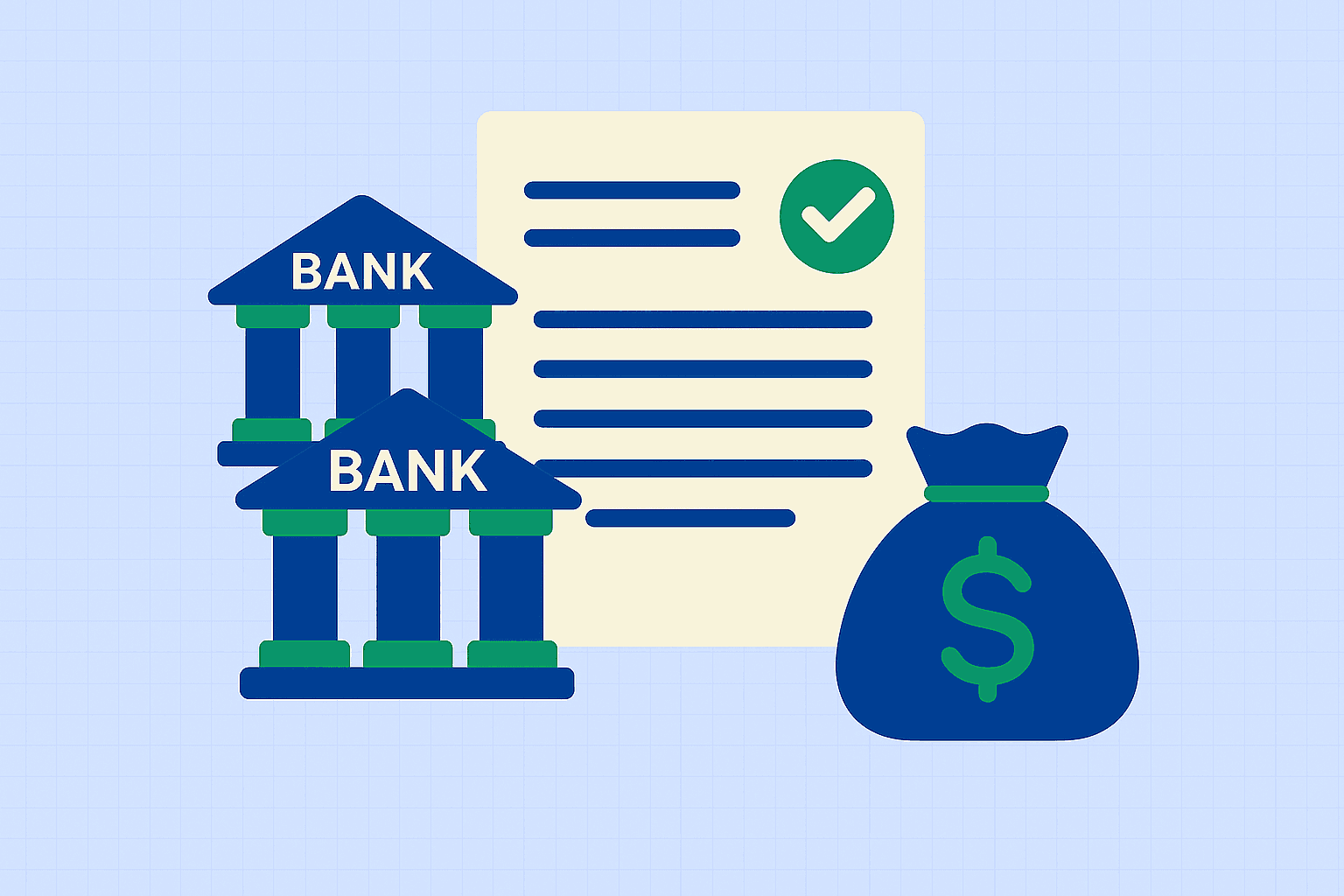
B2B Payments Platform: Methods, Fees & India Guide

TL;DR - Summary
- What are cross-border B2B payments? - Cross-border B2B payments are payments made between businesses located in different countries. For example, a US-based customer paying an Indian software company in USD is a cross-border B2B payment.
- How do B2B Cross-Border Payments operate? - The payment moves from the buyer's bank through one or more intermediary or correspondent banks before reaching the exporter's bank. The funds are then converted into INR, where required, and credited to the exporter's account.
- How can Indian companies receive B2B Cross-Border Payments? - Indian companies can receive cross-border payments through SWIFT bank transfers, international ACH transfers, and fintech platforms that provide foreign-currency virtual accounts. Each method differs in terms of cost, processing time, and convenience.
- What compliance applies to B2B Cross-Border Payments? - B2B cross-border payments in India are subject to FEMA and RBI requirements, including applicable purpose codes and export realisation and reporting requirements. Documents and systems such as FIRC/BIRC, EDPMS, and eBRC may also apply depending on the nature of the transaction.
- What's the biggest pain point in B2B Cross-Border Payments? - One of the biggest challenges is the lack of transparency around fees and processing times. Correspondent bank charges, currency conversion costs, and other deductions can mean that the amount received is lower than the amount originally sent by the client.
What Are B2B Payments Platforms?
A B2B payments platform is software that collects, converts, reconciles and settles the invoices between two businesses. For an Indian exporter, it means translating a foreign client's invoice into rupees inside a domestic bank account, with the compliance paperwork attached, not chased down later.
B2B payments are different from B2C payments in three key ways:
- Larger transaction sizes: B2B transactions are usually bulk orders or long-term service agreements rather than a one-off retail transaction.
- Payment cycles are on net terms: Instead of paying at checkout, buyers typically agree to net-30, net-60, or even net-90 terms. Net terms specify the number of days a business has to pay its invoice after receiving it. For example, Net 30 means payment is due in 30 days, while Net 90 extends that window to 90 days.
- Approval and reconciliation are multi-step: A B2B payment usually requires internal buyer approvals, purchase orders, and accounting reconciliation on both sides- no single tap-to-pay moment.
How do B2B payments platforms work?
How a B2B payment reaches an Indian exporter
Invoice raised with amount, currency, terms and purpose.
Buyer approval by the client's finance team.
Payment instruction by transfer, wire, card or platform.
Settlement via an AD-1 bank, with RBI documentation.
Conversion and credit to the Indian bank account in INR.
FIRC or FIRA issued as proof of export earnings.
Reconciliation against the original invoice. Steps 4 to 7 (amber) are the friction.
A B2B payments platform moves value from a buyer's business to a seller's business against an invoice with agreed terms, net-30, net-60, or milestone-based. Unlike a card tap, there are approvals, purchase orders, and reconciliation on both sides in the flow.
This is what that looks like for an Indian exporter receiving a payment of $5,000 from a US client:
- Invoice raised: The Indian exporter raises an invoice mentioning the amount, currency, payment terms, and purpose of payment.
- Buyer approval: The finance team within the foreign client reviews and approves, usually through an internal workflow.
- Payment instruction: The buyer sends the money by bank transfer, wire, virtual card, or payments platform.
- Settlement: Money moves on banking rails, with currency conversion. This step is through an Authorised Dealer Category-1 (AD-1) bank and needs to be documented for the Reserve Bank of India (RBI) for cross-border flows into India.
- Conversion and credit: The platform converts the foreign currency into INR and credits the Indian bank account.
- FIRC/FIRA issued: The Foreign Inward Remittance Advice (FIRA)/Foreign Inward Remittance Certificate (FIRC) is issued by the platform or bank as proof of export earnings reaching India.
- Reconciliation: The amount received in rupees is checked against the original invoice in the accounting system.
The most friction for Indian exporters is in Steps 4-7: currency conversion, sanctions screening, RBI documentation, and matching a settled rupee amount to a dollar-denominated invoice. Modern B2B payment solutions automate these steps by auto-matching settled amounts to invoices, validating purpose codes before submission, and flagging currency or amount mismatches before settlement, not after.
Best B2B payments platforms for Indian businesses
The best ways to receive B2B payments in India for businesses receiving foreign invoices are ones with RBI Payment Aggregator – Cross Border (PA-CB) authorisation, automatic FIRA issuance, transparent FX pricing, and settlement of funds to an Indian bank account in one business day.
Here's how the big choices break down:
Bank wire (traditional): Used extensively for high-value or time-sensitive cross-border transactions, with no limit on transfer amount. Fees come from three places: the FX spread (banks convert at an interbank rate they don't show you, then mark it up), intermediary/correspondent bank deductions ($15-40 for each SWIFT hop, and there can be more than one hop), and time spent on manual reconciliation. There's also uncertainty about the timing of settlement.
Skydo has obtained full Payment Aggregator - Cross Border (PA-CB) authorisation, with flat-fee pricing perfect for service invoices and a free FIRA certificate on every transaction. Skydo provides virtual accounts in six currencies (USD, EUR, GBP, CAD, AUD and SGD), settlement in 1 working day, and no monthly fees.
PayPal: Supports B2B and B2C payments but was built for consumer and outbound payments first. Fees are percentage-based and compound on large invoices. PayPal isn't set up for FEMA-compliant inward remittances, and its FIRA support is limited.
Stripe: Popular for API integrations, with percentage-based fees (2.9% + $0.30 per transaction on pay-as-you-go). It is built for outbound/domestic card payments, and there is no India-specific inward remittance compliance baked into it.
Razorpay: Has full PA-CB authorisation (as of December 2025). This is useful if you are already running an Indian checkout and want to add a cross-border collection on the same stack. Pricing is an FX markup based on a percentage, with FIRA support. International settlement is 3-5 business days and is approximately 1% on the MoneySaver export route, or up to approximately 3% + 18% GST on cards.
How do these B2B payments platforms compare against each other?
The most important criteria for an Indian exporter getting a $5,000 payment from a US client are: fees paid, time for settlement, availability of Foreign Inward Remittance Certificate (FIRC)/FIRA, and status of compliance with the RBI. The platforms below are compared on these criteria.
| Platform | Best for | Fees on $5,000 receipt | Settlement time | FIRA/FIRC | RBI PA-CB status |
|---|---|---|---|---|---|
| Skydo | Indian exporters, freelancers, Amazon sellers | $19 flat (under $2,000) / $29 flat / 0.3% (over $10,000) | In 24 hours | Free FIRA on every transaction | Full PA-CB authorisation |
| Bank wire | High-value urgent transfers | FX markup (hidden) + $15–$40 SWIFT fees per hop | 3-7 business days (unpredictable) | Manual, chase your bank | Not applicable (AD-1 bank) |
| PayPal | Consumer/freelancer payments | Up to ~8% total (FX markup + fees) | 3-5 business days | Not auto-issued | Not India PA-CB for inward |
| Stripe | API-first, SaaS | 2.9% + $0.30 per transaction + FX conversion | 2-7 business days | Not auto-issued | Not India PA-CB for inward |
| Razorpay | Existing Indian checkout adding cross-border | ~1% (MoneySaver export route) to ~3% + 18% GST (cards) | 3-5 business days | Supported | Full PA-CB authorisation |
For Indian exporters, the highest cost in B2B cross-border payments is the FX spread rather than the visible transaction fee. Banks use a hidden exchange rate and then add a markup. So on a $10,000 invoice at an illustrative mid-market rate of ₹95, a two-rupee spread against the mid-market rate amounts to a loss of ₹20,000 on a single payment.
Correspondent banks can also take $15-40 per hop on a SWIFT wire, and there can be more than one hop, cutting down the amount that actually lands.
If you are an Indian freelancer, agency, or exporter billing foreign clients, Skydo provides a free USD/EUR/GBP virtual account and flat-fee settlements, and takes 5 minutes to set up.
What Compliance Challenges Do B2B Payment Platforms Solve?
Indian exporters' B2B payment platforms address three core compliance challenges: FEMA purpose-code tagging on every inward payment, automatic FIRA/FIRC issuance for GST refund eligibility, and reconciliation of received payments against reported GST invoices.
- FEMA & purpose codes: FEMA (Foreign Exchange Management Act) makes it mandatory to have a purpose code for every inward payment stating what the money is for, so that it can be traced by the RBI. If you use the wrong purpose code or omit it, your transaction may be rejected or delayed in settling. The compliant platform will automatically tag each inward payment with the right purpose code, saving the exporter the hassle of chasing this up manually.
- FIRC and FIRA: FIRC stands for Foreign Inward Remittance Certificate, and FIRA stands for Foreign Inward Remittance Advice. The FIRA is now issued electronically as an eFIRA. It is proof of export earnings reaching India. Exporters need to file FIRC/FIRA for claiming a GST refund on zero-rated exports. In the absence of an auto-issued FIRA, the exporter has to run after their bank for the document before their CA can certify the inward remittance for the purpose of GST refund or tax. A platform that automatically issues FIRA on every receipt removes this chase from the finance team's workflow.
- GST and e-invoicing reconciliation: For the exporter's books, GST filings, and bank records to be in sync, the payments received need to tally with the invoices declared in GST returns. Platforms that integrate with accounting software like Zoho Books or Tally automatically sync settled amounts with invoices, decreasing the chance of manual reconciliation errors.
- RBI PA-CB authorisation: Not all platforms have an RBI Payment Aggregator – Cross Border (PA-CB) authorisation for inward remittances. Only a PA-CB final (not in-principle) authorisation holder can process cross-border receipts into India without regulatory doubt. An "in-principle" approval is a step in the licensing process, not a licence being granted.
How To Choose the Right B2B Payments Platform as an Indian Exporter?
Six-point check for a B2B payments platform
Direction first —ndash; inward into India, or outward to suppliers? Few do inward cleanly.
Licence check —ndash; full RBI PA-CB authorisation for your direction. In-principle is not a licence.
FX transparency —ndash; a margin shown in paise per dollar, not a spread revealed after conversion.
Compliance evidence —ndash; auto FIRA, purpose-code tagging, no disruption to FIRC and GST.
Speed and settlement —ndash; money in your Indian account by next business day (T+1).
Fit and integration —ndash; accounting sync, API depth, and multi-currency receiving.
Choosing the right platform for receiving international payments into India means running a six-point check, in order:
Step 1: Direction first - Are you receiving inward payments (most Indian exporters) or making outward payments to suppliers? Most global platforms are built for outbound payments. Few do inward-into-India cleanly.
Step 2: Licence check - Ensure that the provider has full RBI Payment Aggregator – Cross Border (PA-CB) authorisation for your direction (inward, for receiving). In-principle is a stage, not a completed licence.
Step 3: FX transparency - Find out what FX rate the platform converts at and what the exact margin is. Budgeting is easier with a platform that displays the margin in paise per dollar than one where a hidden spread is only revealed after conversion.
Step 4: Compliance evidence - Confirm auto FIRA issuance, purpose-code tagging, and no impact on your existing FIRC and GST workflow.
Step 5: Speed and settlement - Confirm that your money has reached your Indian bank account by the next business day (T+1). Correspondent-bank limbo of SWIFT wires can last a week.
Step 6: Fit and integration - Check direct integration with your accounting software (Zoho Books or Tally), API depth if you are a marketplace paying out to sellers, and multi-currency receiving so that you can be paid in USD, GBP, or EUR without opening a foreign bank account.
Mistakes to avoid:
- Choosing a domestic-only aggregator; a gateway built for Indian cards cannot settle a foreign wire into rupees.
- No PA-CB authorisation check; only a provider with final RBI PA-CB authorisation can process cross-border receipts without regulatory doubt.
- Headline fee vs all-in FX spread: on larger invoices, the margin over the mid-market rate is where most of the cost lives.
- Not checking whether FIRA is auto-issued: if it isn't, GST refunds and EDPMS reconciliation become a manual chase.
- Ignoring per-transaction caps and eligibility of entities, some platforms have caps on invoices or only allow freelancers/sole proprietors, not private limited companies.
- Assuming reconciliation and API fit will sort themselves out, at volume you need accounting sync, or finance headcount grows with each new corridor.
How Does Skydo Simplify Cross-Border B2B Payments for Indian Exporters?
Skydo is a one-stop solution for Indian exporters to simplify international B2B payments. The platform offers free multi-currency virtual accounts, flat-fee pricing with no hidden forex markup, automatic FIRA issuance, and full RBI PA-CB authorisation, and can be set up in just 10-15 minutes.
- Free virtual accounts in 6 currencies: Skydo offers free local receiving accounts in USD, EUR, GBP, CAD, AUD and SGD. The exporter shares local account details with its foreign client, and the client pays as if it were a domestic transfer, with no SWIFT complexity on the payer's side.
- Flat-fee pricing, no hidden forex markup: Pricing is simple: less than $2,000 is $19 flat, $2,000-$10,000 is $29 flat, and over $10,000 is 0.3%. No monthly fees; you pay only when you make a transaction.
- Automatic FIRA certificate on every transaction: Skydo offers a free FIRA certificate on every inward remittance, no chasing the bank, no delay to the CA, no manual paperwork before claiming a GST refund on zero-rated exports. Skydo also provides Electronic Bank Realisation Certificate (eBRC) closure support: the exporter can link their Directorate General of Foreign Trade (DGFT) account as a one-time activity and then bulk-upload shipping bills to auto-map IRMs and generate eBRC in a click. EDPMS closure assistance is available too.
- RBI-authorised and FEMA-compliant: Skydo is an RBI-authorised and FEMA-compliant Payment Aggregator, Cross Border (PA-CB) built for Indian exporters receiving cross-border B2B payments, not a global platform retrofitted for India. The correct purpose code is automatically assigned to each inward payment.
What is the difference between a B2B payments platform and a regular payment gateway for Indian businesses?
A typical payment gateway, such as a domestic checkout facility, will authorise a transaction at the point of payment. A B2B payments platform takes care of the entire process, settlement, currency conversion, compliance documentation, and reconciliation. For Indian businesses receiving payments from abroad, the crucial difference is whether the platform is authorised by RBI PA-CB and auto-issues FIRA; a domestic gateway does neither.
Is Stripe or PayPal a good B2B payments platform for receiving money from foreign clients in India?
Do I get a FIRC automatically when I receive an international B2B payment?
How long does it take to receive an international B2B payment in my Indian bank account?
What happens if I use a non-FEMA-compliant platform to receive B2B payments from abroad?
Can a freelancer or solo consultant use a B2B payments platform, or is it only for companies?
What B2B payment methods do foreign clients typically use to pay Indian exporters?
What is reconciliation in B2B payments, and why does it matter for Indian exporters?