How to Reduce SWIFT Charges in India: Fees & Alternatives

TL;DR - Summary
- What are SWIFT charges and why do Indian freelancers lose money to them? - These are bank fees linked to an international transfer sent using SWIFT messages. Sender, intermediary and receiving-bank charges can reduce what you receive, alongside currency conversion costs.
- Where do SWIFT deductions happen? - Charges may arise at the sending bank, one or more intermediary banks and the receiving bank. Not every bank charges on every transfer, and some fees are paid separately.
- Who bears SWIFT charges, the sender, the receiver, or both? - OUR assigns transfer charges to the sender, SHA splits them between the sender and beneficiary, and BEN assigns them to the beneficiary. Under SHA, intermediary charges can also reduce your receipt.
- How can you reduce SWIFT charges in India? - Compare the full cost, combine payments where practical, agree who pays the fees, use your bank's recommended routing, and compare local collection options. Payment tracking helps investigate shortfalls but does not itself cut fees.
- What are the alternatives to SWIFT transfers for Indian freelancers? - Skydo, Wise and Payoneer offer local collection options for eligible business payments. Compare the specific currency route, total fees, exchange rate and receipt documents before choosing.
How to Reduce SWIFT Charges in India
You can reduce SWIFT (Society for Worldwide Interbank Financial Telecommunication) charges in India by combining payments where practical, agreeing who pays the fees, investigating deductions, using your bank's recommended routing, or choosing a suitable local collection service. Compare the total cost, not just the transfer fee.
SWIFT is a global messaging network that banks use to send instructions for moving money across borders. It does not move money itself. Banks may charge for sending, handling or receiving a payment; not every bank charges a separate messaging fee on every transfer.
Indian freelancers and service exporters can receive payments through international bank wires or eligible local collection services. A US design agency paying a Bengaluru freelancer $3,000 does not necessarily have to use a SWIFT transfer.
For example, a Pune-based content writer invoicing a UK client £2,000 could receive less than expected after bank fees and conversion costs. Depending on the route and fee instruction, charges may be paid separately by the client or deducted before the writer receives the money.
Here are five practical steps to reduce costs or investigate a short payment.
- Batch payments: Ask clients to combine smaller invoices where practical. This can reduce repeated fixed fees, but not necessarily percentage fees or conversion costs. Keep the invoice-wise allocation, consider your cash flow and do not delay payment beyond agreed terms or applicable export deadlines.
- Agree the fee instruction: If your client agrees to bear transfer charges, ask for OUR and confirm whether the bank offers full-amount delivery for that route. This shifts the cost to the client rather than removing it. Query an unexpected deduction instead of assuming it is unavoidable.
- Request payment tracking details: Ask your client for the bank's payment confirmation and UETR tracking reference. Your banks can use these to investigate a shortfall. A legacy MT103 copy may help, but it is not a complete ledger of every bank's charges.
- Check the routing instructions: Ask your receiving bank for the correct currency-specific correspondent or nostro details, then pass them to your client. Ask whether another supported route costs less. You do not normally need to open your own account with a correspondent bank.
- Switch payment routes: Use a supported local receiving account through Skydo to avoid international SWIFT charges on your client's local transfer. Our Global Bank Account pricing is $19 up to $2,000, $29 for the next published tier up to $10,000, and 0.3% above $10,000, plus 18% GST on our fee. International SWIFT receipts can still incur bank charges.
Who Bears SWIFT Charges, Sender, Receiver, or Both?
Who bears SWIFT charges depends on the charge instruction selected when the transfer is sent. OUR assigns transfer charges to the sender. SHA means the sender pays their bank's charges and the beneficiary bears other applicable charges, including intermediary and receiving-bank fees. BEN assigns all transfer charges to the beneficiary. Availability depends on the bank and route.
- OUR: The sender agrees to pay transfer charges, including applicable intermediary and receiving-bank charges. Ask the sending bank whether it guarantees full-amount delivery on the chosen route. If a payment still arrives short, ask the banks to investigate.
- SHA: The sender pays their own bank's charges, while intermediary and receiving-bank fees can be deducted from the amount due to the beneficiary. Shared does not mean an equal split.
- BEN: The beneficiary bears the transfer charges, including applicable sending, intermediary and receiving-bank fees. This can leave you with less than the invoice amount, so agree the fee arrangement with your client first.
A SHA transfer can arrive short because intermediary and receiving-bank charges are borne by the beneficiary. OUR is intended to put those charges on the sender, but check the sending bank's full-amount-delivery terms rather than relying on the code alone.
SHA can leave you paying intermediary charges as well as your receiving bank's fee. OUR assigns transfer charges to the sender, but confirm the route's full-amount-delivery terms and investigate any unexpected shortfall.


Why Is It So Hard to Track or Reconcile SWIFT Deductions?
SWIFT deductions can be hard to reconcile because fees, payment tracking and currency conversion details may appear in different records. Compare the invoice, the sender's payment confirmation, your bank's credit advice and the exchange rate used. Ask the banks for a breakdown if the amounts do not reconcile.
Your account statement may show only the final INR credit, rather than every bank fee. The sender's debit advice shows what left their account, but it may not explain charges taken later. Check both sides of the payment before attributing a shortfall to a particular bank.
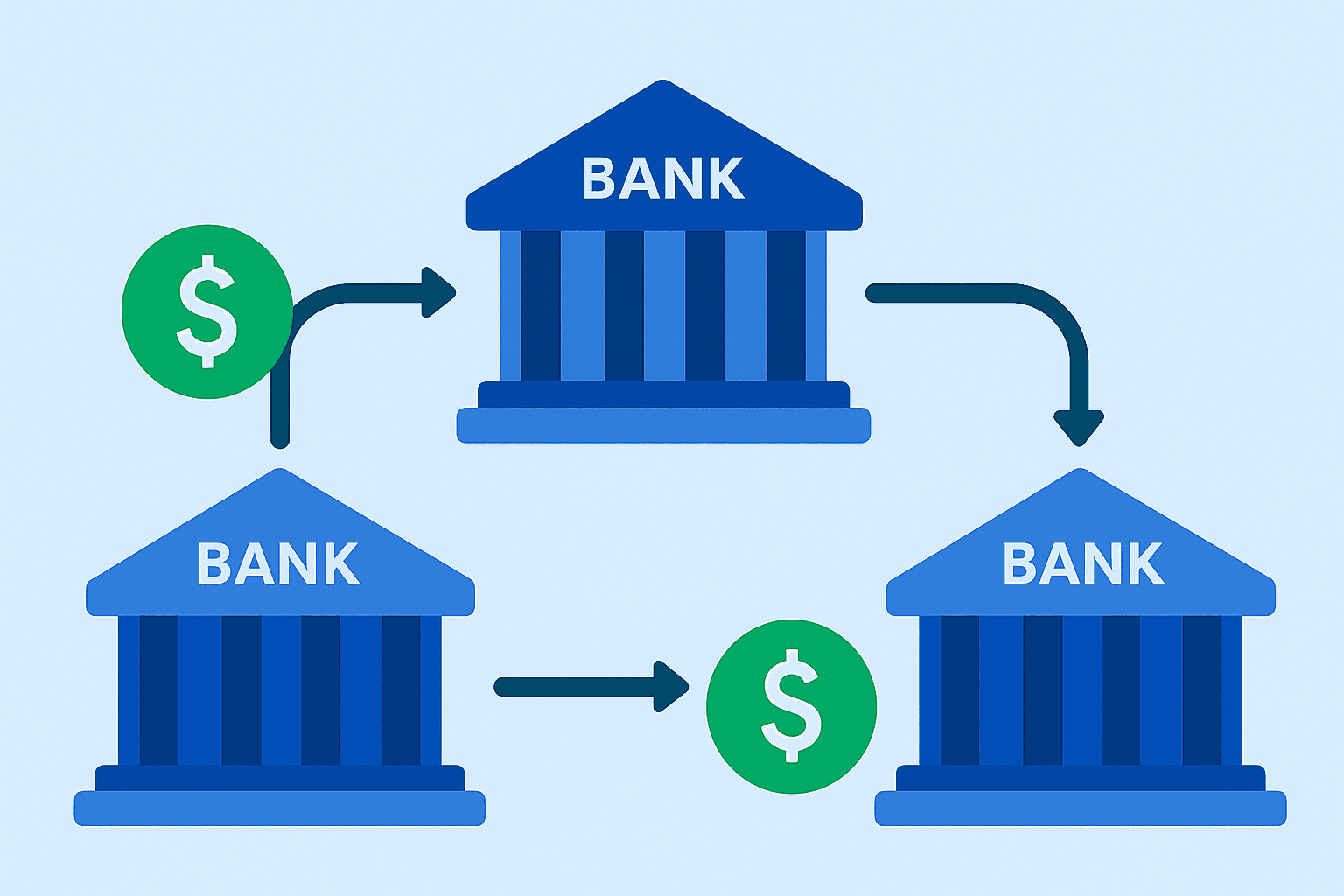
SWIFT transfers can pass through one or more correspondent banks, depending on the currency and route. Each intermediary may apply a charge. Ask the sending bank for tracking information rather than assuming every payment follows a fixed three-bank chain.
Ask for the payment confirmation and UETR, the unique end-to-end transaction reference that banks use to track the payment. SWIFT's MT/ISO 20022 coexistence period for cross-border interbank payment instructions ended on 22 November 2025. A bank may still provide an MT103-style copy, but it does not necessarily show every later deduction or prove final credit.
✅ PRO TIP
Keep the invoice, payment confirmation, UETR and bank credit advice together. Ask your bank to separate transfer fees, intermediary deductions, conversion costs and taxes. If the payment is still short, ask the sender's bank to trace it using the UETR.
What Are the Best Alternatives to SWIFT Transfers for Indian Freelancers?
Local collection services can offer alternatives to SWIFT transfers for eligible Indian freelancers and businesses. Skydo, Wise and Payoneer have different fees, supported routes and receipt documents. Some routes still use SWIFT, so check the payment instructions before your client sends money.
- Traditional SWIFT via a bank: Costs can include sending, intermediary and receiving-bank charges, plus conversion costs and applicable taxes. There is no universal percentage cost: compare a transaction-specific quote and the final INR proceeds.
- Wise: Eligible Indian businesses can receive payments using local account details in supported currencies; other routes use international SWIFT details. Wise converts receipts to INR and sends them to the verified Indian bank account. Fees depend on the currency and route, and GST applies to Wise's fees. Check the live quote for the full cost.
- Payoneer: Clients can pay supported local receiving accounts in currencies such as USD, EUR and GBP; SWIFT receipts are also supported. Indian receipts are automatically withdrawn to the linked Indian bank account. Receiving, withdrawal, conversion and other account charges depend on the route and account.
- Check the receipt documents: Wise automatically provides e-FIRC for qualifying Business account-detail receipts, while Payoneer offers free FIRA/FIRS/NOC documents. For service-export GST refunds, the rules specify relevant BRC/FIRC evidence; filing an LUT is a separate step. Check which document your route provides and what your bank or refund process needs.
- Skydo: We automatically provide a free Foreign Inward Remittance Advice (FIRA) for settled payments. It records the receipt, but FIRA and formal FIRC are not universally interchangeable. The document alone does not establish GST eligibility or replace export-reporting obligations.
Here is how the cost layers on a $3,000 bank wire compare with a supported local collection through Skydo. Bank charges vary by route and account; these are not universal tariff quotes.
| Fee Layer | Traditional SWIFT (Bank) | Skydo |
|---|---|---|
| Sending bank fee | Sender pays under OUR/SHA; beneficiary under BEN | No international SWIFT fee on local leg; payer-bank fees may apply |
| Correspondent bank fee | Route-dependent; check the quote | No SWIFT intermediary charge on the local receiving leg |
| Receiving bank fee | Check your bank's tariff and agreed pricing | No additional SWIFT fee for onward transfer to India |
| Platform / flat fee | None | $29 + 18% GST on the fee |
| FIRA/FIRC provided | Document and process depend on the bank | Free FIRA after settlement |
| Final amount clarity | Quote and tracking help; check final credit | Published fee; INR proceeds depend on the applied exchange rate |
Local collection can reduce the bank-fee layers you need to manage. Check your client's payment method, our fee and the conversion quote before sharing account details.
⚠️ WATCH OUT
Our Global Bank Account pricing is $19 up to $2,000, $29 for the next published tier up to $10,000, and 0.3% above $10,000, plus 18% GST on our fee. We offer zero forex markup. Local receiving routes avoid payer-side international SWIFT charges; international SWIFT receipts can still incur bank charges.
How Does Skydo Help You Avoid SWIFT Charges in India?
Skydo gives you local receiving details in currencies including USD, EUR, GBP, SGD, AUD and CAD. Clients paying the corresponding local account can avoid international SWIFT charges on that leg. We also support international SWIFT receipts, where bank charges may still apply. Proceeds settle to your linked Indian bank account in INR.
- Local-route savings: Local receiving transfers avoid international SWIFT charges on that leg. If your client uses our international SWIFT account, bank charges may still be paid by the sender or deducted in transit. Once funds reach Skydo, there is no additional SWIFT fee for onward transfer to India beyond our transaction fee and applicable GST.
- Digital signup, no monthly fees: Sign up online with your business details and documents. You can start receiving payments after verification; cases needing manual review can take longer. There is no monthly subscription charge, and transaction fees apply when you receive payments.
- Free FIRA certificates: We automatically provide a free FIRA for settled payments, available from your dashboard. It helps you reconcile receipts and maintain payment records, but does not by itself prove EDPMS closure or meet every export-compliance requirement.
- eBRC generation assistance: For goods exporters, our workflow lets you link your DGFT account, bulk-upload shipping bills and match IRMs to export transactions for eBRC generation. Review the details and meet the applicable DGFT requirements before approving generation.
- EDPMS closure assistance: We help with the closure process, but the responsible AD bank must match the remittance to the relevant export entry and close it. Generating an eBRC is a separate process, not proof that EDPMS closure is complete.
- Settlement timing: We aim to settle within one to three business days after a payment passes our screening and compliance checks. This depends on other banks and payment partners completing their checks. Your client's transfer to the collection account takes additional time, and bank holidays can affect arrival.
- India-based support: Contact our team by phone, WhatsApp or email for payment and documentation queries.
Where do SWIFT deductions actually happen on every transfer?
Charges can arise at the sending bank, one or more intermediary banks, and the receiving bank. Not every transfer incurs every charge, and some fees are billed separately rather than deducted from the payment. Compare the payment confirmation and credit advice, then ask the banks to trace unexplained differences using the UETR. A payment-message copy alone may not explain every deduction.
How much do SWIFT charges actually cost Indian exporters?