How to Invoice a Parent Company from India? A Full Guide

TL;DR - Summary
- How do you invoice a parent company from India? - Check export eligibility and arrange an LUT or bond where applicable. Establish arm’s-length pricing, prepare the invoice, generate an e-invoice if required, report in GSTR-1, and retain payment evidence and complete export reporting.
- What should an invoice to a foreign parent company from India include? - Use six blocks: identification, supplier and recipient details, description, currency and valuation, GST/export declarations, and regulatory/payment details. Include mandatory tax particulars and the commercial details needed for payment.
- What are the GST rules for invoicing a parent company from India? - Services are zero-rated only if all five export tests are met. A separate Indian subsidiary can qualify; a branch supplying its own head office cannot. Eligible registered exporters can use an LUT or bond to export without upfront IGST.
- What transfer pricing rules apply when you invoice a parent company from India? - International transactions with an associated enterprise, including a foreign parent, need arm’s-length pricing, supporting records and an annual accountant’s report. Each invoice is not separately certified.
What Is Intercompany Invoicing?
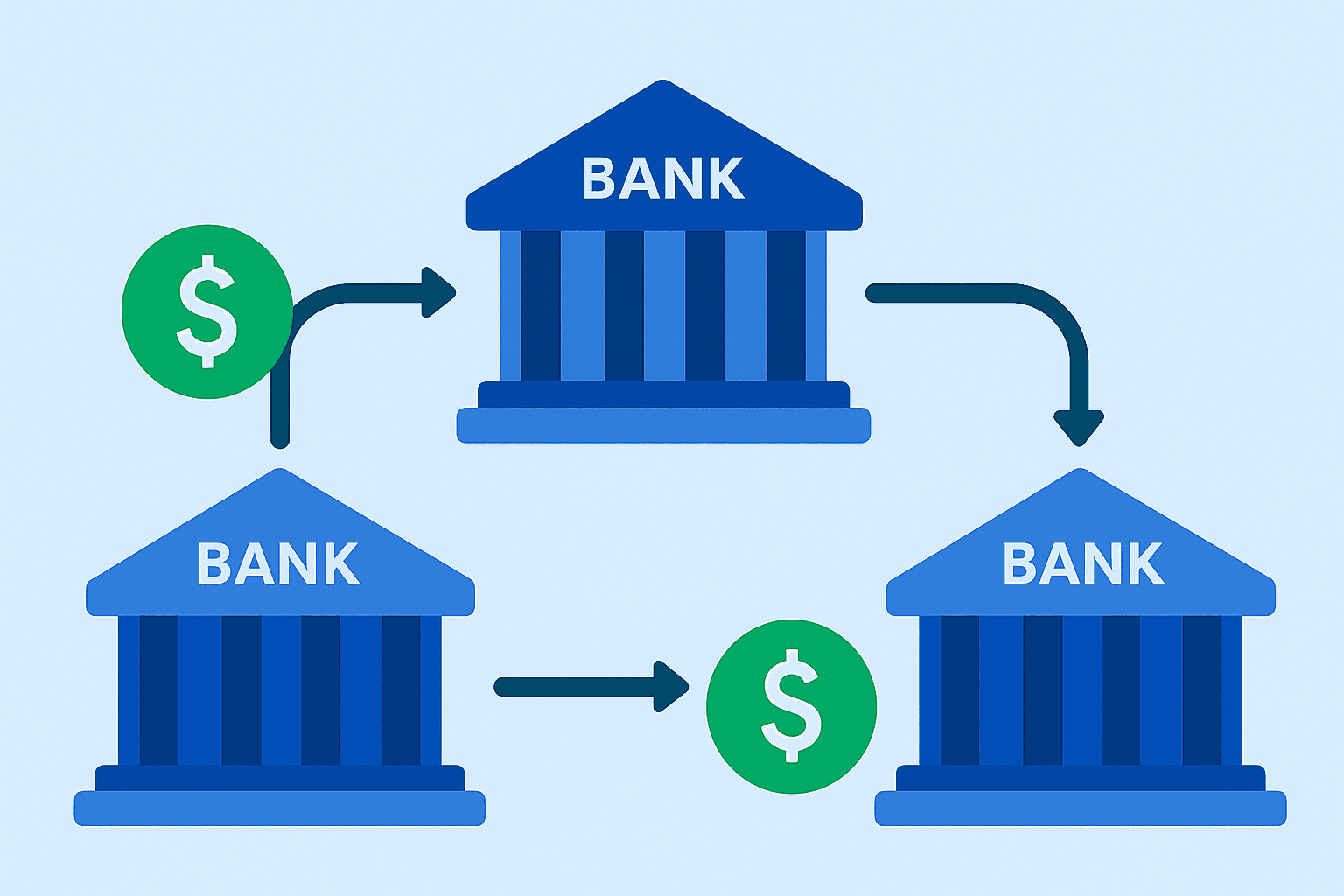
An intercompany invoice is a billing document between separate legal entities in the same corporate group, such as an Indian subsidiary and its foreign parent. Transfers between departments or branches of the same legal entity are different.
For an Indian subsidiary, it records services such as IT support or shared services, or goods supplied to the foreign parent. The subsidiary records revenue and a receivable; the parent records the corresponding expense or asset and payable. These records support tax compliance and group reconciliation.
Say a Bengaluru-based IT subsidiary bills its US parent $10,000 for a month of software development. The invoice needs the usual export checks plus related-party pricing support. Group ownership does not remove GST, FEMA or transfer pricing obligations.
How to Invoice a Parent Company from India?
Use these six steps for invoicing and collecting payment. First check whether the supply qualifies as an export; related ownership alone does not establish zero-rating. Filing and payment deadlines run separately, so this is not a sequence that waits for receipt before reporting.
Invoice a parent company from India
Six steps to invoice and collect. Filing and payment deadlines run separately, so reporting does not wait for receipt.
For a qualifying export, furnish an LUT or bond before invoicing, to export without paying IGST (GST Portal, Form GST RFD-11). A late LUT can be condoned case by case.
Price on each entity's work, assets and risks, backed by comparables. An intercompany agreement records it but does not prove the price is fair.
Include all Rule 46 fields: parties, destination, SAC/HSN, values and tax, plus the export endorsement and the IRN-embedded QR code where required.
Required if PAN-based turnover crossed ₹5 crore in any year since 2017-18. Report to the IRP, get the IRN and signed QR, and add it to the invoice.
Report the invoice in Table 6A (Exports), without payment of tax for an LUT export. Service exports do not need shipping-bill details.
The parent pays through a permitted channel; convert the proceeds or credit an EEFC account. Keep the BIRC or remittance advice and file the EDF, usually within 30 days of the invoice month ending.
Step 1: File Your Letter of Undertaking (LUT) Before Issuing Any Invoice
For a qualifying export, furnish an LUT or bond before exporting without payment of IGST. This avoids paying the applicable tax upfront; 18% is not a universal service rate. A delayed LUT can be condoned case by case where export conditions are met, rather than automatically forcing the payment-and-refund route.
Process: GST Portal → Services → User Services → Furnish Letter of Undertaking (LUT) → select the financial year → complete declarations and details of two independent, reliable witnesses → file Form GST RFD-11 using DSC or EVC, as applicable.
Step 2: Establish the Arm's-Length Price
Set an arm's-length price based on the work, assets and risks of each entity, supported by comparable transactions and the most appropriate pricing method. An intercompany agreement records the arrangement, but does not by itself prove the price is fair.
Cost-plus pricing is one possible model. For example, a 10% markup may be agreed, but it is only an illustration, not a standard or automatically acceptable rate. Define the cost base, allocation keys and benchmarking support.
Step 3: Draft the Invoice with All Mandatory Fields
For a GST-registered exporter, your export invoice needs the applicable Rule 46 particulars: date and number, supplier and recipient details, destination country and delivery address, SAC/HSN, description, quantities for goods, values, applicable tax details and signature unless exempt. Add the prescribed export endorsement and IRN-embedded QR code where required. The blocks below also include useful commercial fields.
- Header: The Indian entity’s legal name, address and GSTIN. Add PAN and CIN where required by other laws or the parent’s onboarding process; they are not separate GST Rule 46 fields.
- Client block: The parent’s legal name, address, delivery address and destination country.
- Invoice number: A consecutive number unique for the financial year, no longer than 16 characters, using letters, numbers, hyphens or slashes.
- Currency: Use the agreed foreign currency or a permitted INR invoicing and settlement arrangement.
- Export declaration line: For the LUT route, use “SUPPLY MEANT FOR EXPORT UNDER BOND OR LETTER OF UNDERTAKING WITHOUT PAYMENT OF INTEGRATED TAX”. The LUT reference can also help with record-keeping.
- Banking details: Add the bank name, account number, IFSC and SWIFT/BIC details needed for payment. These are payment instructions, not mandatory GST Rule 46 fields.
Step 4: Generate an E-Invoice if Applicable
E-invoicing covers registered suppliers whose PAN-based aggregate turnover exceeded ₹5 crore in any preceding financial year from 2017–18 onwards, including export invoices. Notified exemptions apply, such as SEZ units, banks, insurers and specified other suppliers; SEZ developers are not exempt merely as developers. For AATO of ₹10 crore or more, the IRP also blocks invoices and credit/debit notes reported more than 30 days after their date.
Process: Report invoice details to an Invoice Registration Portal (IRP), obtain the Invoice Reference Number (IRN) and signed QR code, and include the IRN-embedded QR code on the invoice sent to the parent. Meet the reporting deadline where it applies.
Step 5: Declare the Transaction in GSTR-1
Report the invoice in GSTR-1 Table 6A (Exports). For an LUT export, select without payment of tax and enter the invoice number, date, total value and taxable-value details. There is no LUT-number field in Table 6A. Service exports do not need shipping-bill details.
Step 6: Secure the E-FIRA
The parent pays through a permitted banking channel. Proceeds may be converted to INR or credited to an eligible EEFC account. EEFC monthly accruals must be converted by the following month’s last day after adjustment for approved use or forward commitments.
Retain the bank’s remittance advice or BIRC and check which evidence your GST refund needs. A FIRA alone does not prove all export conditions. Service exports also need the applicable Export Declaration Form (EDF): generally within 30 days after the invoice month ends, though non-software services may file on or before payment receipt. Ask the bank about justified extensions and confirm receipt matching and EDPMS reporting.

What Should an Invoice to a Foreign Parent Company Include?
Organise the commercial invoice into six blocks: identification, supplier and recipient details, description, currency and valuation, GST/export declarations, and regulatory/payment details. Some fields are mandatory under GST; bank details, payment terms and agreement references serve commercial or other compliance needs.
Invoice Identification
Use a consecutive invoice number unique for the financial year and no longer than 16 characters, plus the invoice date. Add agreed payment terms such as Net-30 or Net-60; these are commercial terms rather than separate GST Rule 46 requirements.
Supplier and Parent Company Details
- Supplier block: Legal business name, address and GSTIN. Add PAN where needed for other compliance or onboarding.
- Foreign parent block: Legal company name, address, delivery address and destination country.
Service or Goods Description
- Give a detailed breakdown of the services rendered (for example, IT consultancy, management support, shared services). Avoid generic labels like "intercompany support."
- Include the appropriate SAC code for services or HSN code for goods.
- Check the place of supply before treating a service as an export. The usual cross-border rule follows the recipient’s location, but exceptions apply. An intermediary arranging another person’s supply generally has its place of supply in India; supplying your own services is not, by itself, intermediary activity.
Currency, Valuation, and Exchange Rate
- Use the agreed foreign currency or a permitted INR invoicing and settlement arrangement.
- For GST, value services in INR using the exchange rate under generally accepted accounting principles at the time of supply. Goods use the CBIC-notified customs exchange rate at the time of supply. Rule 34 does not prescribe one universal RBI invoice-date rate.
GST and Export Compliance Declarations
- For the LUT route, use “SUPPLY MEANT FOR EXPORT UNDER BOND OR LETTER OF UNDERTAKING WITHOUT PAYMENT OF INTEGRATED TAX”. You may add the LUT reference for records; Rule 46 does not separately mandate its number on the invoice.
- If you are not GST-registered and are not required to register, issue a commercial invoice without a GSTIN or LUT endorsement. The inter-State service exemption generally covers aggregate turnover up to ₹20 lakh, or ₹10 lakh where the lower State threshold applies. Other compulsory-registration rules may still apply.
Regulatory and Banking Details
- Bank name, account number, branch address, and SWIFT/BIC code for international wire transfers.
- Use the RBI purpose code matching the actual service, confirmed with your AD bank. P0802 covers software consultancy/implementation other than services covered in SOFTEX; it is not a catch-all for IT or management services.
- A reference to the underlying intercompany service agreement or MSA number, so auditors and tax authorities can reconcile the transaction.
⚠️ WATCH OUT
The purpose code classifies the inward remittance. Confirm it with your bank before payment to reduce queries and reconciliation delays.
What Documents Are Required to Invoice a Foreign Parent Company?
Keep core billing records, applicable export and GST records, and transfer pricing documentation. The fourth group below concerns payments in the opposite direction, from India to the foreign parent, not collecting your invoice.
Core Commercial and Billing Documents
- Commercial/tax invoice: With a unique invoice number, date, and the legal names and billing addresses of both parties.
- Intercompany service or supply agreement: A legally executed contract defining scope, pricing model, and cost-allocation methodology.
- Delivery proof or work sign-offs: Timesheets, project deliverables, or service logs showing the services were actually rendered.
Export and GST Compliance Documents
- GST export invoice: Use the prescribed endorsement for export with payment of integrated tax or under bond/LUT without payment, as applicable.
- Letter of Undertaking (LUT): Filed in Form GST RFD-11 by eligible registered exporters using the without-payment route. A bond applies where LUT eligibility is not met.
- Importer Exporter Code (IEC): Generally needed for goods exports unless exempt. For services or technology exports, it is required to claim Foreign Trade Policy benefits, not for every service invoice.
- AD Code: The bank code used in customs export documentation where applicable. Customs AD-code registration is not a universal requirement for ordinary service invoices; confirm your service-reporting details with the AD bank.
- Remittance and realisation evidence: Keep the bank’s remittance advice or BIRC and any BRC/FIRC needed for the relevant filing. Exporters generate eBRCs through DGFT using bank-reported inward remittance data. FIRA, FIRC and eBRC are different documents.
Transfer Pricing and Statutory Documentation
- Transfer pricing policy or benchmarking study: Supports arm’s-length pricing. The 2025 Income-tax Act applies from tax year 2026–27; the 1961 Act still governs FY 2025–26 and earlier years.
- Annual accountant’s report: Form 3CEB applies to FY 2025–26 under the old Act. Form 48 replaces it for tax year 2026–27 onward under the new Act.
- Master File and Country-by-Country Report (CbCR): Separate group-reporting obligations depend on thresholds and the Indian entity’s reporting role, not each invoice.
Withholding Tax and Remittance Compliance Documents
These concern payments from India to the foreign parent, not collection of the Indian subsidiary’s invoice. Requirements depend on taxability, treaty relief and remittance rules.
- Tax Residency Certificate (TRC): Issued by the parent’s home-country tax authority to support applicable treaty relief.
- Treaty information: Form 41 replaces Form 10F under the new Rules, providing prescribed residence and identification details alongside the TRC. Use Form 10F where the old Act applies.
- No Permanent Establishment (PE) declaration: Supporting evidence for a treaty analysis, not an automatic exemption from Indian tax or withholding.
- Outward-remittance reporting: New Forms 145 and 146 replace Forms 15CA and 15CB. A CA certificate is generally needed for taxable remittances exceeding ₹5 lakh in aggregate during the tax year unless the relevant tax-officer certificate or order applies. Non-taxable sums generally use Part D of Form 145, with specified exemptions including qualifying import payments. These forms are not needed just to receive the parent’s payment.
What Are the Transfer Pricing Rules for Intercompany Invoices in India?
International transactions with an associated enterprise, including a foreign parent, need arm’s-length pricing, supporting records and an annual accountant’s report. This is annual reporting, not separate certification of every invoice.
The Arm's-Length Principle and the Benefit Test
Use a functional, asset and risk (FAR) analysis, suitable comparisons and the most appropriate pricing method to support what independent enterprises would charge in comparable circumstances.
For service recharges, retain evidence of the work, the recipient’s business needs and the pricing basis. Here the foreign parent is the recipient. These are practical record checks, not a separate mandatory three-question legal test:
- Was the service actually rendered?
- Why would an independent recipient pay for these services?
- Is the charge supported by an arm’s-length pricing analysis?
6 Prescribed Pricing Methods
Taxpayers must select the most appropriate method from 6 statutory options:
- Comparable Uncontrolled Price (CUP) Method
- Resale Price Method (RPM)
- Cost Plus Method (CPM)
- Profit Split Method (PSM)
- Transactional Net Margin Method (TNMM)
- The CBDT-prescribed other method, using the price charged, paid or that would apply to a comparable uncontrolled transaction
Mandatory Documentation
- Annual accountant’s report: Form 3CEB for FY 2025–26 is normally due on 31 October 2026; Form 48 for tax year 2026–27 is normally due on 31 October 2027. The report is due one month before the relevant income-tax return deadline, subject to official extensions. There is no minimum transaction-value exemption.
- Local transfer pricing records: Detailed prescribed records generally apply above ₹1 crore of aggregate international transactions. At or below that threshold, still substantiate arm’s-length pricing and file the annual report. Closely linked transactions may be analysed together. Under the new Rules, retain records for nine years from tax-year end.
- Master File: Detailed reporting requires group revenue above ₹500 crore plus either international transactions above ₹50 crore or intangible-property transactions above ₹10 crore. Part A is required even below these thresholds. New Form 56 replaces Form 3CEAA, subject to designated-filer rules.
- Country-by-Country Report (CbCR): The threshold is ₹6,400 crore group revenue in the preceding accounting year. Duties depend on the entity’s role and statutory conditions, not revenue alone. New Form 59 replaces Form 3CEAD; an Indian subsidiary may have notification or conditional local-filing duties.
- Supporting evidence to archive: Timesheets, work logs, project emails, management reports, cost-allocation keys, and board approvals.
Penalties for Non-Compliance
- Late annual report: Legacy Form 3CEB has a ₹1 lakh penalty provision, subject to applicable relief. Under the new Act, late Form 48 filing attracts a ₹50,000 fee for delay up to one month and ₹1 lakh thereafter.
- Transfer pricing records: Failure to maintain, report or provide prescribed information can attract a 2% penalty on the relevant transaction value, depending on the default and applicable relief.
- Under-reporting or misreporting: Where applicable, penalties are 50% or 200%, respectively, of the tax payable on under-reported income. A transfer pricing adjustment does not automatically trigger these penalties; statutory exclusions and relief may apply.
- Dispute mitigation options: An Advance Pricing Agreement can agree the pricing approach with the tax authority. Safe Harbour Rules instead offer specified treatment for eligible transactions when their conditions are met; they are not the same as a negotiated APA.
⚠️ WATCH OUT
Support your pricing before invoicing, especially when your Indian subsidiary serves only its foreign parent. Keep the agreement, cost calculations, benchmarking and proof of work together.
What Are the GST and Tax Rules for Invoicing a Foreign Parent Company?
GST depends on the direction and nature of the supply. Services from India to a foreign parent are zero-rated only when all export tests are met. Taxable imported services generally attract reverse-charge IGST; goods imports follow customs rules, with applicable duties, IGST and exemptions.
GST Rules When the Indian Entity Invoices the Foreign Parent
Services supplied to a foreign parent qualify as exports under GST only when all five conditions are met:
- The supplier is in India.
- The recipient is outside India.
- The place of supply is outside India.
- Payment is received in convertible foreign exchange, or in INR where permitted by the RBI.
- Supplier and recipient are not merely establishments of the same person. A separate Indian subsidiary and foreign parent can qualify; a branch and its own head office cannot.
For qualifying exports under LUT or bond, issue the invoice without IGST. Furnish the LUT or bond before export and renew the LUT each financial year. Eligible exporters may instead use the permitted IGST-payment-and-refund route. A foreign customer or foreign-currency receipt alone does not make a supply an export.
Use the prescribed export endorsement for the chosen route. For GST INR valuation under Rule 34, services use the accounting-principles-based exchange rate at the time of supply; goods use the CBIC-notified customs rate at the time of supply.
GST Rules When the Foreign Parent Invoices the Indian Subsidiary
- The Indian subsidiary generally pays reverse-charge IGST when the parent’s service is a taxable import. Check place of supply and exemptions before applying RCM.
- Eligible ITC may be claimed after paying reverse-charge IGST, subject to normal credit conditions and documents. Imported-service RCM credit does not populate GSTR-2B. Report the liability in GSTR-3B Table 3.1(d) and eligible credit in Table 4(A)(2).
- Imported goods follow customs classification and valuation rules, with applicable duties and import IGST, subject to exemptions.
Valuation and Transfer Pricing Intersection with GST
GST valuation is separate from income-tax transfer pricing. Rule 28 uses open market value, then like-kind supplies. If neither works, apply Rule 30’s 110% of cost or Rule 31’s reasonable-means approach; service suppliers may opt for Rule 31 without using Rule 30. Where the recipient is eligible for full ITC, the invoice value is deemed open market value.
Keep transfer pricing, GST and customs valuations reconcilable. Their rules serve different purposes, so explain legitimate differences rather than assuming every value must be identical.
Income Tax and TDS
- When crediting or paying royalty, technical-service fees or another sum chargeable to Indian tax to the parent, assess withholding under the applicable Act and treaty. It is not automatic for every overseas payment. Timing is generally the earlier of credit or payment.
- For imported services, IGST paid separately by the Indian recipient under reverse charge is not part of the fee remitted to the parent. Assess withholding on the amount chargeable to Indian tax, including any applicable gross-up; do not apply a blanket GST-exclusion rule to every non-resident payment.
- Treaty relief may offer a lower rate or exemption, subject to its conditions and evidence such as a TRC and prescribed treaty information. Form 41 replaces Form 10F under the new Rules. A TRC or no-PE declaration alone does not establish that every payment is exempt.
What Are the Common Mistakes to Avoid When Invoicing a Parent Company?
The most common mistakes when invoicing a parent company from India are ignoring transfer pricing obligations, using vague service descriptions, mishandling GST treatment, failing to coordinate with the parent's consolidation schedule, overlooking currency policy, and sending invoices without an approved intercompany agreement.
- Ignoring transfer pricing regulations: Pricing intercompany services or management fees without an arm's-length basis can trigger tax audits, profit adjustments, and penalties from Indian tax authorities.
- Vague or missing itemization: Generic labels like "management services" or "intercompany support" in place of a detailed breakdown of hours, deliverables, or cost-allocation methodology can lead the parent's accounts payable team to reject or stall the invoice. They also weaken your position in a transfer pricing audit.
- Disregarding intercompany elimination requirements: If invoice numbers and billing timing aren't coordinated with the parent company's consolidation schedule, you get intercompany reconciliation mismatches during financial reporting and group audit cycles.
- Mishandling GST treatment: Treating every parent invoice as an export, missing place-of-supply exceptions or using the wrong endorsement creates risk. Paying IGST is not inherently wrong where the permitted export payment-and-refund route is used.
- Overlooking currency and exchange rate policy: Agree the billing currency and conversion policy. Billing currency is not necessarily either entity's functional currency, and exchange movements can create valid ledger differences that need reconciliation.
- Missing intercompany agreement or PO reference: Link every invoice to an approved intercompany service agreement, cost-sharing contract, or purchase order number. Don't assume payment is automatic just because the recipient is a group entity.
How Does Skydo Help Indian Entities Receive Payment from a Foreign Parent?
Receiving payment is only part of the job. You also need clear records linking the invoice, payment and supporting export documents, while keeping GST and transfer pricing work on track.
Skydo helps eligible Indian exporters receive service payments. Confirm that the parent’s payment, country, currency and service are supported before sharing account details. Equity and loans must not be labelled as service receipts.
- Free virtual receiving accounts: We offer supported currency accounts, including USD, EUR and GBP, with no setup or monthly fee. Share the relevant account details for the supported payment route. These are not EEFC accounts for retaining currency.
- Digital setup: Complete your business details and verification online. Account activation depends on successful checks, so do not promise the parent a fixed activation time.
- Automatic remittance records: We provide FIRA with each payment. It records the receipt, but does not establish arm’s-length pricing or GST export eligibility, or replace bank reporting.
- Free FIRA certificates: Your Foreign Inward Remittance Advice is free and available in your inbox and dashboard, without a separate manual request.
- Transparent pricing: Our standard fees are $19 up to $2,000, $29 for the next tier up to $10,000, and 0.3% above $10,000, plus 18% GST on the fee. There is zero forex markup; Amazon Global Selling pricing differs.
Can an Indian company invoice its foreign parent company in a foreign currency?
Yes. Use the agreed foreign currency or a permitted INR route. For GST valuation under Rule 34, services use the accounting-principles-based exchange rate at the time of supply; goods use the CBIC-notified customs rate at the time of supply.
Can a parent company pay an invoice from a different bank account?
Can an invoice to a foreign parent company be amended after it has been issued?
What happens if the parent company pays less than the invoiced amount?
Can an Indian company raise one invoice for multiple services provided to its parent company?
Can an Indian company invoice its foreign parent company on a monthly basis?
Can an Indian company receive advance payment from its foreign parent company before raising an invoice?
What happens if the parent company does not pay the invoice on time?